In a significant legal case that could shape the future of religious freedom in India, the Supreme Court recently issued notices to 12 states regarding a petition challenging the constitutionality of anti-conversion laws.
The petition, filed by the National Council of Churches in India (NCCI), argues that these laws incentivize violence against religious minorities, particularly Christians, and create a chilling atmosphere for the free exercise of religion.
The stakes are high, as the case has the potential to not only redefine the legal landscape for religious freedoms in India but also serve as a precedent for other nations considering similar legislation.
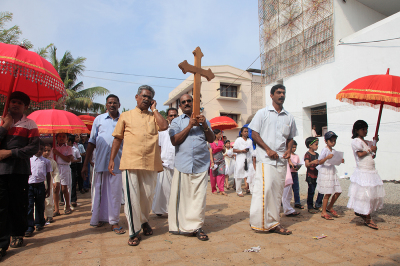
India’s religious diversity is one of its greatest strengths, yet it is also a source of tension. While the Indian Constitution guarantees the freedom to profess, practice, and propagate one’s religion, the reality on the ground often tells a different story. Anti-conversion laws have been passed in 12 states with the intention of curbing forced conversions, but the laws have been criticized for their potential to marginalize and target minority faith communities, particularly Christians.
The misuse of anti-conversion laws: Fueling violence and vigilantism
The petitioners’ primary argument is that these laws encourage vigilantism, allowing individuals and groups to take matters into their own hands. The laws, while ostensibly aimed at preventing forced conversions, have instead created an environment in which religious minorities — especially Christians — are subjected to harassment, intimidation, and violence. The laws do not effectively differentiate between coercion and free choice, leading to the criminalization of voluntary conversions and stifling religious expression.
The consequences are grave. In states with anti-conversion laws, Christians have faced mob violence, accusations of forced conversions, and even arrests for simply practicing their faith. These acts of vigilantism are often carried out with the tacit approval, or at least indifference, of local authorities. The NCCI argues that such laws not only violate the constitutional right to religious freedom but also create a toxic atmosphere in which religious minorities live in constant fear.
The role of the judiciary: Protecting constitutional rights
As the case progresses through India’s highest court, the eyes of the world are on the judiciary to uphold the country’s constitutional commitment to religious freedom. India, the world’s largest democracy, is home to a rich tapestry of religious communities, including Hindus, Muslims, Sikhs, Buddhists, and Christians. The country’s secular constitution guarantees freedom of religion, and any law that infringes upon this freedom must be subjected to rigorous scrutiny.
The Supreme Court has the opportunity to strike a balance between the protection of public order and the fundamental rights of individuals. While the state may have a legitimate interest in preventing fraudulent or coercive conversions, it must not use that interest to justify laws that are disproportionately applied to religious minorities or that serve as a pretext for violence and discrimination.
In past rulings, the Supreme Court has upheld the right to religious freedom, as seen in the 1977 Rev. Stainislus v. State of Madhya Pradesh case, which clarified that while individuals have the right to propagate their religion, they do not have the right to forcefully convert others. The court’s ruling emphasized that freedom of religion must be balanced with public order and should not be used to justify social unrest. This precedent will play a crucial role in determining the outcome of the current case.
The global implications: A call for international solidarity
The unfolding case in India has far-reaching implications beyond the country’s borders. As an influential democracy and a leader in the global community, India’s approach to religious freedom sends a powerful message to the world. If the Supreme Court rules in favor of the anti-conversion laws, it could embolden other nations to adopt similar restrictive laws, undermining religious freedoms worldwide.
Religious freedom is a fundamental human right, and the global Christian community must stand in solidarity with our brothers and sisters in India. As Christians, we are called to support one another in times of persecution, and we must raise our voices against any law that infringes upon the right to freely practice and propagate the Gospel. The NCCI’s petition is not just a legal challenge; it is a moral plea for justice, for the protection of religious minorities, and for the preservation of India’s democratic ideals.
The global Church has a responsibility to advocate for religious freedom in India and around the world. As citizens of a global community, we must call on governments, international organizations, and civil society groups to stand in support of those who face discrimination and violence because of their faith. Our solidarity with persecuted Christians in India is a testament to our commitment to the values of liberty, equality, and human dignity.
A turning point for religious freedom
As the case continues to unfold, the world watches with bated breath. The decision that the Supreme Court makes will not only affect the religious landscape of India but also serve as a bellwether for the protection of religious freedoms worldwide. If the Court rules in favor of the petitioners, it will reaffirm the right of every individual to freely practice their religion, free from fear of coercion, violence, or state-sponsored discrimination.
For those who care about religious freedom, the stakes could not be higher. India’s commitment to secularism, religious pluralism, and democracy is on trial. The outcome of this case could have profound implications for millions of people, both in India and around the world. As Christians, we must pray for justice and stand in solidarity with those who seek to preserve the fundamental right to religious freedom.
Conclusion: Upholding religious liberty for all
Religious freedom is a cornerstone of democracy, and it is under threat in India today. Anti-conversion laws that target religious minorities, particularly Christians, must be carefully examined and reformed to ensure that they do not violate constitutional guarantees of freedom of religion. The global Christian community must stand together, advocating for the protection of religious freedoms in India and worldwide. As the Supreme Court of India deliberates on this case, we must continue to pray for justice, stand in solidarity with those who are persecuted for their faith, and advocate for the preservation of religious freedom.
Rev. Dr. Richard Howell is the founder President of Caleb Institute. And Chairman of Evangelical Church of God established in 1977. He is the former General Secretary of Evangelical Fellowship of India. (1997-2015) and of Asian Evangelical Alliance for ten years. He was Vice President of World Evangelical Alliance of Four Years. And a founding member of Global Christian Forum.