LEADERS of a “Synodal Way” reform process in the Roman Catholic Church in Germany have praised the progress achieved during six years of debate, although conservative bishops rejected its final resolutions, while some supporters of liberal change voiced frustration.
“Not everything went smoothly: there were tensions, setbacks, and crises along the way, while efforts were thwarted and people hurt,” participants said in a final statement.
“And yet a new way of working together has been initiated, enabling new forms of synodality, accountability, and transparency, and greater participation. This applies not just at federal level: impulses have also been given to dioceses, parishes associations, and church communities.”
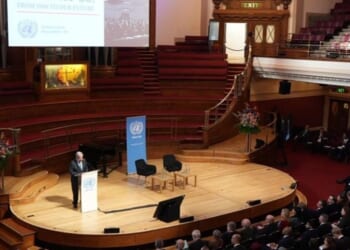
The statement came after the final session of the Synodaler Weg, which was launched as a national consultation in December 2019 in response to sexual-abuse complaints.
It said that the six-year process had established “many hopeful beginnings”, and would be followed up by a permanent Synodal Conference, comprising clerical and lay representatives, to combat “systemic dimensions of power abuse”, while combating discrimination in the Church and promoting gender equality.
The German Church’s main news agency, Katholisch.De, reported that ten of 32 participating bishops had voted against allowing the planned Synodal Conference to “monitor” compliance nationwide. Resistance to demands for reform, in some of the Church’s 27 dioceses, had caused “emotional reactions and sharp criticism”, while the Archbishop of Munich & Friesing, Cardinal Reinhard Marx, and others had warned of “unease in Rome”.
The Synodal Way’s six working groups have discussed the ordination of women deacons and a re-examination of priestly celibacy, as well as more involvement of lay people in preaching and selecting bishops, and a revision of church teaching on homosexuality and gender diversity.
Among numerous initiatives, a handbook for same-sex blessing ceremonies was approved by the Bonn-based Bishops’ Conference last April, but rejected by the some church leaders, including Archbishop of Cologne, Cardinal Joachim Woelki, who boycotted the Synodal Way’s final session.
The Bishops’ Conference said at the weekend that the Synodal Conference, to be convened next November, would include 27 bishops and 27 lay members of the Central Committee of German Catholics, as well as 27 elected parish representatives, half of them women.
“This powerful alliance will allow us to be visible to the public,” the Bishop of Limburg, the Most Revd Georg Bätzing, told journalists. He ends his six-year term as President of the Bishops’ Conference this month.
“Synodality is the defining characteristic of our Church’s future, both worldwide and in Germany. I am pleased and grateful that the two synodal processes, the Roman path and our path, are now so well intertwined,” he said.