THE Government’s Listed Places of Worship Grant Scheme, set to expire on 31 March, has run out of funds before the introduction of its replacement, the Places of Worship Renewal Fund, leaving potentially hundreds of churches in difficulty, and 21,000 — the majority of churches — subject to VAT overnight.
The new £23-million-a-year fund — a drop in real terms from the previous £42-million budget in 2024/2025 — has already been exhausted, the National Churches Trust (NCT) says.
Churches now have no idea what government support they can expect to receive in the six weeks remaining until the end of the financial year, it says.
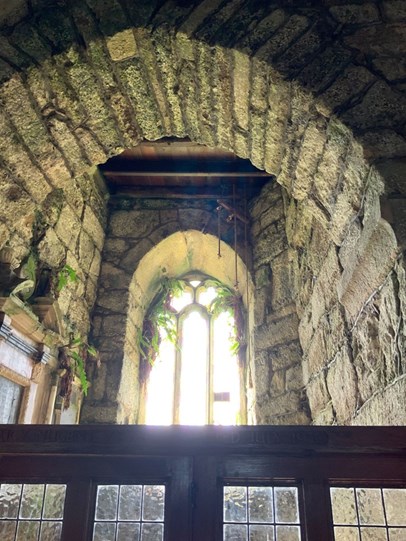 National Churches TrustA window in St Grada and Holy Cross, Cornwall. The church is in urgent need of repair work to its roof and tower and is struggling to raise the new funds needed with the added VAT costs, National Churches Trust reports
“Why is the new scheme not up and running already?” its press release on Friday asks. “We now are likely to have a significant period where there is no government support available to churches — something that was entirely avoidable.
“The future of churches is our biggest heritage challenge. Almost 1000 churches are on Historic England’s Heritage at Risk register and one in 20 churches in the UK needs a new roof or gutters this year. The Government have been caught short — they have no scheme or funding in place to help keep churches open. They have withdrawn help from churches when they need it most.”
It describes the additional 20-per-cent VAT tax as “the biggest blow of all”.
Sir Philip Rutnam, who chairs the Trust, said that the news had left potentially hundreds of churches in the lurch. “After 25 successful years, the Government has removed a lifeline for churches which was introduced by a Labour Chancellor in 2001, allowing them to reclaim VAT on repairs.
“With thousands of churches at risk, this is yet another blow to our national heritage, as many will now be unable to pay for urgent repairs.”
The Trust has already expressed concern that, since churches depended overwhelmingly on volunteers, the scheme needed to be simple, accessible, and predictable. It said that the scheme also needed to work “in an agile way, so that it does not slow down urgent repair works that are needing to be made, particularly following bad weather and storms”.
The Trust has also said: “Churches across the UK save the NHS costs of £8.3 billion a year from community support they host and run in their buildings. A small thing for the UK Government, but what would make a huge difference to churches, is to remove this tax burden.”