A SERMON is not “an op-ed for a newspaper”, the former Archbishop of Canterbury Lord Williams has said. “You are not just there to comment on current affairs, and I am always rather wary when I hear a sermon which is dominated by what’s in the media to the extent that you are not quite sure whether anything more than a general moral perspective is coming out of it.”
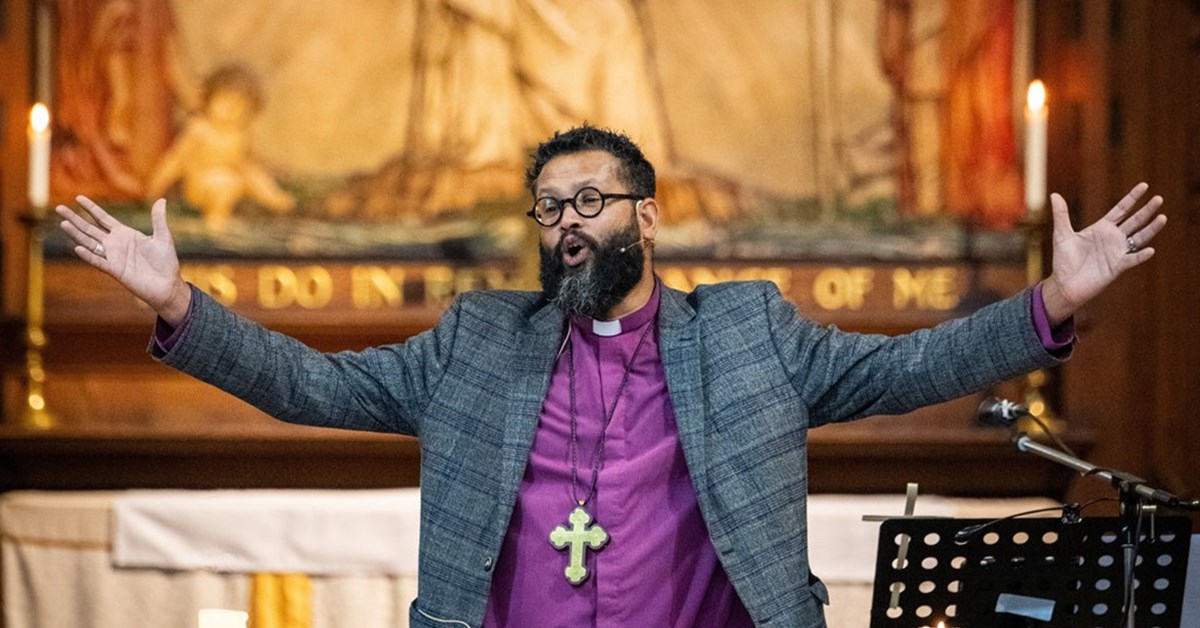
He offered the comments in a new podcast, Preaching Well, launched by the Bishop of Loughborough, the Rt Revd Saju Muthalaly, who said that he had created it because “the Church urgently needs voices who can speak God’s truth with clarity, mercy, and conviction.” He hoped that it would “build confidence in preachers and encourage those who long to proclaim the gospel in ways that stir hope, deepen faith, and lead us towards Jesus Christ”.
Lord Williams is the first guest in the new series. Sermons should help the congregation to “look more clearly at the nature of the God that has addressed us”, he said. “Then bits of the contemporary jigsaw begin to fall into place a bit more. . . If that’s the kind of God we believe in, then there are some reactions and engagements with the world around us that will make sense and some that won’t.”
A sermon “prompts people, encourages people, to a certain level of self-awareness”, he said, “so that somebody might go out from listening to sermon and be able to say not just ‘I have never thought of that,’ but ‘I have never seen that in myself.’” Rather than suggest that scripture provided “an agenda or solution to current affairs”, it should help people to “see where some of the tangles arise, where some of this is rooted”. One example might be to see that “an issue about our attitude towards migrants rests in some deep deep insecurities and fears in ourselves.”
Among his suggestions for preachers was to avoid “apologising for what you say. The worst sermons I’ve heard are sermons where people are clearly embarrassed by the fact that they are in the public.”
Preaching was a “Catholic job”, he said. “You don’t get up into the pulpit with an agenda, you don’t do an op-ed for the newspaper, you don’t do a campaign pitch. What you do is speak for the Catholic faith . . . to say: ‘We are all living in this extraordinary new world with its new perspectives, new connections, new relationships, that God has invited us into. . . One thing we all have in our pockets is the invitation.”
He reflected on the art of preaching to a known congregation and the need to “listen till it hurts”.
“Many times I have found myself looking out into the congregation where I know so- and-so has this issue, so-and-so is struggling with that, so-and-so has recently experienced this, that so-and-so is habitually very troubled by language like this, and all of that is whirring away in the background, not to paralyse you with worry, but just a little voice saying ‘Don’t forget they’re there.’”
Asked by Bishop Muthalaly what the Church might be failing to see, Lord Williams spoke of reminding people “that the Church is not ours, or ours to win or lose. . . The Church is God’s, and what the Church often fails to realise is that the more it gets tied up and paralysed by its own internal controversies, inevitable as many of those are, the more the Church somehow narrows the possibility for people outside it to see that this is God’s word, God’s act that is coming, not our bright idea, not our successful strategy.”
Bishop Muthalay is currently helping to coach 24 young preachers in the diocese of Leicester. Asked what advice he would offer to those who felt overwhelmed by the task, Lord Williams said: “Nobody’s going to measure up to the task; so don’t panic. Try to make sure that what you preach is something to do with what you yourself need to hear, need to know. . . You need to hear the Good News as well.”
Preaching Well is available on Spotify and Apple Podcasts.