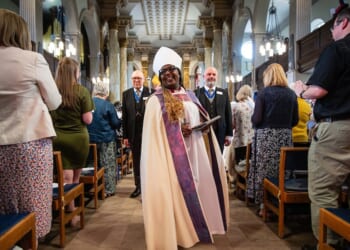
IN A recent article in The Times (30 January 30), the novelist and biographer A. N. Wilson, who often comments on religious affairs in a characteristically trenchant way, criticised the Archbishop of Canterbury. Her fault was to behave like a politician rather than a church leader, declaring her policy intentions on matters such as safeguarding, misogyny, and reparations for the slave trade. Wilson’s criticism is a version of the familiar plea that bishops should stick to religion and not meddle in public affairs.
Here and now, I am not concerned to defend or to criticise our new Archbishop. More interesting is the substance of Wilson’s article, in which he articulates what, in his view, people who want the Church of England to continue to exist think it is, or should be.
He first identifies two categories of regular worshippers. He is dismissive of flourishing Evangelical churches, where hopes of a widespread revival of faith are encouraged. He is sceptical of the “quiet revival”, as well as uncomfortable with the very idea of a widespread revival of faith. The other category of regular worshippers is the congregation of the average parish church, where “a dwindling band of elderly worshippers” struggle on without much hope.
Then he turns to a third category of those who wish the Church of England well. These are not regular worshippers. Wilson undertakes to speak for this “majority”, which, he thinks, may be enormous. What do they think when they think of the Church of England?
They think of traditions that have not changed since the 17th century. They think of traditional liturgy and choral music, of the King James Bible and the Book of Common Prayer, and of parish clergy who are both scholars and saintly pastors, on the model of George Herbert’s country parson. In this ideal vision of the Church, all that has changed is that these occasional churchgoers do not believe as much as George Herbert did — and perhaps not very much at all.
But it is worth comparing it with another attitude to the Christian tradition, one that is held by, among others, some of our most prominent political leaders. The Prime Minister and the Leader of the Opposition agree on it. It aims to hold on to “Christian values” without Christian faith. Sir Keir Starmer, a self-described atheist, has often praised the Christian values of compassion, community, and service. Kemi Badenoch recently described how she had given up the faith in which she had been raised, but “Christian values” continued to guide her policies (News, 15 August 2025).
THUS, those for whom Mr Wilson claims to speak want liturgical traditions without (much) faith, while the politicians want “Christian values” without faith. We must ask the hard question, whether either can survive uprooted from the living faith that previously nourished them.
In much of our society, “Christian values,” if acknowledged at all, consist of an attenuated notion of neighbourly love, divorced from the other “great commandment” to which Jesus firmly attached it (love of God), and often overlaid with such contemporary values as non-discrimination and inclusion.
Undoubtedly, there are many admirable people who devote themselves to others’ service without appearing to need any religious or metaphysical basis for their values. But free-floating moral imperatives do not fare well on a broader scale. Nietzsche foresaw that, although the radical consequences of the loss of God would take time to have widespread effect, in the long run, something radically different from “Christian values” (in his view, a contemptible ethic of weakness) would take their place.
Christian ethics were never meant to have the power of resisting evil and transforming human life without the resources of the Holy Spirit available to those who believe in Jesus Christ. Put another way, Christian values are not separable from Jesus Christ,
Similarly, it is unlikely that Anglican traditions can long survive the loss of the faith that they were designed to express, except as the fragmented rites of a secular society for which they are no more than symbols of the seasons.
In truth, those for whom Wilson claims to speak are mostly of the same generation as the dwindling band of those who keep the parish churches going, in Wilson’s notion of them. They are the people who still read newspapers. Many are people who also find spiritual sustenance in art galleries and classical music. They are living in the late twilight of an age of faith. That faith cannot be sustained merely by keeping traditional forms of Anglican devotion going, exquisite though many of them are.
MOST importantly, neither mere liturgical traditions nor “Christian values” have the power to engage with the cultural crisis of our time. It is a crisis of hope. The whole modern age has been sustained by a quasi-religious faith in the inevitability of human progress. The idea of progress made secularisation possible. It softened the impact of the loss of God.
It has survived many blows, but it is surely now dead. The climate catastrophe, the impact of AI, the likely prospect of another world war, and the sheer persistence of evil in many horrendous forms have deprived most young people today of hope that the future will be better than the present. They are the first generation since the Victorian age to face such a bleak future for themselves.
The two main foundations of progress were technology and politics. Technology has turned against us, destroying the planet and threatening to destroy our own humanity. Politics, whether “progressive” or populist, no longer inspires the utopian hopes that it did for our 20th-century forebears. It turns out that we need faith. We need something more radical and transcendent than the idea of progress. Whatever the statistical facts behind the “quiet revival”, there are real signs that the tide is turning back to faith.
Perhaps the Church should focus more seriously on a central element of Anglican tradition which Wilson does not mention: the creeds. They need explaining and interpretating for 21st-century people, but they offer a robust summary of what life is really all about. This is why we remind ourselves of them so often. They facilitate hope that is based not on progress, but on redemption.
The creeds are not a test that churchgoers must pass: they are a resource that can feed enquiring faith. At this juncture of our history, churches must be especially welcoming to the seekers, those who are looking seriously for meaning in life, something to build their lives on. They want more than liturgical tradition or Christian values. The Church of England must be there for them.
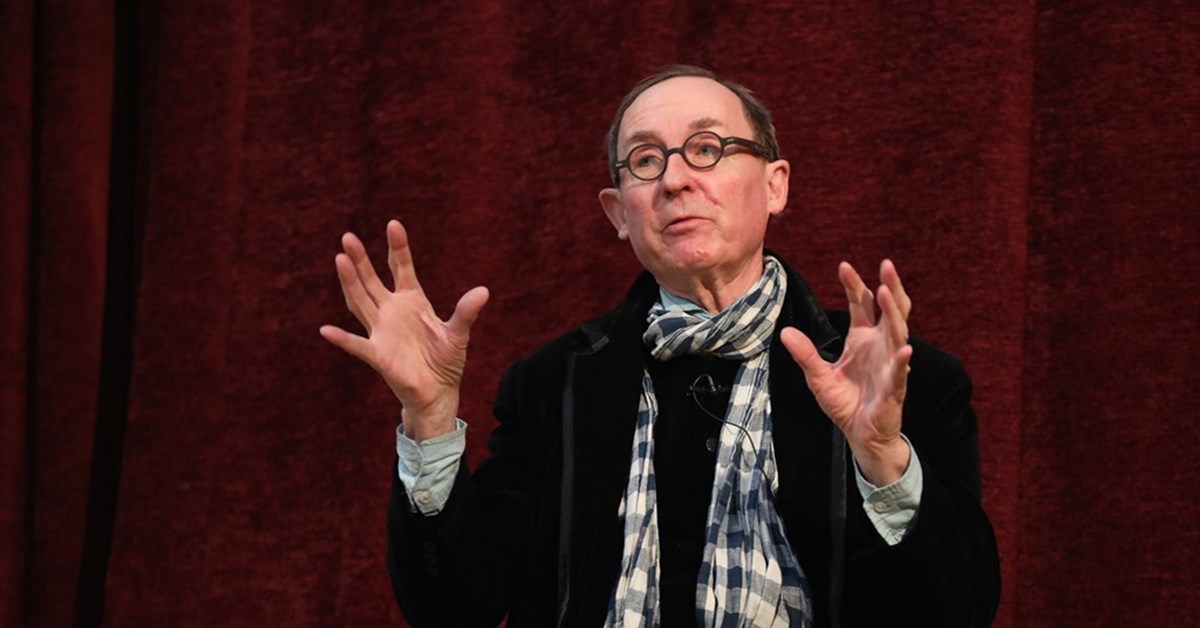
Dr Richard Bauckham is Emeritus Professor of New Testament Studies in the University of St Andrews, and Senior Scholar at Ridley Hall, Cambridge.