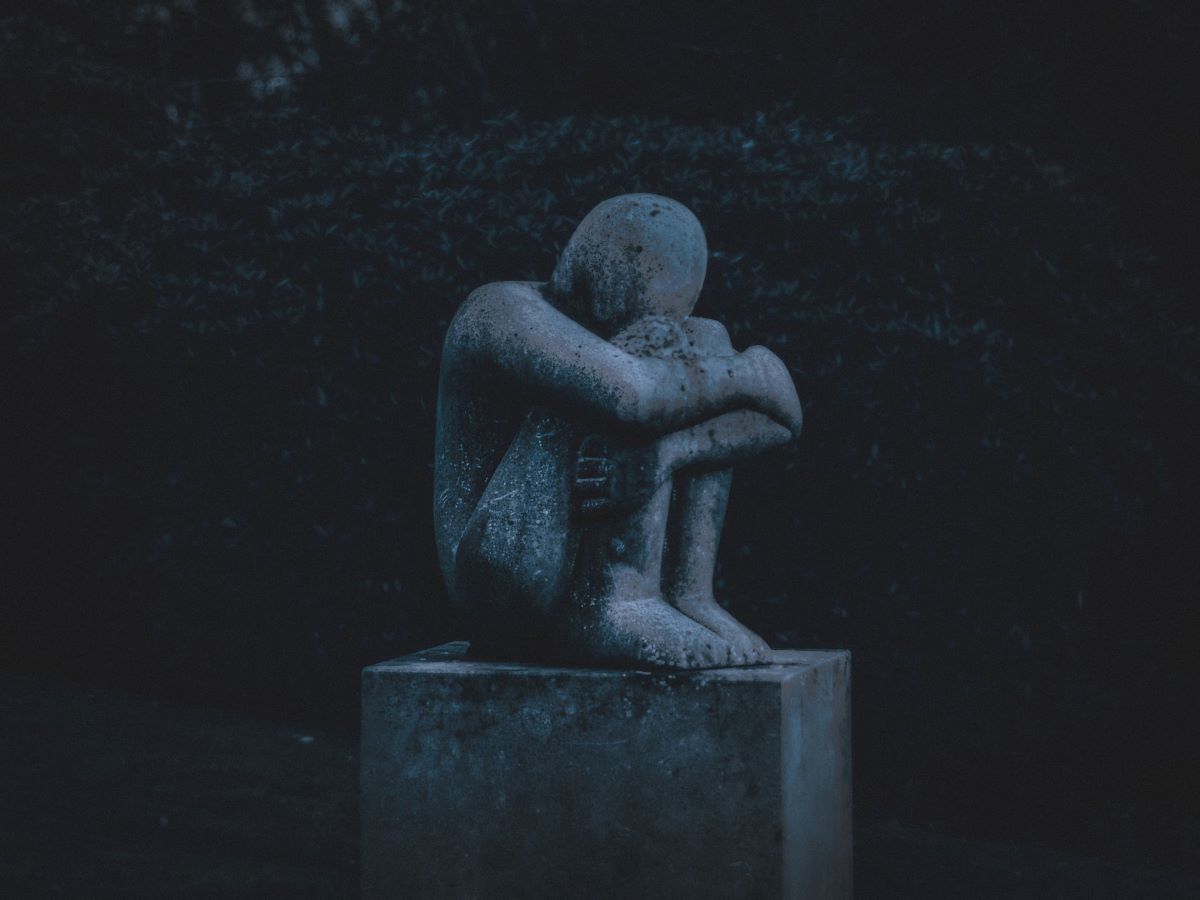
The phrase, “the dark night of the soul,” has been around for over 500 years. It represents a deep season of suffering and confusion when we feel abandoned by God, but the ultimate purpose of the “dark night” is to deepen our spiritual union with Him.
Theologian R.C. Sproul wrote that this darkness is something that “the greatest of Christians have suffered from time to time. It was the malady that provoked David to soak his pillow with tears. It was the malady that earned for Jeremiah the sobriquet, ‘The Weeping Prophet.’”
He clarifies, “This is no ordinary fit of depression, but it is a depression that is linked to a crisis of faith, a crisis that comes when one senses the absence of God or gives rise to a feeling of abandonment by Him.”
Sproul adds, “We ask how a person of faith could experience such spiritual lows, but whatever provokes it does not take away from its reality. Our faith is not a constant action. It is mobile. It vacillates.” And then he concludes with this powerful truth, “We move from faith to faith, and in between we may have periods of doubt when we cry, ‘Lord, I believe, help Thou my unbelief.’”
There must be a turning point
This can be an incredible turning point: We either turn toward God or we turn toward bitterness, anger and frustration.
We must choose wisely; it’s a very critical time in the life of a believer. And many of us go through multiple dark seasons — a failed marriage, the loss of a loved one, or a debilitating diagnosis.
For example, there was a very dark season in the late 1990s that drew me back to the Lord; another hard season followed in 2020. I even wrote a book about it in 2025, I Almost Quit.
We can spend weeks in a dark place, both mentally and emotionally. It is a battle. Discouragement is one of those enemies, among the greatest weapons against us: We must choose thankfulness over fear, and joy over dread. And always remember that God has the final say.
What we believe, not what we say we believe
Dark seasons reveal what we actually believe, not just what we say we believe. The phrase, “the dark night of the soul,” captures a moment we all dread. It’s the moment when the floor drops out from underneath us and when we realize we don’t have control; we come face-to-face with something we cannot fix. Believe it or not, this can actually be a good thing. It’s often only when we hit rock bottom that we turn to the Rock at the bottom.
In Acts 12, we watch this happen in real time. The Apostle James is killed by King Herod, and Peter is arrested, awaiting a similar fate. If we put ourselves in Peter’s shoes, we can imagine the dread: If James has been executed, what’s coming for me?
Some of us know that type of fear. Even if we’ve never been in a prison cell awaiting execution, we have received the call from the doctor, a friend, or the police department. We may have watched a relationship fall apart or have experienced financial uncertainty.
We’ve no doubt carried grief and have lived through moments of pain … that’s often when we realize, “I can’t fix this!” But again, this can be a glorious moment. When our world falls apart and “the dark night of the soul” grips our hearts, we must choose worship over worry, faith over fear, and trust over doubt.
Is faith a slogan or an anchor?
“Worry” is an interesting word. It means being anxious or troubled about actual or potential problems. We’re often inclined to worry about what’s coming, so we can change course or slip into protection mode.
The idea of “worry” can also feel complicated. Sometimes anxiety can push us toward necessary changes, such as repentance and the use of practical wisdom. But when worry becomes unbiblical, it becomes our master and the antithesis of trust. Trust in God and worry are enemies; they cannot both have dominion in the same heart. There is a constant tension between trusting God and worrying, and we feel it deeply.
We’re not designed to lean only on people — we need community, but we’re called to cast our cares on God and let Him carry the load (1 Peter 5:7).
The hard truth is that people will let us down. And at times, that disappointment, however painful, can actually serve us. When friends, parents, pastors, and others fail us, we are forced to lean more fully on God. What wounds us often becomes the place where our dependence on our Savior deepens.
When life is hard, when we are alone and disappointed, this is where the “rubber meets the road” in the Christian life. It’s easy to talk about God’s goodness when life is easy. It’s easy to say we trust Jesus when the bills are paid, relationships are stable, and the body is healthy. But when the wheels fall off, and the storm comes, that’s when worship becomes real. That’s when we discover whether our faith is a slogan or an anchor.
Shane Idleman is the founder and lead pastor of Westside Christian Fellowship in Lancaster, California, just North of Los Angeles. Shane’s sermons, articles, books, and radio program can all be found at shaneidleman.com or wcfav.org. He is the author of Feasting & Fasting, If My People, Desperate for More of God, and Help! I’m Addicted. Follow him on Facebook at: facebook.com/confusedchurch. You can also follow Pastor Shane on Instagram @shaneidleman and Twitter (X) @IdlemanShane