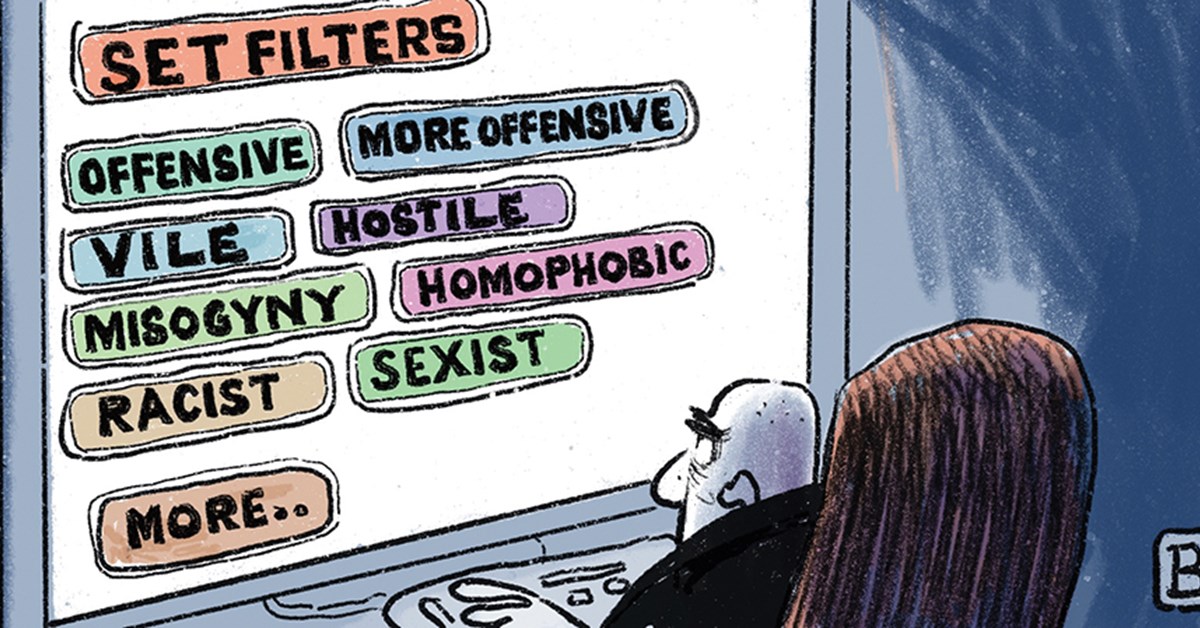
IT IS no secret that the world of social media is a cesspit of misogyny and violence against women, from influencers such as Andrew Tate to AI chatbots such as Grok creating non-consensual sexually violent images of real women (News, 16 January). One in nine tweets received by female MPs is abusive.
It is worrying that misogyny has also crept into Christian spaces, mostly, but not exclusively, targeting female clergy, and often perpetrated by people who claim the name of Jesus. A study from 2019 found that 68 per cent of the clergy surveyed had experienced verbal abuse, and that female clergy were more likely to be threatened by an active church member or parishioner. All indications are that, in the past seven years, this situation has worsened, particularly in terms of online abuse. What happened to Christ’s exhortation “By this all will know that you are my disciples, if you have love for one another” (John 13.34-35)?
Some of those opposed to women’s ordination seem to feel free to disregard Christ’s command to treat their sisters in Christ with love and respect, on the grounds that their theological disagreements disqualify them from being considered fellow Christians. We are not called to always be in agreement, but we are called to love one another, even when we disagree.
I am not talking about simple disagreement with the ordination of women. Many people disagree with this, and still manage to do so without becoming abusive. I am talking about comments such as: “Satan in a skirt”; “Didn’t know Shrek was a clergy man”; “Could have chosen a photo which doesn’t make her look like a crackhead”; “Is this a trans priestess or a lesbian”; “My God, she’s ugly”; and “Who is that guy?”
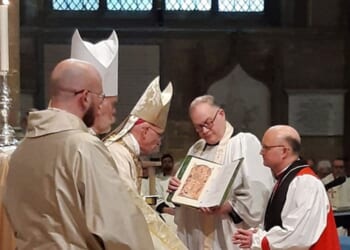
These are all comments taken from the Church Times Facebook page underneath an article containing a picture of a female bishop (The paper is investigating how best to address this — Editor). It is also impossible to ignore the nasty transphobic and homophobic comments here, although the priest in question was neither transgender nor gay. It seems that the penchant for abusing women often goes hand in hand with abusing LGBTQ+ people. The same principle applies: whether or not we believe that homosexuality is sinful, there is no excuse for personal attacks. This is not Christlike behaviour.
THIS kind of behaviour reveals that, for such people, the root of their objections to the ordination of women and same-sex marriage is not the Bible or religious conviction: it is hatred. It is no different from the hatred that once opposed interracial marriage, slavery abolition, and civil rights, and today opposes immigration.
Perhaps the growing misogynistic, homophobic, and racist sentiment in wider society has made Christian misogynists, homophobes, and racists feel that they no longer need to hide behind their faith, no longer need even to pretend to care what Jesus says about how we should treat those whom we do not like. At least we can appreciate their honesty.
But that does not mean that we should tolerate it — not in Jesus’s name. Recently, the Revd Chantal Noppen asked a question in the General Synod about what steps were being taken by the Archbishops’ Council to “moderate misogynistic, demeaning, or threatening comments directed at ordained women on official Church of England social media platforms”. She pointed out that “routine toleration of hostile and belittling online behaviour causes real pastoral and vocational harm — including discouraging vocations, normalising abuse, and creating unsafe environments”.
She is right. It may be tempting to simply advise women to “ignore” online abuse, quoting the old adage “Sticks and stones . . .”; but we know from various bodies of research that there is a strong correlation between online and offline violence against women. These comments normalise sexism and empower misogynists, some of whom will go on to perpetrate physical violence and domestic abuse.
THE Church has a duty of care not only to its female clergy, who are directly affected by these comments, but to members of the wider society who are influenced by them. It is good that the Archbishops’ Council said, in reply to Ms Noppen’s question, that unacceptable comments would be removed from the C of E’s official social-media accounts; but more needs to be done.
Removing this content helps to curb the spread of misogyny, but the beliefs and attitudes that lead to it in the first place need to be tackled. We need to be talking from our pulpits, and in all our communication, about how we are called to live differently, called to honour and cherish one another, called to recognise the image of God in everyone.
We need overtly to teach those men in our churches who feel free to make derogatory comments about women’s appearance that those women are not only God’s precious daughters: they also bear the actual image of God. We need to name abuse, and teach that it is unacceptable and the very antithesis of Christ’s teachings. We need to ensure that love, and only love, permeates our churches and our online spaces.
Sally Hope is a writer who specialises in faith and domestic abuse. She is the author of No Visible Scars (Books, 7 November 2025), and the creator of Always Hopeful, a recovery programme for Christian survivors of domestic abuse.