Return to Cair Paravel
THE second Narnia story, Prince Caspian, tells of the children’s return to Narnia. It opens with them sitting at a railway station awaiting the trains that will take them back to their boarding schools for the start of term, when suddenly they are transported instead back to Narnia.
As they take stock of their surroundings and try to make sense of what has happened, they stumble across some apple trees and the ancient ruins of what was once a castle. It takes them some time to recognise the ruins as the remains of their own Cair Paravel, since only a year has passed since they left Narnia, and the ruinous state of the castle implies a much longer time. As the realisation begins to dawn on the children, they feel a sense of nostalgia for their past life as kings and queens of Narnia, recalling the happy times they spent with the fauns, giants and mer-people.
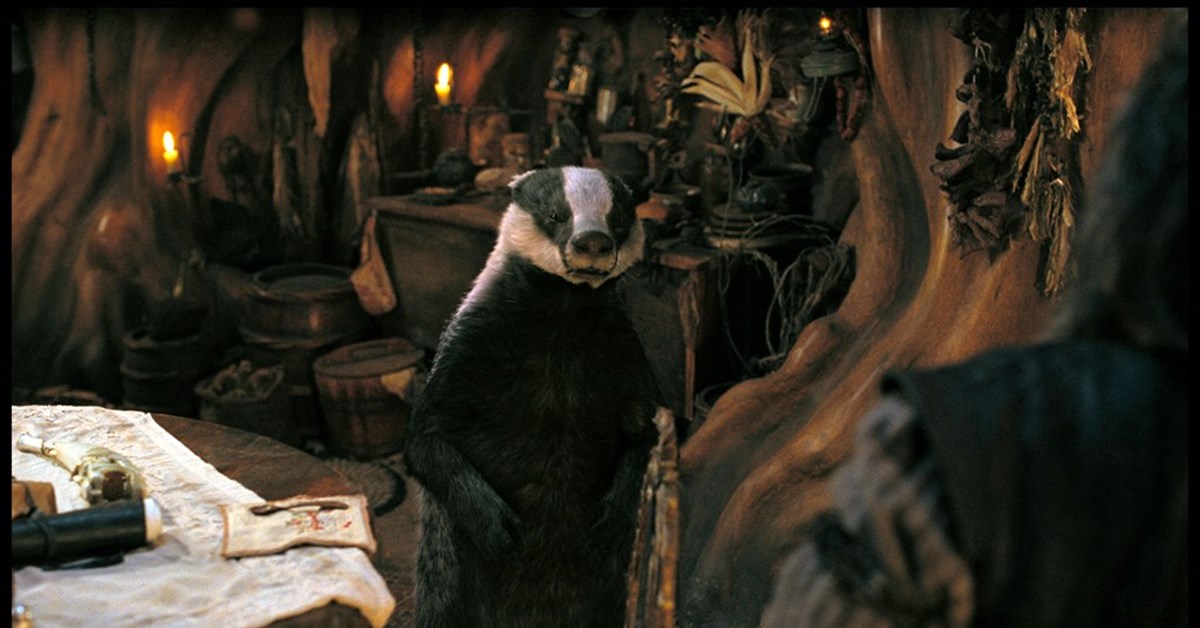
THIS description of the destruction of Cair Paravel and its reduction to rubble provides an effective contrast with the constancy of the stalwart badgers that the children meet later. As the badger Trufflehunter retorts to Nikabrik: “You Dwarfs are as forgetful and changeable as the Humans themselves. I’m a beast, I am, and a Badger what’s more. We don’t change. We hold on.”
But more important than their staying power are the badgers’ memories and their faith in the promise that there is a true king of Narnia who will return to restore it to its former glory. Trumpkin scornfully dismisses such fabulous old tales about King Peter reigning at Cair Paravel, but Trufflehunter doubles down in his certainty that such stories are true: “I believe in the High King Peter and the rest that reigned at Cair Paravel, as firmly as I believe in Aslan himself.”
This cuts no ice with Trumpkin, who simply mocks the idea that anyone nowadays should believe in such a figure. But Prince Caspian himself comes to Trufflehunter’s defence, asserting his own belief in Aslan and pointing out that many humans don’t believe in Dwarfs and talking animals, “Yet there you are.”
HERE, Lewis is asserting the importance of stories for communicating truths, and the danger of dismissing them as feigned nonsense. The 1300 years that have passed since the reign of the Pevensie children means that they have once again taken on a mythical status among the inhabitants of Old Narnia. The beasts have no evidence of their existence, nor that of Aslan, but nevertheless they have faithfully passed on the stories through the generations and held fast to the truths they communicate.
Trufflehunter’s assertion of his faith is a kind of creed, which summarises the key tenets of his faith: “I believe in the High King Peter and the rest that reigned at Cair Paravel, as firmly as I believe in Aslan himself.” We might compare this statement of belief with the Apostles’ Creed and its opening statement: “I believe in God the Father almighty, maker of heaven and earth.” The tendency for such stories to be dismissed as merely myths or fairy stories, recounting fabulous adventures of fantastical beasts like human beings, is an important reminder of the value of the stories of the Bible for continuing to transmit the Christian faith to new generations in a society where such tales are frequently dismissed.
IT’S not just the stories that are important in passing on the Christian faith: it is also the people. The passage we have considered provides an effective contrast between the transitoriness of humans, and the edifices that they build, and the steadfastness of the badgers.
Where human rulers come and go, badgers remain. Where humans build impressive castles made of stone, these tumble down and become ruins. And yet the networks of underground tunnels built by the badgers continue to be occupied centuries later. As Trufflehunter says, badgers are not like humans: “‘We don’t change. We hold on.”
Reflection Are we guilty of being changeable in our faith, failing to hold on to the truths that led us to faith in the first place? Can we learn from the steadfast badgers, clinging on to those truths even when the world around us rejects them?
Read John 20.29 (NIV): “Then Jesus told him, ‘Because you have seen me, you have believed; blessed are those who have not seen and yet have believed’.”
Professor Simon Horobin is Fellow and Tutor in English at Magdalen College, holding the position that C. S. Lewis held at the college, and has lectured and published widely on Lewis and J. R. R. Tolkien. His latest book is C. S. Lewis’s Oxford (Bodleian Publishing).
This is an extract from Wardrobes and Rings: Through Lenten lands with the Inklings, published by Canterbury Press at £12.99 (Church Times Bookshop £10.39); 978-1-78622-690-7.