THE face of the Anglican Communion should not always be the face of the Church of England, and the position of President is “no longer helpful” within its life, a supplementary paper from the Anglican Standing Committee on Unity, Faith and Order (IASCUFO) suggests.
The committee’s 2024 report Nairobi-Cairo Proposals recommended changes to the structure and leadership of the Communion. One was that the Communion have a “rotating presidency” among the Primates.
Feedback on this, however, raised questions about “potential rivalry with the Archbishop of Canterbury, inconsistent geographical and/or theological diversity in the ‘face’ of the president, and potentially irregular funding and staffing of the office”. Dependency on the discernment of one archbishop was, it was suggested, outmoded in the light of increasingly collaborative and collegial patterns of ministry.
Instead of this, the new paper suggests, leadership could be shared by the Archbishop of Canterbury: “A preferable approach will be simply for the Archbishop of Canterbury to invite the regional primates (who comprise the Primates’ Standing Committee) to share his or her ministry in the Communion in a collegial way and to begin to think about formalising such an arrangement in a kind of council. This might take place over a period of 3-6 years.”
Among the advantages of this arrangement, it suggests, is that each Primate on the proposed Primatial Council “could represent the Communion (as the Archbishop of Canterbury does) in different settings, such as at the inauguration of a new province or the installation of a new primate”. The Primate would not be functioning as a delegate of the Archbishop of Canterbury.
“The Archbishop of Canterbury could continue to serve as the presumptive representative of the Communion in most ecumenical settings, even as the option of calling upon others could prove helpful.”
The practical shape of this shared ministry would need to be discerned over time by the Archbishop of Canterbury and his or her colleagues, as they grew further into cooperating with one another in this way. This might also include a review of the current configuration of the five regions.
Under the new proposals, presented at a media briefing on Monday, and which acknowledge fractures in the Communion on issues such as marriage, sexuality, and governance, the 42 Churches would no longer be “in communion with the See of Canterbury” but have a “historic connection” with it.
The leadership of the Communion “should look like the Communion”, the original report suggested (News, 6 December 2024). The paper confirms that this is an argument that “raises questions of fairness, justice, contextuality and mission, as well as questions of Anglican identity. . .
“In this way, the Communion as a whole, including the Church of England, might also continue to grow beyond its former colonial mindset and reckon with the polycentric character of global Christianity.”
The committee remains confident about its original proposal of a revised description of the Anglican Communion. Full communion, in the sense of “one holy, catholic and apostolic church” cannot be assumed by all Anglican Churches, but should be sought, the Supplement says. “Full communion with Canterbury may not always be possible for every member church. . . The Church of England cannot carry the faith of the Anglican family, nor should it be asked to do so.”
The committee reiterates that these proposals would “enable us to shed some of the baggage of colonialism while celebrating a shared theological and sacramental inheritance, to which the ministry of the Archbishop of Canterbury bears witness. And it will encourage all Anglican churches, even amid serious disagreements, to speak and embody a word of hope and healing in a world riven by violence and despair.”
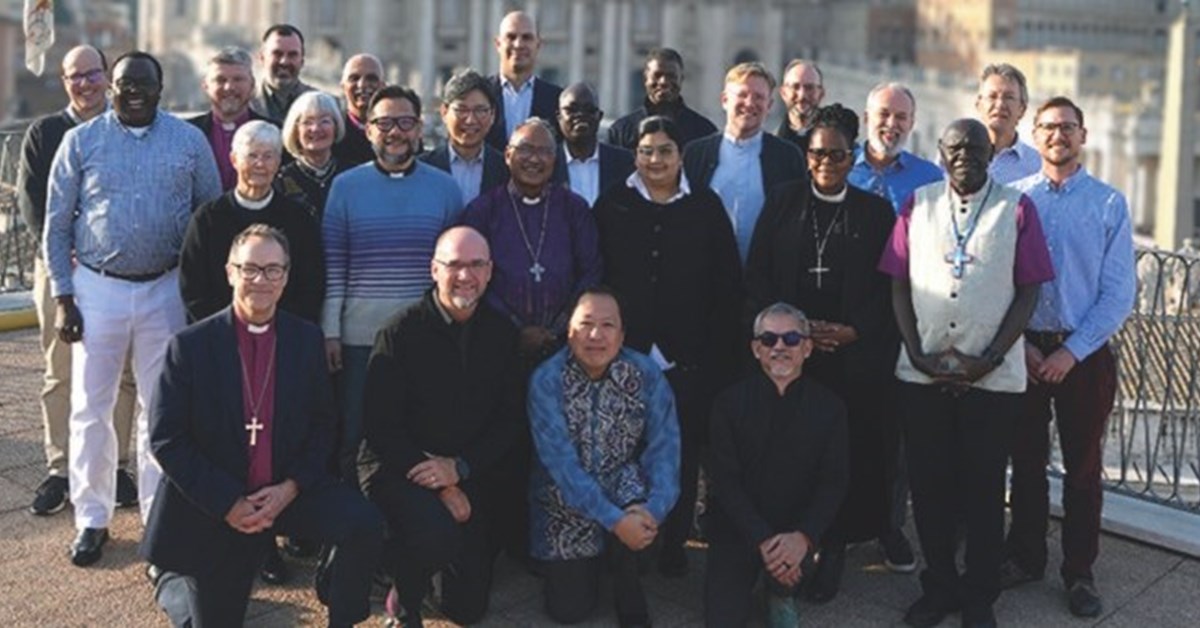
The chair of IASCUFO, the former Bishop of Kensington, Dr Graham Tomlin, described the proposals as “a new way of trying to address issues that have been part of a long, ongoing conversation . . . hopefully keeping us together as a Communion and avoiding damaging divisions . . . while at the same time acknowledging the depth of the disagreements amongst us.
“I think the history of the Church tells us that when we do any kind of radical walking away, it’s very hard to mend those walls.”
The proposals are to be put to the Anglican Consultative Council (ACC) at its June-July meeting in Belfast.
The Archbishop of Canterbury said that she was looking forward to this meeting and that, “In a fractured world, and an often divided church, the Anglican Communion is such a profound gift. As I begin my ministry as Archbishop of Canterbury, I am so grateful for this global community of Anglicans, all bound by our shared faith in Jesus Christ.”