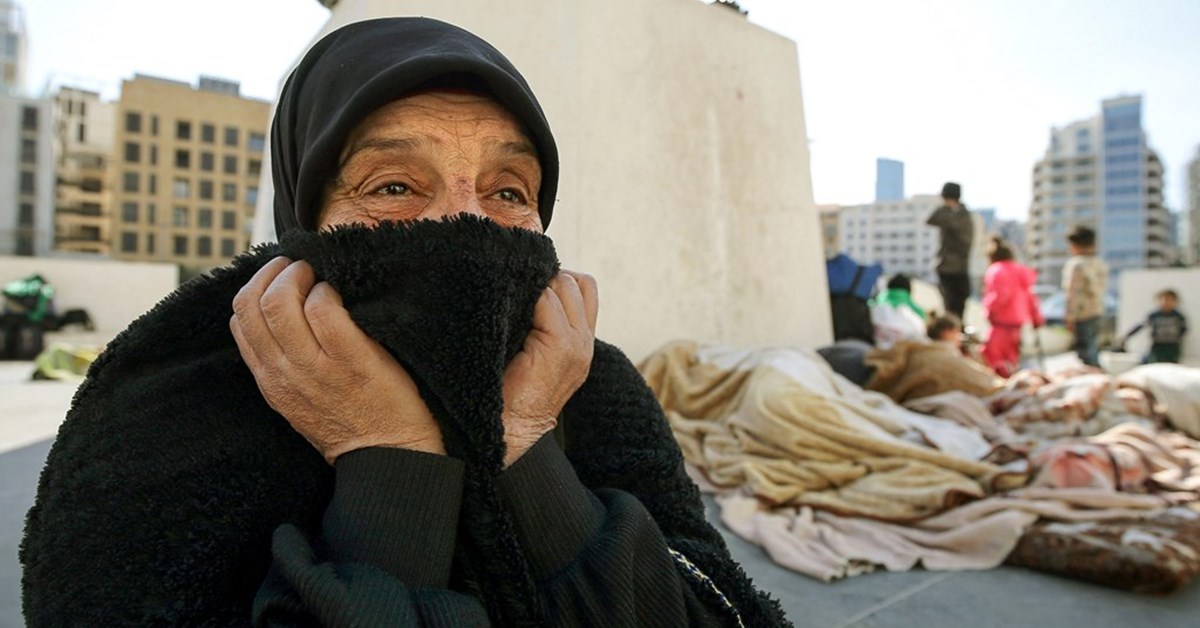
CHILDREN are “bearing the brunt” of escalating violence in Lebanon, UNICEF warned on Tuesday.
In the past 24 hours, almost 60,000 people — including 18,000 children — had been newly displaced, adding to the tens of thousands who had already fled their homes in recent years. On Wednesday, the government announced the closure of all schools.
On Tuesday, Serop Ohanian, director of the Karagheusian Association, which runs a medical centre in Bourj Hammoud, a northern suburb of Beirut, described the situation in Lebanon as being as “bad as it could be. . . We are still in a deep, dark tunnel that we are not able to see the end of. War, displacement, hopelessness, what can I say? . . . We don’t know what will happen; so we are all anxious. People are anxious; they are fleeing their homes.”
On Wednesday, Christian Aid reported that its partners in southern Lebanon had said that the latest displacement had been “so severe that it is proving impossible to evacuate priority cases, such as older people with disabilities and chronic health issues”. There was “no space left in Beirut’s shelters”.
A ceasefire with Israel announced in November 2024 has been repeatedly broken. Since Monday, the Israeli army has conducted military strikes across the country, after Hezbollah fired rockets at Israel in the wake of the weekend’s Israeli and US attacks on Iran.
The Karagheusian Primary Healthcare Center is serving people, including children and pregnant mothers, who have fled the south of Lebanon and southern Beirut. Its mission was to offer affordable primary care to “every human being, Lebanese or non-Lebanese, refugee or not, Christian or not”, Mr Ohanian said.
“They are knocking on our floors and our job is to be available, open our doors and provide care. . . Just being there, being available, saying ‘You know what, we are here we are here to help.’”
The centre offers services including dental care, mental-health services, and support for chronic conditions. But it is also providing basic humanitarian support, enabling people to fill up water bottles and to charge their phones with electricity generated by its solar panels.
“In the times of war and in the times of troubling moments, humanity prevails,” Mr Ohanian said. “Humanity surpasses all those issues that suddenly become solvable.”
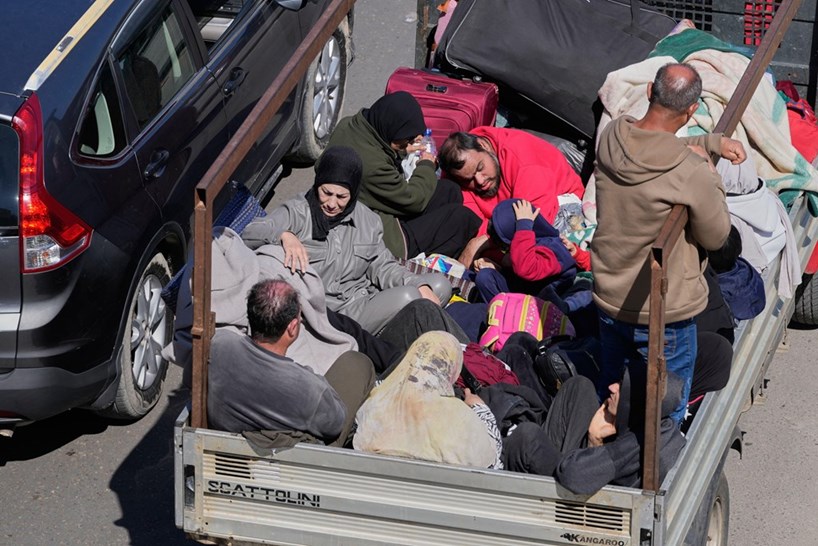 AlamyA displaced family flee Israeli air strikes in the port city of Sidon, in southern Lebanon, on Tuesday
The Karagheusian medical centre was established in 1941 with the support of the Karagheusian Foundation, a charity established in 1921 in the memory of Howard Karagheusian, an American-Armenian who died, aged 14, in the 1918 influenza pandemic. Mr Ohanian’s great-grandfather survived the Armenian genocide and settled in Beirut in 1916. It is estimated that Christians, including descendants of Armenian refugees, make up about one third of the Lebanese population.
People knew that the centre was a Christian organisation, Mr Ohanian said. Its operation was an example of the Body of Christ “walking the talk”, serving all without discrimination. “You know, they say there are four Gospels. . . The fifth one is yourself. Many people will not read the Bible, but they will see your life.”
Among those served by the centre are some of the more than one million Syrian refugees living in Lebanon. During the Syrian civil war, the centre’s caseload soared from 50 to 1000 patients a day. In the wake of the Beirut port explosion of 2020, it offered minor surgery, despite being heavily damaged.
Lebanon alone could not “bear on its shoulders this crisis”, Mr Ohanian said, pointing to the fact that refugees now made up 25 per cent of the population — the highest ratio in the world.
Lebanon is still grappling with the effects of what the World Bank described as “the most devastating, multi-pronged crisis in its modern history”, including one of the world’s worst economic crises since the mid-19th century, brought on by the accumulation of government debt (News, 1 October 2024).
Embrace the Middle East, which supports the Karagheusian medical centre and is currently hosting Mr Ohanian in the UK, reports that churches are struggling to continue to run their hospitals, schools, and social-support programmes, and that many church schools have closed.
In January 2025, a new President of Lebanon, Joseph Aoun, was elected after a two-year presidential interregnum. Nawaf Salam, a former president of the International Court of Justice, was appointed Prime Minister. The country was “supposed to enter into a brighter phase”, Mr Ohanian said. “The change that we were hoping for wasn’t fast enough. . . However, on the ground, we have seen good changes.”
He grew up during the Lebanese civil war and has described in an Embrace podcast how being saved at the age of eight by his school principal after his school was attacked was the “first seed” of his humanitarian work. The centre has operated through decades of what Mr Ohanian describes as “war, rumours of war, civil war, all types of definition of war”.
“I have lived through it. I have learned from our parents, our forefathers, how to survive and thrive, how to be resilient,” he said. “I have seen death around me, however besides that I have learned and gained experience by exercising my Christian faith.
“Whatever we have learned through the Bible, we are living it . . . The Apostles were scared and terrified and didn’t know what tomorrow would bring. We say, ‘it’s as if it’s written for me.’ The Bible verse that says the peace of God that transcends all understanding may guard your heart and your mind in Christ Jesus. These are the words, the promises, that we are circling around.”