IN 1992, just after the end of the Cold War, the American political philosopher Francis Fukuyama published a groundbreaking book, The End of History and the Last Man. In it, he argued that, with the emergence of Western liberal democracy, human societies had reached the final stage of their evolutionary history. There would be “no more history”, because the American model would be copied universally, bringing an end to rival ideologies and war.
The thesis was always controversial and was much challenged. Less than a decade later, 9/11 might be thought to have delivered a fatal blow to Fukuyama’s argument, but he continued to refine and reformulate his views. He did concede, however, that the end of history could well be delayed — not so much by religious ideology as by the growing economic and military power of China, as Russia tagged along in the background.
Part of the criticism of The End of History was that it was over-reliant on certain forms of Christian apocalypticism which assume that that “the Kingdom” will emerge out of the historical process. This has often been a theme of Christian prophecy and hope. During the various crises of 17th-century England, there were many who expected the imminent return of “King Jesus” and the establishment of a new and just social order.
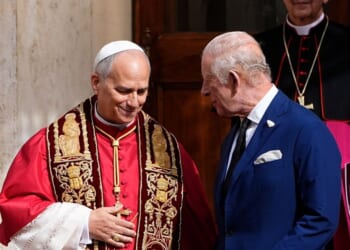
It would not be unfair to suggest that some contemporary Christian teaching faintly echoes such themes in the name of justice, peace, anti-racism, sex and gender equality, and climate preservation. It is as though the “correct” way for human beings to live and manage their lives really did lie just round the historical corner, and would become actual when we came to our senses, without, of course, abandoning the democratic process.
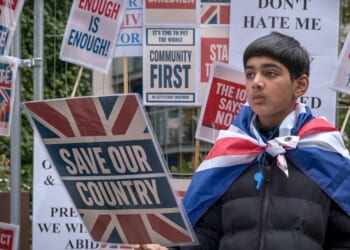
What Fukuyama never quite dealt with was the way in which the democratic process itself might lead to outcomes different from the one that he envisaged — democracy led Western nations to become more nationalistic, divided, and authoritarian — and that we would all be affected by religion-inspired ideology, such as the one that had already taken over Iran more than a decade before The End of History was written.
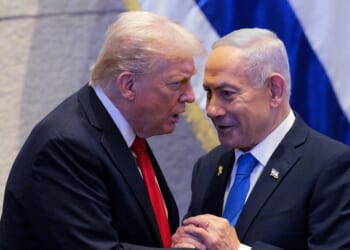
On Sunday, as American and Israeli missiles rained down on Iran, and the Iranians counter-attacked, I preached a sermon that I was not expecting to preach. The Gospel was from John 3, and should have led me to the familiar themes of Nicodemus’s dialogue with Jesus and the paradox of Christian regeneration.
Instead, I found myself drawn to the image of the wind blowing where it will, and to how we hear it without knowing where it is coming from or where it is going. The gospel is not a panacea, and the Kingdom does not come with warning “Signs to be observed”. Never has Christ’s instruction not to be anxious seemed harder to fulfil, or more important.