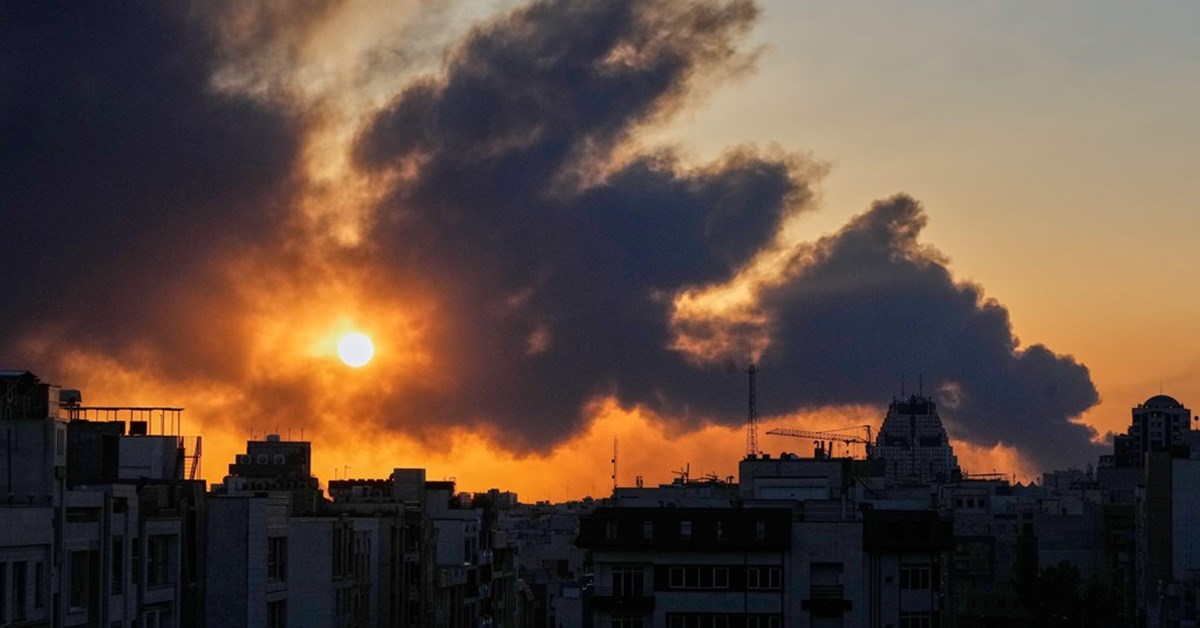
FOUR global Church networks, representing hundreds of millions of Christians, have issued a joint call for peace in the Middle East as the conflict continues. The death toll across the region is reported to have reached at least 1100 people.
The Christian groups expressed their “deep sorrow” and called for multilateralism and “the peace the world longs for”.
A statement from leaders of the Anglican Communion, the Lutheran World Federation, the World Communion of Reformed Churches, and the World Methodist Council said: “We are profoundly dismayed at the international community’s failure to prevent these tragedies. Instead of pursuing the difficult but necessary paths of diplomacy and dialogue, nations have increasingly resorted to military solutions, pouring vast amounts of resources into arms rather than into peace processes and humanitarian assistance for the vulnerable.”
It continued: “Justice demands that perpetrators of violence and the individuals and countries responsible for atrocities and violation of international law must be held accountable for their actions. The victims of their actions must be heard, and their dignity, rights, lives, and livelihoods must be protected.”
The statement came as tensions continued to rise in the region following the killing of Iran’s Supreme Leader, Ayatollah Ali Khamenei, at the weekend after joint strikes on Iran by the Unites States and Israel. The US Defence Secretary, Pete Hegseth, said on Thursday that “firepower over Iran and over Tehran is about to surge dramatically”. Israel also launched major strikes on Lebanon this week and ordered the evacuation of 500,000 people from southern Beirut.
The Christian leaders’ statement was signed by the Secretary General of the Anglican Communion, the Rt Revd Anthony Poggo; the General Secretary of the World Methodist Council, the Revd Dr Reynaldo Ferreira Leão Neto; the General Secretary of the Lutheran World Federation, the Revd Dr Anne Burghardt; and the General Secretary of the World Communion of Reformed Churches (WCRC), the Revd Philip Vinod Peacock.
It stated: “We are witnessing the devastating impact of violence and war on countless individuals and communities around the world. In response, through our ongoing work and the ministries of our churches and partners on the ground, we are engaged in concrete actions of solidarity, humanitarian aid, and peacebuilding.”
It also warned: “The world is approaching a dangerous tipping point — a time when violence becomes the norm and death and suffering of people and communities condoned.”
The leaders reaffirmed their “strong commitment to peace, in a world increasingly amassing arms, and accepting destructive conflict as inevitable” and hoped for a peaceful world in which every person and nation acted “with justice and respect for international law”.
“The peace the world longs for is not only the absence of wars, nor one which is enforced by coercion and dominance. It is not to be brokered by the highest bidder. Peace is not for sale. It is a peace which includes justice and which transforms our collective culture. Peace is the presence of justice, dignity, and flourishing for all God’s children.”
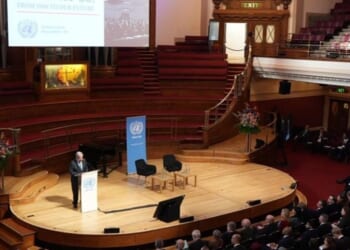
The leaders stressed their support of “multilateralism — countries of the world pursuing a common goal of justice, peace and sustainability, based on principles of inclusivity, equality, and cooperation. This is the foundational role of the United Nations. . . This path of diplomacy, mediation, and international law is sadly too often undermined.”
The statement went on to highlight the context of the Lent season: “a cycle of reflection which includes suffering, fear and the destruction of what is good.
“Our Christian faith teaches us that such times can be faced with courage and integrity; the way is not easy, but renewal and recreation are possible. We call on national governments, regional intergovernmental bodies, the United Nations, international organizations and all stakeholders to invest in peace, not war.”
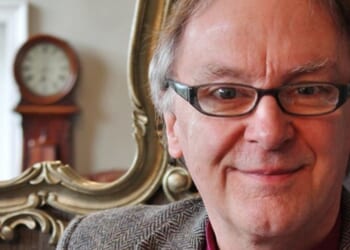
Earlier this week, the former Archbishop of Canterbury Lord Williams told the Church Times that the current military action “poses serious threats to any secure short-term future in the region” (News, 4 March).