FINANCIAL controls were dismantled, and trustees were “disempowered”, in Bangor diocese, a review of the situation over the five years before the previous Archbishop’s resignation has found.
The independent governance review of Bangor Diocesan Board of Finance (BDBF) and Bangor Diocesan Trust (BDT), published on Friday, was told by trustees that it had became apparent that “they should not challenge what was being done because it was already agreed, and dissent would not be appreciated.”
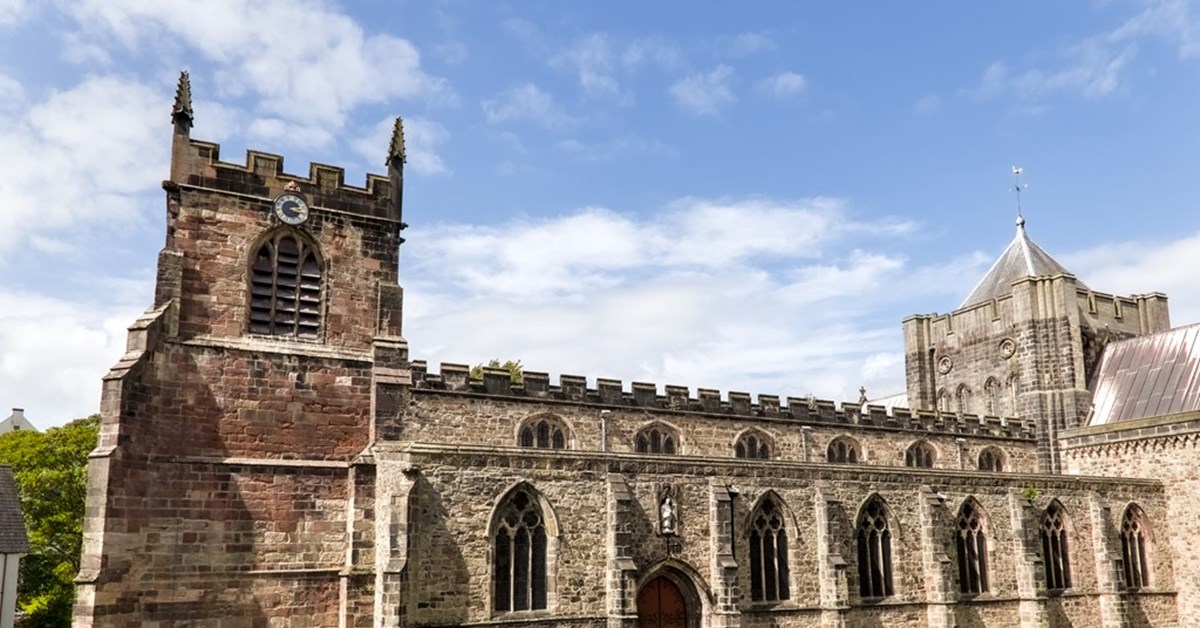
During the period studied — the five years leading up to the retirement as Bishop of Bangor and Archbishop of Wales of the Most Revd Andy John, in 2025 — several serious-incident reports were sent to the Charity Commission relating to Bangor Cathedral (News, 14 May 2025).
A Visitation and safeguarding audit heard about “weak financial controls” and was told that there was “no protection for those raising concerns” (News, 3 May 2025). Archbishop John announced his retirement in the wake of its publication, apologising for “errors of judgement” (News, 27 June 2025)
The independent review, commissioned by the BDBF and BDT, explores “what allowed governance to break down or be broken down”. It is not, the reviewers write, “about attributing fault to individuals, or to exploring the intent behind actions, whether collective or individual”. Individuals are not named, but the roles and periods during which events took place are listed.
Archbishop John is referred to as Bishop1. Canon Siôn Rhys Evans, who is referred to as DS1, was appointed Diocesan Secretary in 2013 and the company secretary of both the BDT and the BDBF. From 2021, he was also a trustee, Canon Treasurer, and Sub-dean of the Cathedral, effectively fulfilling the office of Dean, which was vacant. He stayed in both posts until February 2025, when he stood down, having been away from his duties since February 2024.
At the heart of the review is an exploration of the “conflicts of interest” created by this set-up, “compounded by funding going from the BDBF and BDT to the Cathedral Chapter, so leaving someone in both roles as leading both grantee and grantor”.
The reviewers write: “A, if not the key element in a well-run and financially sound diocese is the dynamic balance between a Bishop’s vision and the critical friend he or she has in the Diocesan Secretary and the BDBF. . .
“That did not happen here. The Board of the BDBF was not a critical friend, and was in practice chaired by DS1 or Bishop1, with their appointing other clergy as Chair with the explanation that they were to be Chair in name only.”
Among the factors that “compounded the risks” posed by this structure were the fact that “proper and necessary internal controls were dismantled — whether deliberately or not we cannot tell”.
The review reports that “decisions were being made without adequate analysis and supporting information, perhaps notably financial information and budgets going to the Board. . . Matters of financial impact were noted or decided-upon at Bishop’s Council . . . and then either taken to the trustees as matters already decided, or not taken to the Trustees at all, leaving trustees not on the Bishop’s Council oblivious to key financial commitments.”
It records that DS1 “appears to have been making material financial decisions alone or perhaps with the support of Bishop 1 without appropriate delegated authority, so not involving the trustees”.
The DBF is expected to have a majority lay membership and a lay chair, the review says. But in Bangor, members of the laity “severely outnumbered by those in Diocesan clerical leadership roles”. They made up just four of 13 trustees for much of 2023, falling to just two for most of the second half of 2024.The clergy on the Board were solely from managerial positions in the diocese.
“The laity naturally tended to defer to clerical authority outside the boardroom and let that come into the Boardroom, and they too often faced a wall of agreement from the clerical leadership which was combined with insufficient information or insight presented to meetings to be able to scrutinise and challenge,” the review states.
The reviewers write: “We have heard that it was apparent to those around them that they should not challenge what was being done because it was already agreed, and dissent would not be appreciated. That messaging and the lack of induction and training of, and information given to, trustees left staff, and trustees, disempowered and reluctant to challenge what might be going on.”
On the few occasions staff attended Board meetings, they were rarely expected to speak while the papers they had prepared were “habitually heavily edited or summarised by DS1 and the originals not presented to trustees”.
Habitually, annual budgets and forecasts were not prepared, while monthly or quarterly management accounts were “not taken to the meeting in a meaningful format or with acceptable detail”.
The review says that “real progress” has been made since 2025, including the appointment of a DBF lay chair who “seems to be widely trusted”. Trustees are “able to contribute to discussions”, and the Board has established a group to develop a three-year financial plan for the two charities.
Challenges remain, however. The cathedral’s finances are “difficult”, the review says, “and it has been left with a debt to the BDBF that will take a time for it to clear.” It warns that it likely to be necessary to have “costs cut in some areas”.
Last September, the Chapter confirmed that five out of eight members of staff were at risk of being made redundant or having their posts discontinued owing to “financial pressures” (News, 5 September 2025). It had already been confirmed that the Chapter had agreed to pay back funds spent by the diocese which should have been borne by the Chapter (News, 16 May). There was also acknowledgment of “inadequate consultation and information” about expenditure of £418,000 on new furniture for the cathedral.
The review’s key recommendation is that the BDBF and BDT should be merged into a single entity, using one of the two previous charities as the relevant body. It was carried out by the charity specialists Jim Clifford and Alice Hulbert of Sonnet Advisory & Impact.
On Friday, the chair of the DBF and BDT, Hywel Parry-Smith, welcomed the review and said that its recommendations had been accepted in full.
The review drew on 32 interviewees, but did not interview Canon Rhys Evans. The reviewers write: “it is our opinion that to do so would not contribute to establishing what the Trustees should do to establish good standards of governance across the BDBF and BDT.” Bishop Andy John was interviewed.
Last month, it was announced that the diocese had been unable to appoint an interim Bishop of Bangor (News, 27 February). A permanent replacement is now being sought.
On Monday, a retired priest in the diocese said: “For many of us we had an idea that things had gone wrong. Now we know. It seems action is being taken to put things right. They don’t blame anyone, but it is clear that some individuals have serious questions to answer and should be held to account. Is that going to happen?”
Last year, the Archdeacon of Meirionnydd, the Ven. Robert Townsend, told the Governing Body: “A desire from one person for almost total control is never healthy, and it would become a theme in our diocese. If you want to control something, allow chaos to reign underneath you and ensure the only way to get an answer is through yourself” (News, 28 February 2025).