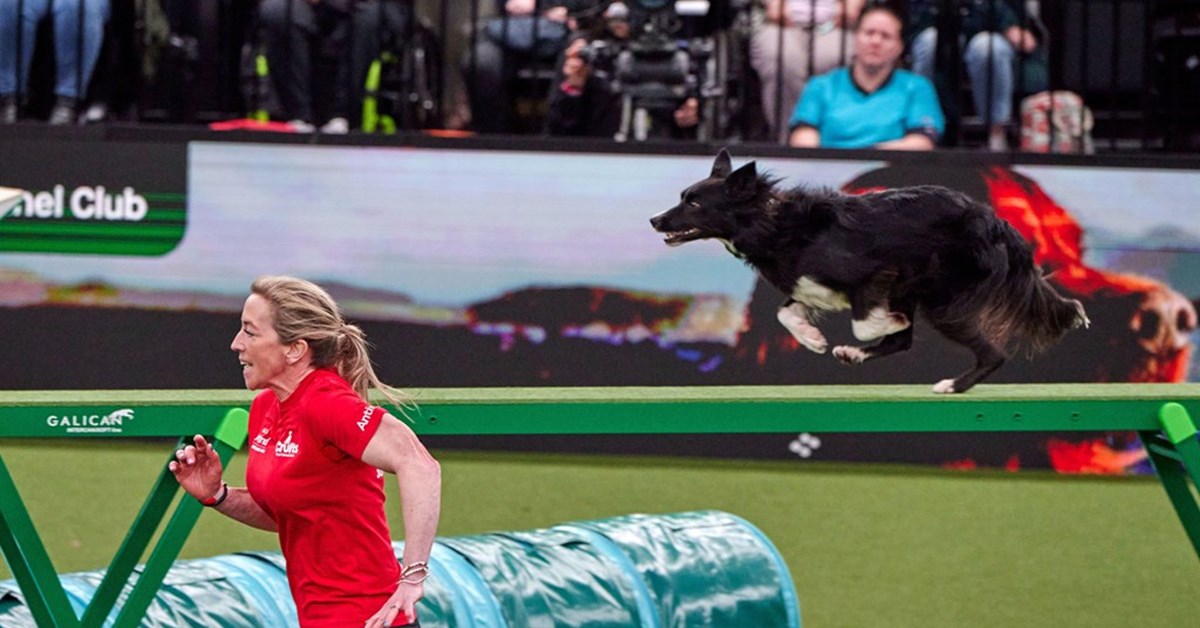
IT IS the most wonderful time of the year: not Lent — although I am having a blessed one so far. No, it’s Crufts (Channel 4, Thursday to Sunday). The annual dog show returned for a four-day canine bonanza, beamed to our screens from the NEC in Birmingham. At the helm was Clare Balding, but this year she was joined by Claudia Winkleman, who brought zany enthusiasm to the event, as well as a glossy hairstyle that wouldn’t look out of place on some of the show benches.
If you are of the opinion that Crufts is a byword for controversy and elitism, you couldn’t be more wrong. As the coverage ably demonstrates, this is an event committed to dog health and welfare and encouraging good practice. Not every dog gets to win, but every owner gets to go home with the best dog.
A teenager, Molly Russell, took her own life in 2017, just before her 15th birthday. An inquest in 2022 directly implicated the part played by social media in her death, referring to posts that she had viewed in the six months before she took her life — content about self-harm, suicide, and depression, all fed to her by an insidious, rapacious algorithm. Molly vs the Machines (Channel 4, Thursday) documents the fight for justice by her father, Ian, particularly his battle to force Big Tech companies to take responsibility for the content on their platforms.
The documentary deploys a dramatised, chilling AI mock-up to tell parts of the narrative, one that is bigger than Molly’s tragic story. Its roots go back before she was even born, to the late 1990s: the story of how Big Tech came to dominate and manipulate all of our lives. In 1997, Bill Clinton gave an address about the burgeoning, snowballing power of the worldwide web — something that had contained just 50 websites when he first became President in 1993. Portentously, he said: “We want to encourage the private sector to regulate itself.”
Mr Russell is clearly a brave and principled man, using the terrible circumstances of his daughter’s death to achieve some good, in a world shaped by the unchecked power of Big Tech. It is a world in which a teenager’s misery was collated, logged, and leveraged for profit. The Meta founder, Mark Zuckerberg, said last year that, to prioritise free speech, they would have to “catch less bad stuff”.
With this callous attitude, it is hard to see how, despite the best efforts of people such as Mr Russell, social media will ever be safer for teenagers — or, indeed, for anyone. This is something that the Church might want to consider as the diocesan exodus from X continues, allegedly for the more ethical plains of Facebook and Instagram.