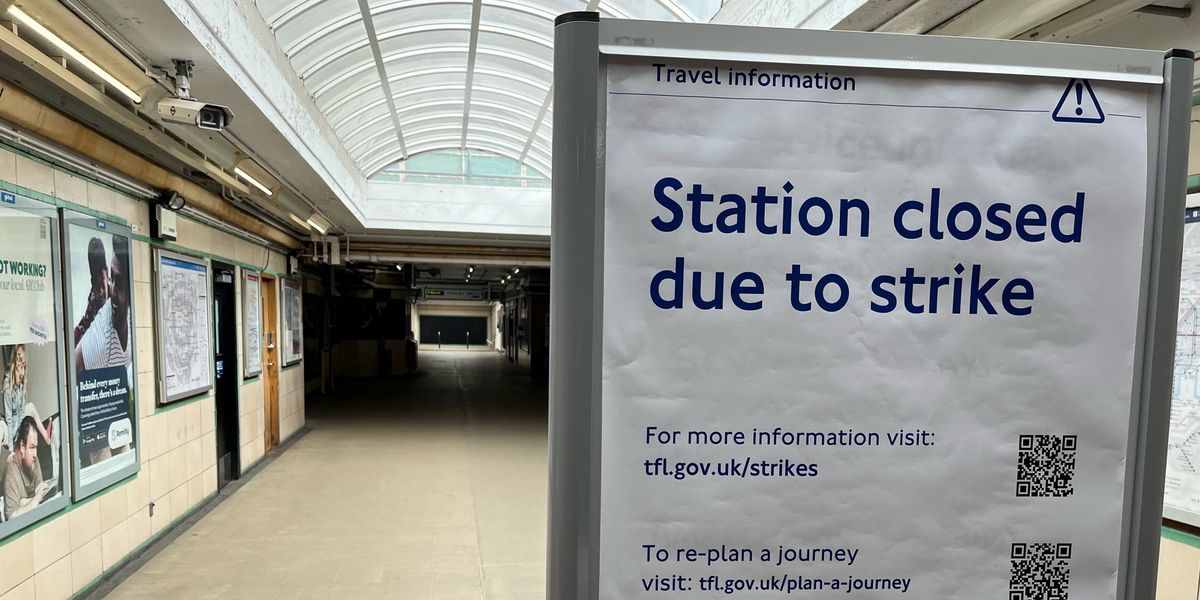
London Underground faces significant disruption this spring after the RMT union confirmed six days of industrial action by Tube drivers in opposition to Transport for London’s proposed voluntary four-day working week.
The walkouts commence at midday on March 24, with each strike lasting 24 hours.
The full schedule of action spans three months: March 24-25 and 26-27, followed by April 21-22 and 23-24, concluding with May 19-20 and 21-22.
RMT members, representing approximately 1,800 drivers, or between 40 and 50 per cent of the Tube’s workforce, voted overwhelmingly in favour of strikes last month.
TfL loses approximately £5 million daily in fare revenue during Tube strikes.
The union has also instructed its members to cease using any electronic devices provided by London Underground, including iPads.
The RMT maintains that London Underground management is pressing ahead with changes to working patterns despite clear opposition from train operators.
Eddie Dempsey, the union’s general secretary, stated: “London Underground is trying to force through major changes to working patterns that have already been rejected by our members.”

London Underground faces significant disruption this spring after the RMT union confirmed six days of industrial action by Tube drivers in opposition to Transport for London’s proposed voluntary four-day working week
|
PAHe added: “We are clear that these proposals raise serious concerns around fatigue, safety and work-life balance.”
The union’s objections centre on compressed hours that would extend daily shifts, raising worries about driver tiredness and its potential consequences for passenger safety.
Mr Dempsey emphasised negotiations had failed to produce an acceptable resolution over many months.
“There is still time for London Underground to come up with a workable solution, but we will take strike action if we cannot get a negotiated settlement,” he said.

Six dates across March, April and May have been announced that will affect commuters
|
PAThe dispute has exposed a remarkable division within the trade union movement, with rival union Aslef enthusiastically backing TfL’s proposals.
Aslef, whose members comprise roughly half of the Underground’s 3,600 drivers, views the scheme as the most significant improvement in working conditions for Tube drivers in decades.
Four-day weeks are already standard practice across the wider rail industry.
Finn Brennan, Aslef’s London regional organiser, described the RMT’s position as extraordinary.
“It is the first time in the history of the trade union movement that a strike has been called to oppose a shorter working week, with fewer hours at work,” he said.
Aslef members are expected to continue working throughout the strikes, meaning some services will likely operate despite the industrial action.
TfL has dismissed the planned walkouts as entirely avoidable, stressing that the proposed changes remain optional for drivers.
“These threatened strikes are completely unnecessary and will have a serious impact on London’s businesses and commuters,” a TfL spokesperson said.
The transport authority confirmed the four-day week would initially apply solely to Bakerloo line drivers, with those preferring traditional working patterns free to maintain their five-day schedule.
The first walkout threatens to cause considerable disruption for over 30,000 supporters attending the Women’s Champions League quarter-final between Arsenal Women and Chelsea Women at the Emirates Stadium on March 24.
Other TfL services, including the Elizabeth line, London Overground and DLR, will continue operating normally.