INTERFAITH work has failed to contain animosity between communities over the past five years, and the Church of England lacks status in Israel, an Israeli professor has suggested this week.
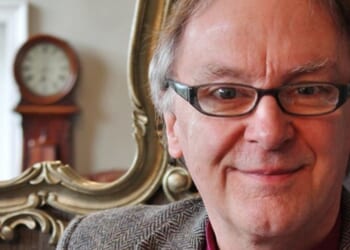
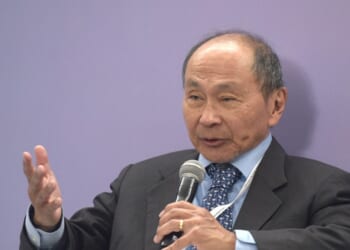
Professor Uriel Simonsohn is senior lecturer in the Department of Middle Eastern History in the University of Haifa. He spoke on Tuesday from his home in Israel.
“From my perspective, the interfaith endeavour has been somewhat unsuccessful, to put it lightly,” he said. “And it’s been unsuccessful when really we need it. Here, there is so much work around interfaith dialogue, collaboration, encounter. But go back to 2021, go back to the past two years, none of that has been effective in containing the terrible animosity between different communities, and we are in a state of complete disconnection.”
Having devoted his academic career to the study of interfaith encounter in the early and middle Islamic periods, Professor Simonsohn founded the Haifa Laboratory for Religious Studies in 2020, with a vision to establish “a model of inter-religious and inter-cultural relations for mixed cities in Israel and around the world”. Today, the centre brings together academics, civic leaders, and religious leaders to address social and civic challenges, and to promote encounter in a country with an “extremely segregated” education system.
“It’s not enough that we understand that religion can be a constructive force, that we recognise that there are various ways to interpret different religious texts,” he said. “If you realise dialogue not as an end point, but a middle point to something constructive, that would allow people to start forging connections that are based on shared goals and interest. Then interfaith could become a much more binding glue for society that is currently extremely fragmented.”
Haifa is one of the world’s most religiously diverse cities, where Orthodox, Conservative, Reform and secular Jewish congregations live alongside Muslims and the worshippers attending seven different Christian churches, in addition to the Baha’i Center and the Druze community.
The laboratory was keen to identify the “unique ingredients of the Haifa fabric that we can learn from and devise in other places”, Professor Simonsohn said. While its residents lived and worked alongside one another, education remained “extremely segregated”, and the laboratory’s work includes efforts to tackle this by going into schools. It also offers scholarships every year to 12 MA students from representative religious communities. In addition to pursuing academic studies together, they are supported in developing collaboration in practice on the ground.
The laboratory’s work has continued since the 7 October attacks, proving that interfaith dialogue could continue “at perhaps one of the most destructive moments for Jewish and non-Jewish relations”, Professor Simonsohn said.
In the UK, the Prime Minister has expressed regret that some of the interfaith work in the UK — “which we all thought was stronger and more robust than it turned out to be” — had fallen away in the wake of the 7 October attacks. Archbishop Welby suggested in 2024 that interfaith dialogue had “almost collapsed”.
Asked about the potential pitfalls that the Church of England should seek to avoid in such work, Professor Simonsohn spoke of the need to be aware of “charged terms” and avoid working in isolation.
“If the Church of England is interested in seeing lesser friction and violence and persecution of Christians in the Holy Land, then I am wondering to what extent has it partnered with organisations such as ourselves that consider protecting the rights of Christians as one of our forefront objectives,” he said. The Church needed a “local and trustworthy partner. . . It’s not enough to partner with those who we know from day one.”
In recent years, several C of E bishops have issued statements criticising the Israeli government and politicians. “I completely understand the criticism towards Israeli policies, and I completely identify with the need to side with the underprivileged, the oppressed, the weak, and that should continue to be the traditional role of the Church,” Professor Simonsohn said.
He pointed to the alternative approach taken by the Latin Patriarch of Jerusalem, Cardinal Pierbattista Pizzaballa, who in the wake of the 7 October attacks, offered himself in exchange for hostages. “It was obviously not a practical suggestion, but, as a gesture, it was a very symbolic one, a very meaningful one, and I think it was very well received by the Jewish public in Israel,” he said. “That allowed for more harsh criticism to come up down the road. . .
“I think the Church of England is failing to acquire the same kind of position in the Israeli public sphere, because it gives the impression that it’s less connected or less in touch with the variety of voices that currently prevail in our society.”
Professor Simonsohn continued: “This is is not a reality where there is a pure good and a pure bad, where there are simply two sides facing one another. This is a reality that is far more complex. There is a lot of evil in it, but there is a lot of good of compassion, while there is also a lot of bigotry. There are both, and I think people living outside in the UK and other parts have less access to these nuances.”
Professor Simonsohn spoke to the Church Times more than a week after the beginning of the war with Iran, from what he described as a “comfortable setting” with a safe room. But most Israelis lacked this comfort, he said. “The greatest challenge is not material so much as it is mental: the way, all of a sudden, life stops and everything shuts down, and the streets are empty. We don’t know what the future holds.” He described “gradations of suffering”, conscious of “people who are living in tents on the Gaza seashore”.
“We are all, at the same time, victims of a very cynical political system,” he said. “But we can work on the ground, with grass-roots-level forces. The politicians can continue turning everything that is here into fire and ashes, but we, on the other hand, are keeping something alive for the day when these politicians will go away and we will have a society to continue.”