“IT’S a gorgeous place,” Brother Felix tells me enthusiastically on Zoom from his monastery between two Worcestershire villages, where the patchy WiFi is compensated for by the views over the rolling hills. “It takes about half an hour to walk to either village. We’re up this big dirt track, and all you can see around you are fields.”
Brother Felix, aged 25, is a novice Brother of the Society of St Francis (SSF), currently at Glasshampton Monastery, a wisteria-clad converted stable block, 30 miles south-west of Birmingham. He has been moving around different Franciscan houses during his novitiate — a period of training and discernment during which he will decide if he wants to commit himself to the community for life.
Although the SSF is primarily an active order rather than contemplative, at Glasshampton “the strict rules of silence are laid down,” he explains: silence in the hallways and the cloisters, in the refectory over meals, after the evening office of compline until after the morning meeting. “The way I always like to phrase it is: to find God in the monastery and then bring God into the city.”
After graduating in filmmaking, the prospect of monetising his creativity troubled him. At the same time, he wondered: “I’ve got all this love to give, and how can I best give it?” The religious life crossed his mind; so he searched online and found that he would not have to become a Roman Catholic — a relief, he jokes, for his Methodist grandparents and Baptist mother. He began visiting religious houses and meeting Brothers, became an “alongsider” for six months, and then a novice.
While Christianity offers all believers a new identity, the religious life, he says, hopes “to find and unpack” — citing the American Trappist monk Thomas Merton — “the true self which is known and loved by God through community, and through the love of God and neighbour”. Another part of its appeal to him that, in constrast with the job market, “there’s enough room for everyone.”
Although he is renouncing relationships and family life, “I don’t mind that very much,” he reflects. “Everything that I would get from a family or a marriage I’m able to get from my Brothers: watch telly together in the evenings, share laughs, and have that real sense of community. For a lot of the Brothers here, they are a very different sort of man. There is a deep compassion and empathy, which, I think, sometimes gets lost in this generation.”
Brother Felix is not alone in wanting to explore the religious life, and, among other young people trying out a similar path, he has encountered people equally fed up with social media, consumer culture, and a “feeling of buying your identity”. “There is a dissatisfaction with the world outside: a lot of people look at that and go, ‘That’s not the life that I want to live,’ and it leads them to religious life,” he says. He observes that, mostly, “it’s urban people joining.”
NOVICES from across the communities meet three times a year at inter-novitiate study-gatherings. With them may be “alongsiders”, who move in for a while and volunteer; aspirants, who are interested in entering the religious life, but are not yet living with a community; and postulants, who move in for a few months, and have made a promise but not a vow.
Sister Alison Fry, novice guardian at Mucknell Abbey, says that professed Anglican religious in England and Wales have noticed an increase in the number of people exploring the religious life and living in recognised communities — from eight or nine last year, to 17 this year, ranging in age from 20 to 60. Of the 17, 12 are novices, and five are postulants or alongsiders (communities use different terms for what is more or less the same status).
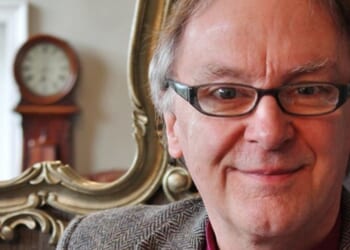
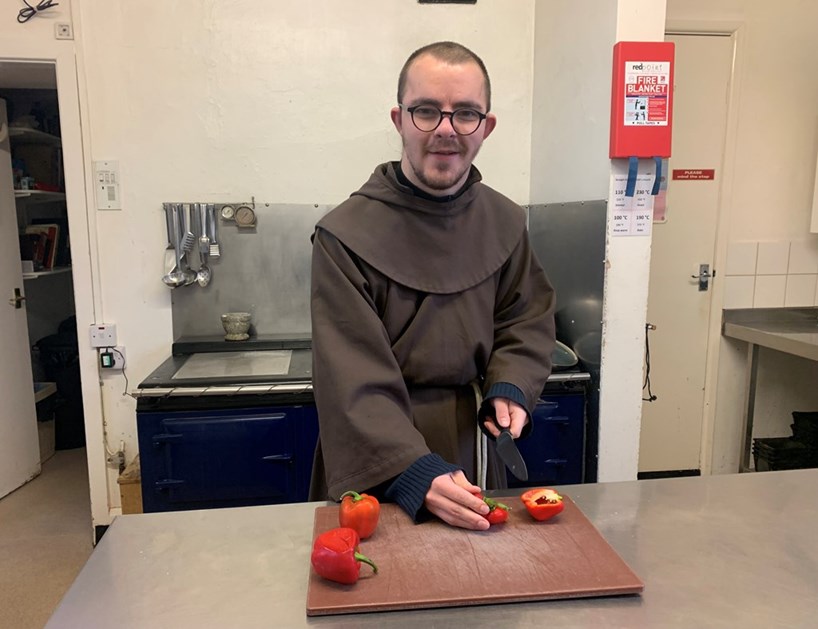 Br Peter SSFBrother Felix, a novice with the Society of St Francis, currently at Glasshampton Monastery
There are, she says, six Anglican communities with novices, postulants, or alongsiders; hers, the a Benedictine order, the Society of the Salutation of Mary the Virgin, has two, of whom one is in their twenties. Anecdotally, several Anglican religious communities in England say that they have noticed an upturn in younger enquirers, alongsiders, postulants, and novices. While younger newcomers have longer to commit themselves, many conclude during the long discernment process that taking final vows is not for them. Fr Nicolas Stebbing, a member of the Community of the Resurrection at Mirfield since 1977, said that one’s thirties was a good stage at which to enquire. “Twenty-one is too young.”
“The present buoyant numbers may as quickly fade, or — please God — continue to grow,” Sister Alison says. They make a welcome contrast to the previous ten years. Fr Colin, Superior of the Community of the Servants of the Will of God, in Crawley Down, says that, in 2016, there were 340 people living in about 35 religious communities: 250 women and 90 men. This year, however, he calculates that there are 30 communities: 158 women and 59 men: a total of 217.
What is driving some younger people to seek out religious life? Millennials (those born between 1981 and 1996, as defined by the Pew Research Center) watched the global financial crisis and their own student debt push milestones such as home ownership and having children out of reach. They have been reported as being more inclined to value purpose-driven work over well-paid work, and are less likely to have been formed by religious beliefs in the home.
After growing up with the internet, selfies, and a pressure to define themselves, besides having to navigate the unreliable connectedness that Facebook and Instagram have to offer, they prioritise mental well-being. The religious life, with its unchosen community and chosen restrictions, its inward focus and stability, is offering something that they have not found elsewhere.
Members of Generation Z — born between 1997 and 2012 — are also seeking anew. Brother Charlie Annis CR, 39, the novice guardian at Mirfield, says: “We have seen an increasing number of young people coming to stay with us and enquiring about our life since the pandemic.” A common theme, observes Brother Charlie, who made his solemn profession last July, is “a sense of chronic instability in their lives and relationships — everything being fleeting or superficial”.
He continues: “Mostly, they have not been at the stage of actively enquiring about the religious life, but dipping their toe in.” But, he says, “In the past year or so, there have a been five or six young men in their early twenties who have come to us individually for a visit, or a retreat, in which they have been wanting to speak to Brothers about vocation, including religious vocation.”
ONE of two novices at Mirfield is Brother Michael, 42, from Manchester. He came to faith as an adult, and has worked in insurance manufacturing and with adults with special needs. Hearing the curate’s wife talking about being an oblate (someone linked to a religious community, but not by vows) sparked an interest in him, and he signed up for a retreat day.
He was “blown away” by what he found, having expected the Brothers to be “austere, aloof” and out of touch. “When I saw the Brothers together,” he says, “it struck me like a lightning bolt. . . I thought, ‘This is the Christian life,’ and I knew, this is what I’m missing.” He was also impressed by the impact that the retreat had on participants. “God was at work in them, the same as he was in me.”
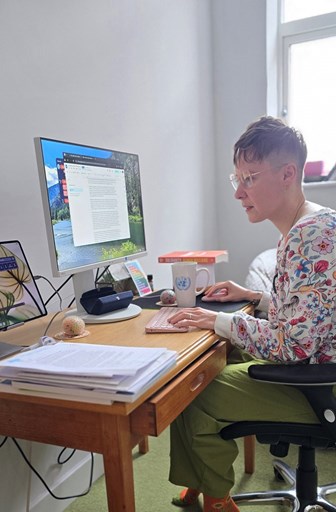 Sister Liz Dodd at the Congregation of the Sisters of St Joseph of Peace
Young people are finding out about the religious life through a mix of internet searching, social media, retreats, word of mouth, and university chaplaincies that advertise communities’ taster days. Sister Mary Clare, 33, a novice of the Community of St Francis (CSF), said that a turning point was finding the BBC2 series from 2006, The Convent, on YouTube, in which four women went to live with the Roman Catholic Poor Clare Sisters in Arundel, West Sussex.
Sister Alison explains: “Usually, individuals make contact with an individual community. They may have heard about it from their vicar, or found the community website online, or met a member of the religious community at Greenbelt, and so on.”
Brother Michael describes the balance between what he is giving up and what he is taking on. “I was already pretty much living a celibate life. Living without any future possibility of intimacy is daunting. Because every day is dictated by the offices and preparation, classes, chores, and so on, there is not a great deal of time to dwell on things that otherwise might occupy more of my mind than they do.
“The number-one thing I’m most happy to give up is having on my mind: ‘Am I in a job that I’m doing well, is it giving me satisfaction, and is it going to lead anywhere?’ What I do now is meaningful and important, has inbuilt progression, and is valued.” He says that he also values being part of a tradition that stretches back centuries and reaches across national borders.
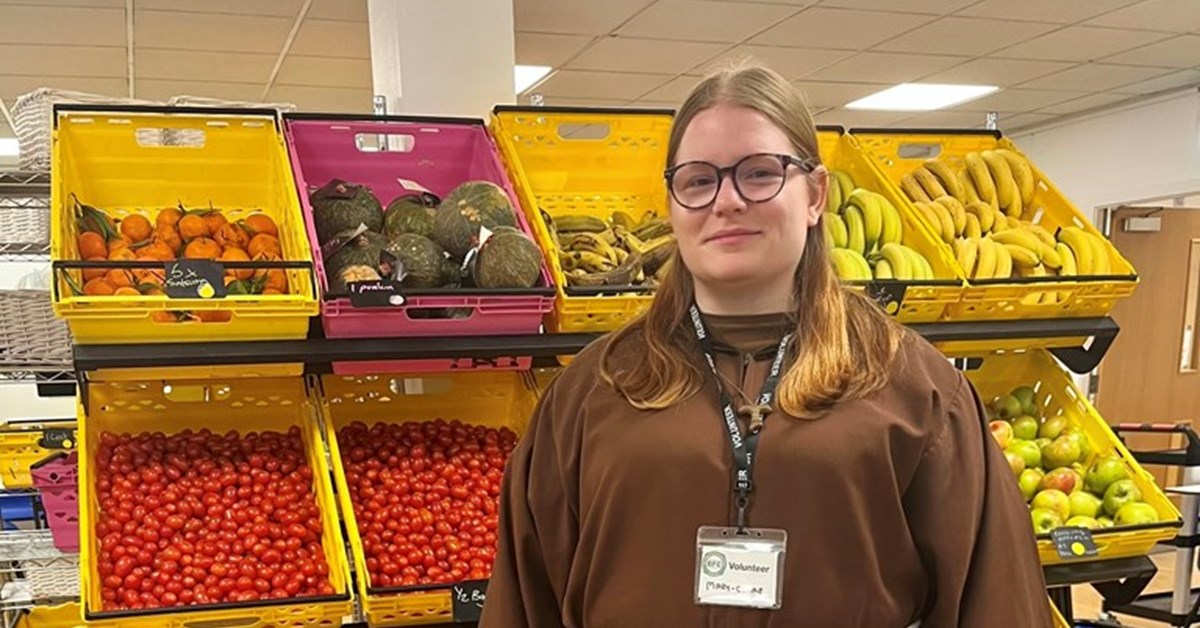
For Sister Mary Clare, 35, her journey to religious life has been an arc that has included a move from rural Australia to London at 20, feeling drawn to cathedral worship by the architecture, getting baptised and confirmed, but wanting to do more within the Church, and feeling unfulfilled working in an office making a profit for her bosses. “The Franciscans gave me an idea that I could be out there, living simply. It’s also a way of sticking it to capitalism. . . I love the fact that the Franciscans are so active, and I feel drawn to be active in the community and helping people.”
She now works at the Borough Food Co-Op, hosted by St George the Martyr, Borough High Street. She chats with users as they shop (for 16 items at £4.50), and does chaplaincy work. “It is one of the greatest privileges of my life that people feel that they can just talk to me about anything,” she says. “One guy who I spoke to recently said, ‘I know that I can talk to you because of what you’re wearing.’”
She is a fan of the Franciscan habit. “We removed the veil in the ’80s, but I like the tradition, and that’s what seems to be [what] a lot of people [are] coming in and saying: ‘I’m looking for something different and something radical, that is not like my life before.’” Women, she says, “have so many options. . . This is a radical way of life, and a radical way of giving yourself to God and service to people.”
Brother Charlie’s job as novice guardian is to oversee the formation of postulants and novices, and dispel myths. Religious life has not been well served by Hollywood, or by terrifying accounts of historic abuse by nuns in Ireland.
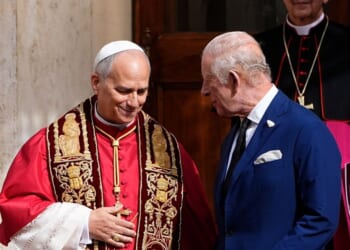
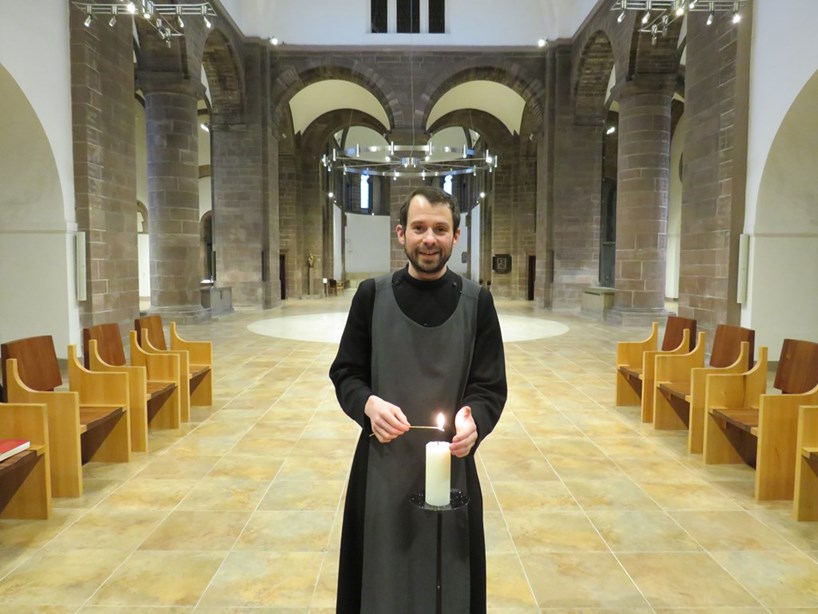 Fr Ryan Green NovCRBrother Charlie, the novice guardian of the Community of the Resurrection, at Mirfield
He encountered the monastery while training for ordination at Mirfield’s adjacent College of the Resurrection, and says that his life now involves a lot of “porridge-making, sandal-wearing; life together with a group of people I didn’t choose, and couldn’t escape, of all different ages and characters” — and a “surprising” amount of gardening. (Brother Felix says: “I’ve been given a job, and I was sure there was an old monastic name for it. It’s the cellarer, which basically means that I do the Sainsbury’s order.”)
For Brother Charlie, the new mundaneness is preferable to the old. He is pleased to give up “social media, buying clothes — in fact, having to think about clothes in general; Christmas, as we generally observe it these days — no Advent, frenetic activity and shopping, carol services until you want to die — and the relentless, irresistible acquisition of stuff”.
Access to WiFi and smartphones highlights a new challenge to the austerity and holiness aspired to in religious life. Brother Felix says that the recommendation in his community is that novices take a temporary break from social media.
ONE OF the challenges of the religious life is living with people you have not chosen. Sister Mary Clare admits that being the youngest in her community by about 20 years, and younger than most of her Sisters by about 40 years, is a mixed blessing. “We are very different in age, and we’ve come from all over the world; so we’re slightly different in culture. A lot of my Sisters are in the baby-boomer generation, which is very different. I’m a Millennial. . . A lot of things in community don’t make sense, and you just need get on with it.”
What things? “This is how we start the dishwasher; this is how we fold the tea towels.” Theology, too, although she sees that as a plus. “We generally worship in different churches because we’re all different churchmanship. . . We sort of represent the Church of England in that way. We have both ends of the spectrum and everything in between.”
There is an international dimension to this phenomenon. There have been reports that a Finnish Orthodox monastic community has grown from ten to 18 in recent years, as young men seek out certainty or conservatism; that young women are becoming Roman Catholic Sisters, especially in Ireland and the United States; that burnt-out Gen Z women are switching their phones off to spend summer months gardening and praying in a monastery; and that contemplative orders of Sisters in the US are attracting young members keen to swap comfort for authenticity and a sense of purpose.
Indeed, some religious houses are confident enough in their appeal to outsiders that they list themselves on a tourism website, monasteries.com, which says: “In today’s day of bland hotel chains and everything done in a rush, monasteries are certainly unique, and can encourage a slower, more contemplative form of travel. They are also often affordable and well located.” They warn potential visitors: “WiFi may be restricted, televisions are uncommon, and the overall atmosphere is intentionally serene and undistracted. For many guests, this simplicity is part of the appeal.”
WHAT about the challenge of changing one’s name? Some communities require newcomers to pick a new name as their name in religion if there is already a member with that name. Brother Michael says that he was grateful to be able to keep his name. Sister Mary Clare, whose birth name is Sam, wanted to change her name, and the presence of a Brother Sam in SSF, the men’s order linked the women’s order CSF, necessitated it.
Something of an identity crisis followed. “I was like, who is Mary Clare? And, actually, who is Sam, and is she still there? What does this mean? My friends and family from before will still call me Sam. . . It’s not like having two identities, but it’s hard to grapple with. I’m still becoming Mary Clare, and I will always be Sam deep down.”
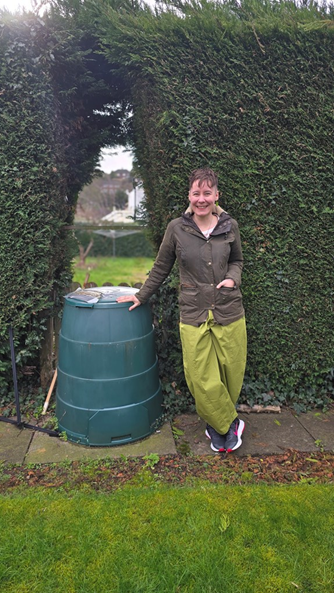 Sister Liz Dodd at the Congregation of the Sisters of St Joseph of Peace
Meanwhile, on the other side of the Tiber, the number of people entering the religious life fluctuates, but in 2024 (the most recent year for which figures are available) 44 people (17 women and 27 men) entered Roman Catholic religious communities to begin their novitiates in England and Wales. Of these novices, 23 were under 40.
Sister Liz Dodd, 39, a former journalist at The Tablet, is approaching the end of her novitiate in the Congregation of the Sisters of St Joseph of Peace. She is the youngest in her congregation by 20 or so years, and she says that its average age is 87. But she says she has found “the one” for her.
She first heard about the congregation on a peace demonstration, and spends her days hosting women experiencing homelessness, and female asylum-seekers, in her community house in Nottingham. Sister Liz has also continued her work as a journalist. In her first book, Easter in Disguise (Books, 30 January 2026), she frames Lent as “a radical, subversive season of resistance”.
She believes that “the idea of nuns” is having a moment. “I think what people have found at the heart of that idea of being a nun is, ironically enough, an independent woman, an independent, troublemaking, anti-authoritarian, woman,” she says.
She points to Lux, an album by the Spanish singer Rosalía (Arts, 9 January), which draws on “very radical female mystics” and “those three fantastic nuns in Austria who fled their care home and ran back to the convent [News, 19 September 2025]. I think what people saw was women living outside social expectations and church expectations, and that is having a moment. It’s just really nice that people have identified that with nuns, almost as a kind of Jungian archetype, but not the sort of archetype you’d expect.”
While RC religious are better known, the Revd Mark Soady, secretary to the Committee of Anglican Religious Communities in England, describes the religious life in the Anglican Communion and in the Church of England as “one of the best-kept secrets”.
It does not have to remain thus. Fr Stebbing makes a plea to the Archbishop of Canterbury, the Most Revd Sarah Mullally, and her fellow bishops: first, that they could let it be known that religious life exists, “so that DDOs and priests can direct people towards that possibility when young people are looking for some way of serving God”. Second, “It would also help if more people took Catholic Anglicanism more seriously. Religious life grows out of a Catholic understanding of Church, prayer, and sacraments. . . Religious life is fundamentally about prayer. All of our young Brothers are serious about prayer.”
Archbishop Welby made the renewal of religious life one of his priorities while at Lambeth Palace, and, in 2015, set up the ecumenical Community of St Anselm (News, 25 September 2025). Fr Stebbing describes the former Archbishop as a “good man and well-intentioned”, but he suggests that the St Anselm Community was less a monastery and more “a youth training scheme”.
The community is on hold, awaiting direction from the incoming Archbishop. Lambeth Palace said: “We are in a period of continuing discernment about the future of the Community of St Anselm (CoSA) in which we are considering questions such as where we will be based, how we are structured, and how people become members of the Community. CoSA still functions as a dispersed Community of Prayer with over 200 members around the world, praying and serving within the Anglican Communion and across the Global Church. Two members continue as part of the praying presence at Lambeth Palace.”
Meanwhile, what is the advice for a young person interested in exploring the religious life? Brother Charlie counsels: “Do it! If this is the life that God is calling you to, then it is the greatest treasure you can ever discover. But I would also say: Be serious about what this exploration entails. It’s a terribly romantic thing to be ‘exploring religious life’ and to go on stringing this out endlessly, but to do this exploration seriously, you have to recognise that no community is perfect, and the real testing of the life is done in the living of it.”
“One hundred per cent, give it a good go,” says Sister Mary Clare, who is fervent about promoting the religious life to young people. “Discernment is a long process. Don’t rush into anything. Get a spiritual director, and start by visiting communities as a guest, and just seeing what it’s about. . . Talk to your vicar as well, if they’re in sympathy with religious life. . . Talk to nuns and monks, and see what it’s about. And there are no stupid questions. . . Don’t tell too many people in your life at the beginning: just think about it, pray about it, and talk to a trusted friend and a spiritual director, and visit communities.”
Sister Liz adds: “You have very little to lose and everything to gain.”