Tolkien and the Music of Creation
J. R. R. Tolkien, The Silmarillion
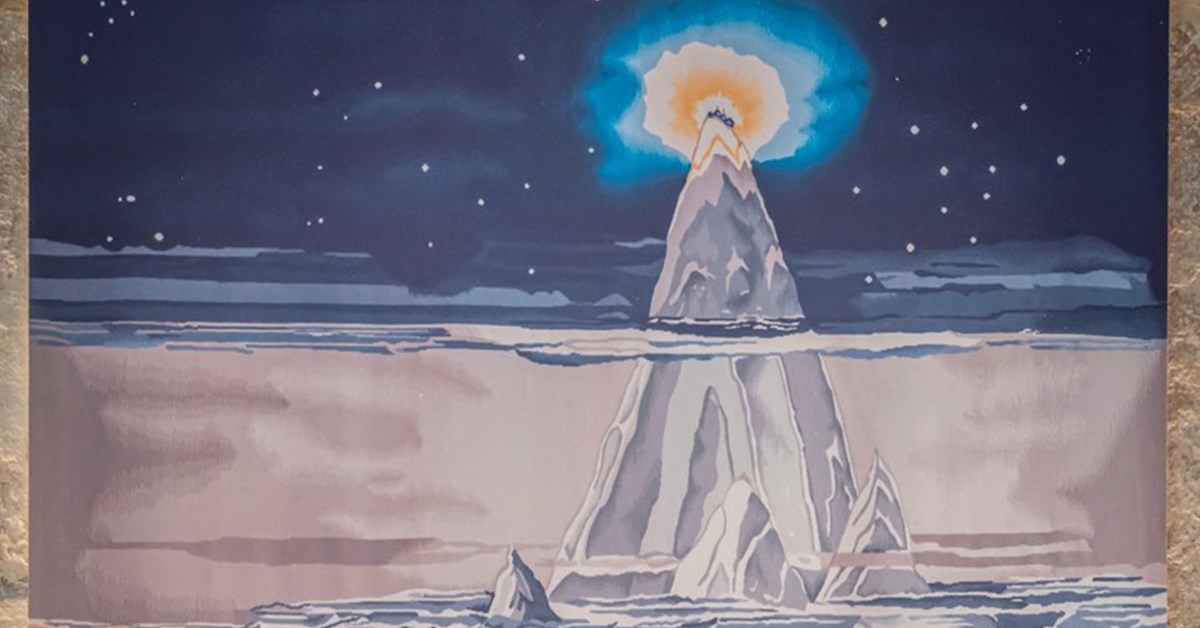
I REMEMBER the rush of excitement when I first heard of The Silmarillion, and then the thrill when it was published, in 1977, four years after Tolkien’s death. At last, we had the creation story of Middle-earth itself. The opening chapter, “The Music of the Ainur”, was both moving and mysterious. It had never occurred to me to think of creation itself as a kind of music. Eru, God himself, also called Iluvatar, declares to the Ainur, the angels, a great musical theme; but he devolves to them, and to their own creativity, the making of that music — already Tolkien’s vital theme of sub-creation is in play.
So Eru says to them: “Since I have kindled you with the Flame Imperishable, ye shall show forth your powers in adorning this theme, each with his own thoughts and devices if he will. But I will sit and hearken and be glad that through you great beauty has been wakened into song.”
THE Ainur make a great and beautiful music, but even that music is not yet the created cosmos, but only its root, its origin; for Eru takes the music and gives it a new physical expression. He creates the world and then says to the Ainur, “Behold your music!”
We see here the way in which God is the primal Creator, the source of all there is, including our own creativity, but that he makes a space for us to be creative, too, lovingly to expound and develop the themes he has given us to work with.
BUT Tolkien does more than explore the theme of creation: he also addresses fall and redemption: the problem of evil, and God’s creative answer to it. For Melkor, the highest of the Ainur, the Lucifer of this myth, seeks “to interweave matters of his own imagining, that were not in accordance with the theme of Iluvatar, for he sought therein to increase the power and glory of the part assigned to himself”.
So discord and dissonance are introduced, and their root, as of all evil, is pride. And this is where Tolkien communicates something true and beautiful through his myth; for Iluvatar does not directly interfere, or curtail the free will of his creatures. Rather, he responds creatively to their evil choices: he introduces new themes that work with and through the dissonance and bring out of it an even greater harmony.
MELKOR’s attempts at disharmony are not silenced, but “taken up” by the new themes and “woven into its most solemn pattern”. Since that music with its redemptive motifs then becomes Arda, the created world, with its history, we can see this theme and counter-theme worked out in the story of The Lord of the Rings in such a way that even the fallen characters are woven into the redemption.
Gandalf intuited that Gollum still had a part to play, and, even though he sought possession of the Ring, he contributed to its destruction and the achievement of the quest, stepping in just at the point when Frodo could go no further. It is indeed just as Iluvatar says to Melkor: “And thou Melkor shalt see that no theme may be played that hath not its uttermost source in me, nor can any alter the music in my despite. For he that attempteth this shall prove but mine instrument in the devising of things more wonderful, which he himself hath not imagined.”
I LOVED this creation myth so much that I wished that it were true; so you can imagine my joy when later in my life, as I returned to my Christian faith, I discovered that that notion of a primal heavenly music was there in the scriptures — “When the morning stars sang together, and all the sons of God shouted for joy” (Job 38.7, KJV) — and in Christian tradition, in the idea of the heavenly “music of the spheres” which only our fall prevents us from hearing.
Reflection Re-read one of the biblical accounts of Creation, either Genesis 1 or Job 38 or both, and take time to reflect on the sheer splendour and majesty of the creation in the midst of which you find yourself.
Now listen to a favourite piece of classical music and try to imagine what kind of a world that music would suggest, if it could be “bodied forth”.
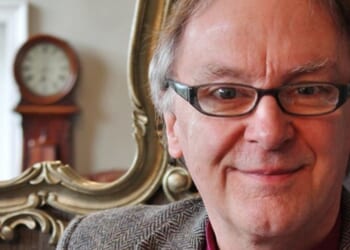
The Revd Dr Malcolm Guite is a Life Fellow of Girton College, Cambridge, a writer and singer-songwriter; and an expert on the Inklings, Tolkien, and C. S. Lewis.
This is an extract from Wardrobes and Rings: Through Lenten lands with the Inklings, published by Canterbury Press at £12.99 (Church Times Bookshop £10.39); 978-1-78622-690-7.