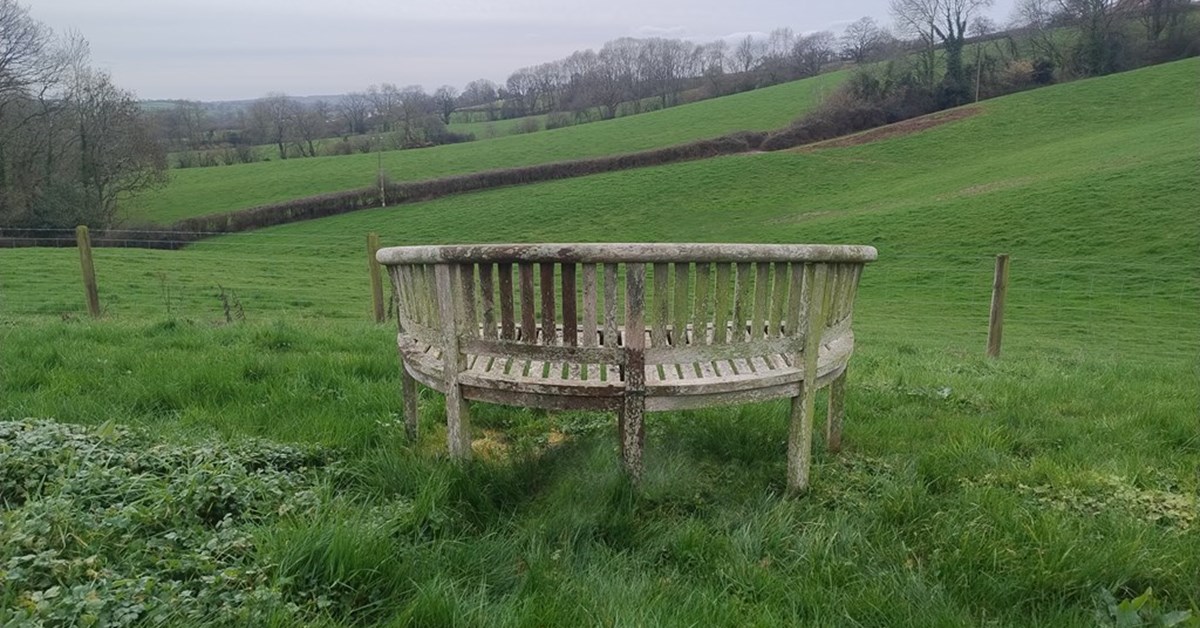
A BENCH at the bottom of a field, in a place apparently unknown to anyone except me, becomes a sacred space. It is also a universal space. This bench and the spot on which it stands represent all those resting places, both real and imagined, that beckon when we need to replenish our spiritual resources. Since this particular bench is only yards from where I live, it is an easily accessible place for meeting spiritual needs. It draws me to itself when I need God.
As with many resting places, the specific need is rarely recognised, or even acknowledged, until I sit down and rest into the view of the Welsh hills in the distance, of the livestock in the adjoining field, of the promise of spring in the new grass that is just beginning to spring up under my feet, defeating the surrounding winter mud. The need is recognised in the minute that it is met. Perhaps this has something to do with the quality of the light, or with the weather, at any given moment of the day. You can see the weather coming from miles away, gathering around the Skirrid mountain in the distance before it rushes up the valley to meet you, there on the bench.
THERE are no specific times for visiting this bench. Sometimes, it is simply a place of escape: a bolt-hole that is there to provide respite from the computer screen or the kitchen. It is also a reminder of how the demands associated with these two work locations are life-affirming and life-giving. They mesh together into the single moment of sitting down on the bench and owning a need for God, who is already there waiting for me.
From this single moment, I am returned to other moments both past and future. Sitting on the bench, resting my eyes on the mountain in the distance — a scene that has been exactly as I see it now for aeons — invites both gratitude and awe: gratitude that, in all the thousands of years that have elapsed, this one present moment exists, and I am part of it. The awe follows, with the gentle but insistent knowledge that God is part of it, too.
THE space anchors this timeless moment in the here and now. It also invites conscious prayer for the generations who have preceded me in contemplating these fields and this mountain. As I sit on the bench, I sense that it is still possible to pray into their situation. It is even necessary.
I am in awe of the diminutive nature of my situation in this regard, and of the weight of the responsibility we carry when we undertake prayer as a task enjoined upon us — how wide its remit in terms of time and space, and yet how pressingly personal. Having a space to go to, a space that draws us into itself, as this one does, lends urgency and an added sense of calling to the work.
The Revd Dr Lorraine Cavanagh is a priest in the Church in Wales and an author. lorrainecavanagh.com. Her book Silence in Ordinary: Contemplative living for busy people is published by Ameo Books.