Insects could be a staple of Britons’ diets within nine years, the Foods Standards Agency (FSA) has revealed.
The FSA and Food Standards Scotland have published a joint report examining which emerging food technologies are most likely to reshape eating habits across the UK by 2035.
Among the technologies that could arrive on British plates soon are lab-grown foods using plant and animal proteins, such as steak, chicken and duck foie gras, with two products already being risk-assessed by regulators.
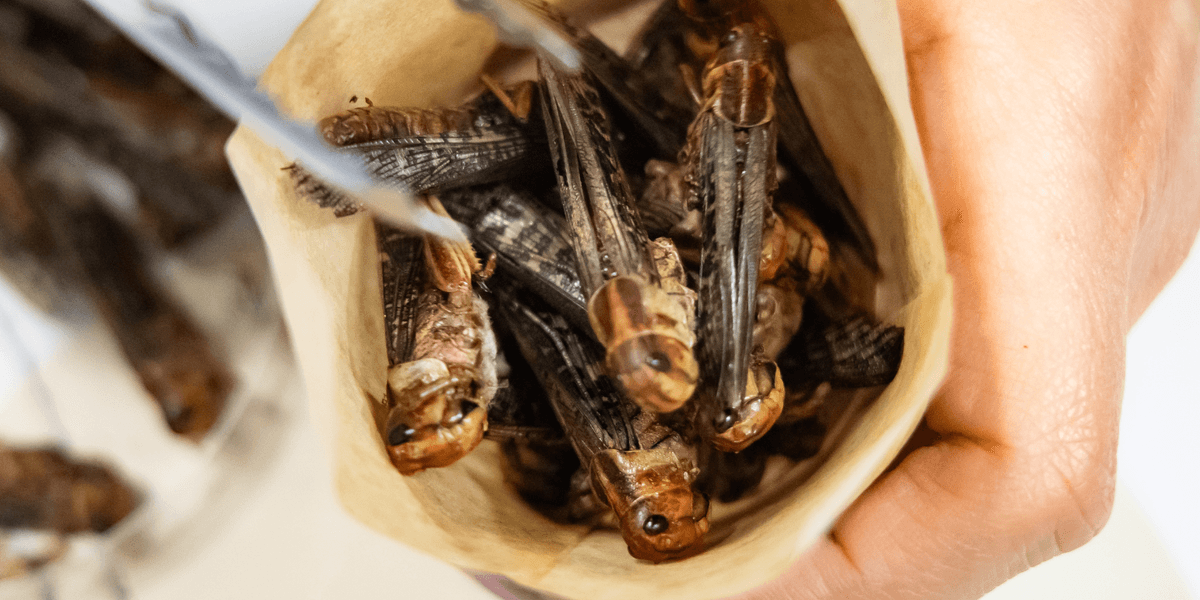
Edible bugs can be sold as whole insects or used as ingredients such as powders added to familiar foods.
Four insect species are currently available for purchase in Britain for human consumption or animal feed under temporary sales arrangements pending full safety evaluations.
Insects may be sold whole or processed into powders that can be incorporated into everyday food products.
However, the FSA has warned that proteins triggering allergic reactions in shellfish are also present in edible insects.
This means consumers with crustacean allergies could experience similar responses when eating insect-derived products, making allergen assessment a crucial element of the approval process.

Four insect species are currently available for purchase in Britain
|
GETTY
Vertical farming has already gone mainstream, with crops like lettuce cultivated in tightly controlled indoor environments where nutrients are delivered with precision, enabling year-round harvests.
Looking further ahead, scientists are exploring methods to use plants as miniature factories for generating specific food components.
Gas fermentation technology, which employs microbes to transform captured carbon dioxide into single-cell proteins suitable for food production, represents another frontier.
The report describes 3D-printed foods as “largely conceptual innovations” at present.
EATING INSECTS? READ MORE:

Insects may be sold whole or processed into powders that can be incorporated into everyday foods
|
GETTY
Such technology would enable manufacturers to construct items like chocolate or mashed potato by depositing layers of edible materials through a printer.
These products are unlikely to achieve widespread market availability within the next five to 10 years.
Nevertheless, 3D printing could prove valuable for producing customised foods for individuals with swallowing difficulties caused by medical conditions.
Dr Thomas Vincent, the deputy director of innovation at the FSA, said: “The food system is always evolving, and as a regulator, we need to keep pace with that and keep pace with the industry so that we can help ensure that new products are safe.”

Lab-grown foods using plant and animal proteins could arrive on British plates soon
|
GETTY
He emphasised that novel production methods must satisfy food safety and hygiene requirements, with allergies factored into assessments.
Nutritional considerations are also essential, ensuring that lab-cultivated alternatives to meat deliver the dietary value consumers anticipate.
Dr Vincent said: “What we do is a really thorough, holistic safety assessment that looks at things like allergenicity, but also at toxicology, at microbial contamination of foods.”
He added: “It looks at acute risks, so things that might happen once you eat food, but also at chronic risks, so there’s longer term potential risks, and that includes things like carcinogens, for example.”