STAGES of development feature widely in psychological and emotional theory and have been applied to the maturation of religious faith. Most famous of these is James W. Fowler’s theory of faith development, but there are many others. Sarah Brush has spent several years studying and analysing these and produced what could become a faith-development textbook. In her introduction, Brush raises a question about the focus in recent decades on church growth in terms of the numbers converted. Instead, she thinks that “a focus on the growth of faith of individuals and communities in terms of ongoing conversion of life would be much more fruitful”.
After exploring the concept of faith in the introduction, Brush, in Chapter One, mines the Christian tradition through spiritual writers such as St Teresa of Ávila, St John Climacus, St Bonaventure, Walter Hilton, and others. The next four chapters represent different groupings of models. Chapter Two explores the progressive stages of Fowler and later writers, including Scott Peck and Alan Jamieson. In Chapter Three, we meet writers who embrace progressive/regressive stages, from Willow Creek to Nicola Slee and Richard Rohr, among others.
Chapter Four focuses on writers who favour a cyclical approach, and Chapter Five identifies various styles of faith development. Every writer is carefully cited, and the text is peppered with references. Many authors are treated to a thoughtful critique. Chapter Six introduces Brush’s own model, and Chapter Seven, the last, applies the model in the parish.
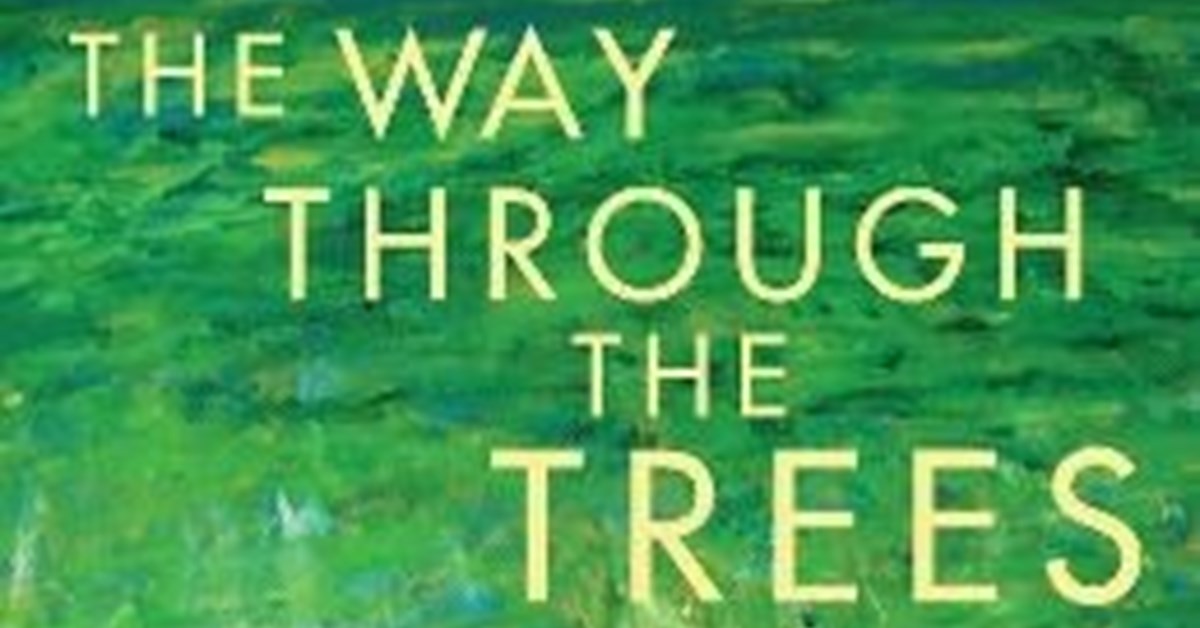
This meticulously described landscape earns the book the textbook epithet and it could well be a go-to starting point for students and ordinands for subsequent essays on faith development. It also scopes the territory from which Brush’s own model can emerge, albeit very late in the book. Her model is indicated by the book’s title and uses the development of a tree as a metaphor for faith development: from seed to seedling; from seedling to sapling; from sapling to young tree; from young tree to mature tree; from mature tree to totem; and from totem to compost. This last anticipates a final stage beyond earthly life, in terms of the impact of the deceased person’s faith on others, rather as the tree becomes indistinguishable from the earth around it as compost.
Fowler’s model owes much to the seminal work of Erik Erikson, in which our human development is marked by various challenges, whose outcome depends on the type of parenting or other nurturing environment to which the baby and child are exposed. There are later opportunities to explore and repair damage caused by flawed attachment or inclement circumstances due to political or environmental tragedies.
Although Erikson’s model has been developed and adapted by later writers, it remains foundational. It allows for flexibility and the revisiting of earlier stages later in life. Fowler and others, however, unlike Erikson, have not considered the experience of children sufficiently. With a background in youth work, Brush seeks to correct this, highlighting the work of Rebecca Nye and others who have taken children’s spirituality seriously.
As Brush indicates at the beginning of the book, any model of faith development is unlikely to be taken up by those who need certainty, perhaps after a Damascene type of conversion, and yet any model needs to embrace periods of doubt or loss of conviction, perhaps after some traumatic event. The concept of hiatus acts as a necessary transition towards some type of deeper personal growth in faith. Ministers are encouraged to understand that a crisis in life may be linked to this. In her own model, lost or damaged branches in the sapling act as a possible metaphor, as does the experience of winter.
This is an attractive model with cross-cultural appeal. Brush has introduced it in various settings, sharing it with parishes, ordinands, academic conferences, and colleagues. I would value this personal experience with the author before seeking to introduce it to a parish setting. There may be scope for a follow-up handbook or video course. Brush is modest in her aim and concludes: “Ultimately, this model is intended not as a diagnostic tool but as a guide to encourage people to reflect on their faith and to grow from where they are.” Amen to that.
The Revd Dr Anne C. Holmes, a former NHS mental-health chaplain, works as a psychotherapist and SSM in the diocese of Oxford.
The Way Through the Trees: An introduction to faith development
Sarah Brush
SCM Press £27
(978-0-334-06664-4)
Church Times Bookshop £21.60