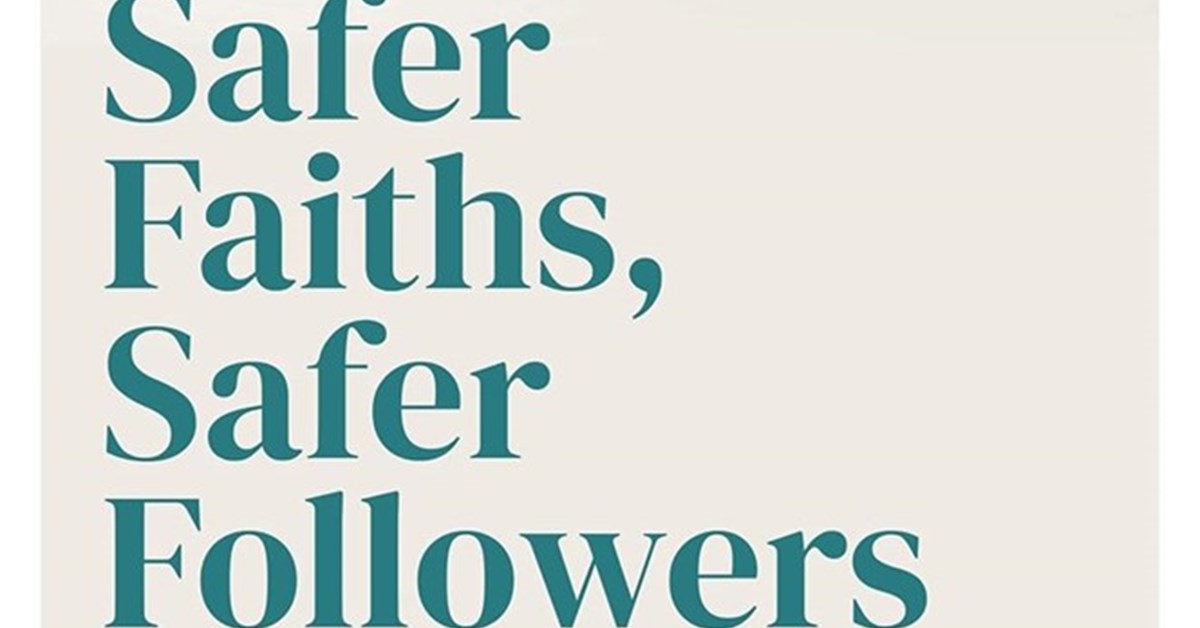
THE author of Safer Faiths, Safer Followers, Tom Wilson, has spent the past ten years as Director of St Philip’s Centre, Leicester. Founded in 2006, the centre’s work focuses on the contribution of Christianity to wider society. It seeks to empower people of all faiths, or none, ensuring that religion and belief serve the common good.
Having served as a priest in Leicester, I recognise the context in which the Centre is working. An introduction to religion is essential for those engaged in public service in Leicester, which is famed for its cultural diversity. The demand for the Centre’s training courses for the police and other agencies suggests that religious literacy is irresponsible. More work is needed on this nationally, at every level of education.
Wilson’s book is an interesting compendium of research, opinion, and debate on spiritual abuse, drawn from his own ecumenical and interfaith experience.
Wilson refers to the Church of England’s advice on this matter in its safeguarding e-manual. That resource provides a clear, accessible, and informed outline of the subject, noting that “spiritual abuse is a form of emotional and psychological abuse” about which there is ongoing discussion.
Professor Lisa Oakley’s work on this has been invaluable to the Church of England’s research in defining spiritual abuse. She also informs much of Wilson’s writing, and he, in turn, very helpfully refers to a wider body of research for those who wish to explore further.
Beyond Part I of his book, Wilson offers three sections that explore spiritual abuse in other religions, its presence in the Church of England, and examples of this abuse and response to it.
The content of these sections is undoubtedly important. Wilson has been bold in seeking to explore how spiritual abuse, still at early stage of definition in the Christian Church, features in other faiths.
Comparison between faiths can distort our perceptions. Wilson offers an overview that thoughtfully skims the surface, indicating the danger of drawing premature conclusions. The phrase “Safer faiths” in the title of the book is interesting. Does it relate to the theology of a particular religion, or to its structure and practice?
Wilson’s presentational balance also prompts questions. In terms of the Church of England, it was interesting that the Anglo-Catholic “Father knows best” mentality is presented as capable of legitimising spiritual abuse (which it might), but three of the four case studies that Watson then repeatedly refers to come from clearly Evangelical contexts.
What is missing here is a theological exploration of how hierarchy is used as an instrument for creating safe spiritual space for the people it serves.
I also wonder about the range of case studies. Seven of the ten examples were about women, though, helpfully, the examples came from a range of faith contexts. But in terms of the gender of perpetrators and recipients, spiritual abuse is surely more complex.
Wilson is a bit dismissive of PowerPoint presentations. But the Church of England’s excellent online safeguarding training, especially on domestic violence, deserves recognition and promotion.
Finally, Wilson offers us three sample sermon texts for use on Safeguarding Sunday. They are weighty constructions, but, of course, they cannot satisfy the demand of his final comment, “We must act.”
Dr Martin Warner is the Bishop of Chichester.
Safer Faiths, Safer Followers: Understanding and countering spiritual abuse in faith communities
Tom Wilson
Canterbury Press £19.99
(978-1786227041)
Church Times Bookshop £15.99