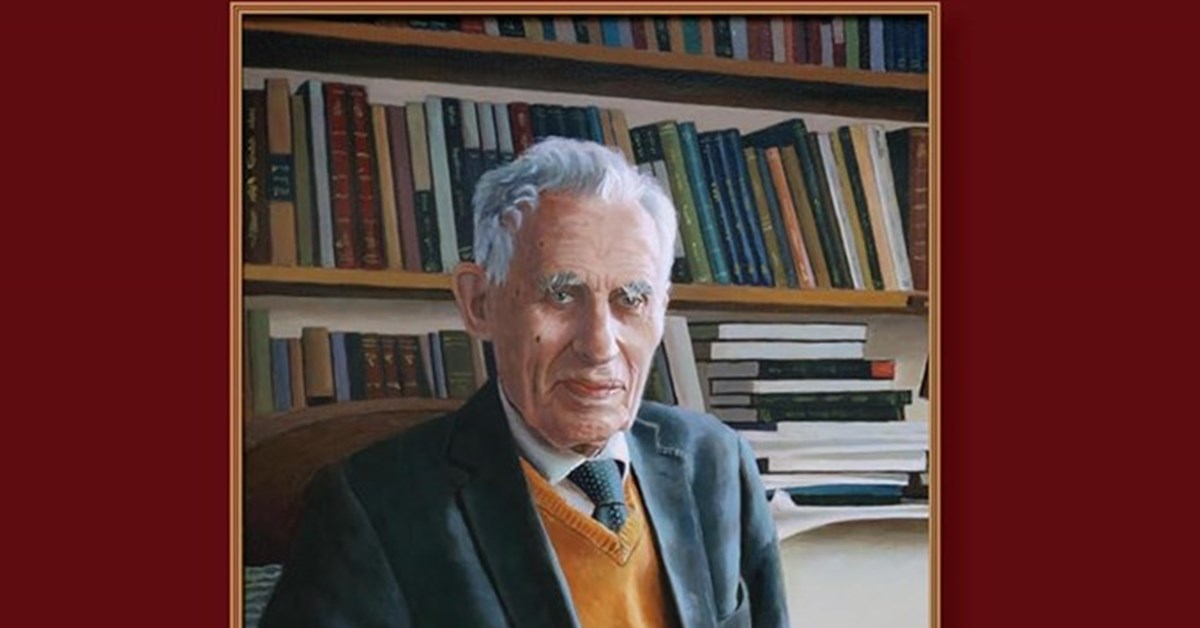
AS AN example of devoted advocacy on behalf of one of Christianity’s most prolific and systematic apologists, Joshua Sijuwade’s comprehensive introduction to the writings of Richard Swinburne is remarkable. Sijuwade not only provides a clear and concise account of his subject’s many publications in the course of a long and distinguished academic career, but also advocates on Swinburne’s behalf in responding to critical engagements with his most substantial publications.
This is a distillation of Swinburne’s thought destined to ensure that the works of one of the most vigorous defenders of theism, in a cultural milieu dominated by a sceptical materialistic world-view, continue to be heard with due seriousness and respect.
An extensive introduction sets the scene with summaries of Swinburne’s life, publishing history, and philosophical foundations. Here, his epistemology is especially significant, incorporating “logical and epistemic probabilities to explain how evidence can increase or decrease the probability of a belief’s truth, using probabilistic reasoning”.
Swinburne’s works are examined and evaluated in accordance with his fundamental aim, moving from his defence of “bare” theism (the coherence of theism, the existence of God, providence, the problem of evil — probably his most hotly contested argument), and then “ramified” theism (Christian doctrines including atonement, resurrection, revelation, and faith).
Something that distinguishes Swinburne from most other apologists for Christianity in response to challenges from the realms of secular scientific and philosophical disciplines is his commitment at an early stage in his academic career to studying science and its philosophical substrate seriously before mounting a challenge. Consequently, “he came to believe that the criteria used to judge scientific theories, such as a theory’s simplicity, and ability to make testable predictions, could also be used to evaluate the probability of theism as an explanatory hypothesis.”
Sijuade acknowledges the degree to which this was resisted by promoters of logical positivism, and theological liberalism’s concessions to the presumed fragility of Christianity’s credentials. But Swinburne stood his ground, and his uncompromising commitment to the intellectual coherence of bare theism provided the theological credibility sufficient to support the more specific doctrinal postulates of ramified theism.
In other words, belief in God as philosophically, scientifically, and intellectually coherent opens the way ahead for Trinity, incarnation, atonement, resurrection, and revelation to be acknowledged as no less credible. Furthermore, he argues for the greater probability of the theistic hypothesis than of its alternatives as the ultimate explanation for the existence and nature of the universe.
Notwithstanding his powerful challenge to modernity’s philosophical and scientific influence when it comes to the unreasonableness of religious convictions, it remains true that probability reliant on cumulative evidence, analogy, metaphor, and inductive reasoning does not put Christianity’s credentials beyond all doubt. But Swinburne does enough to ensure that they cannot be summarily dismissed as irrational or intellectually deficient.
The best that we can hope for from a case for “a rational faith” is that it will establish the probability that God exists and that the central doctrines of Christianity are probably true. But this would be by no means an insignificant claim. It means that the humanists’ assertion on the side of a bus that God probably does not exist has to establish such improbability with no less intellectual rigour than Swinburne himself, as revealed in this comprehensive and challenging introduction, has demonstrated.
The Rt Revd Dr John Saxbee is a former Bishop of Lincoln.
A Rational Faith: An introduction to the philosophy of Richard Swinburne
Joshua R. Sijuwade
James Clarke & Co. £75 hbk, £25 pbk
(978-0-227-17842-3 hbk)
(978-0-227-17840-9 pbk)
Church Times Bookshop £75, £22.50