The US has temporarily lifted sanctions on Russian oil currently stranded at sea as Donald Trump looks to counter the surge in crude oil prices since the start of the war in Iran.
As the price of oil settled above $100 per barrel for the first time since August 2022, the Trump administration announced a 30-day waiver that will help stabilise global energy markets.
On Friday morning, oil markets in Asia appeared to ease following the decision.
“To increase the global reach of existing supply, US Treasury is providing a temporary authorisation to permit countries to purchase Russian oil currently stranded at sea,” US Treasury Secretary Scott Bessent said.
“This narrowly tailored, short-term measure applies only to oil already in transit and will not provide significant financial benefit to the Russian government, which derives the majority of its energy revenue from taxes assessed at the point of extraction.”
The license applies solely to Russian crude or petroleum products loaded onto vessels as of March 12, and is valid through midnight Washington time on April 11.
The US has previously issued a 30-day waiver earlier this month, specifically allowing India to buy Russian oil stuck at sea.
But the move has faced criticism, with President Trump being accused of “filling the Kremlin’s war coffers”.

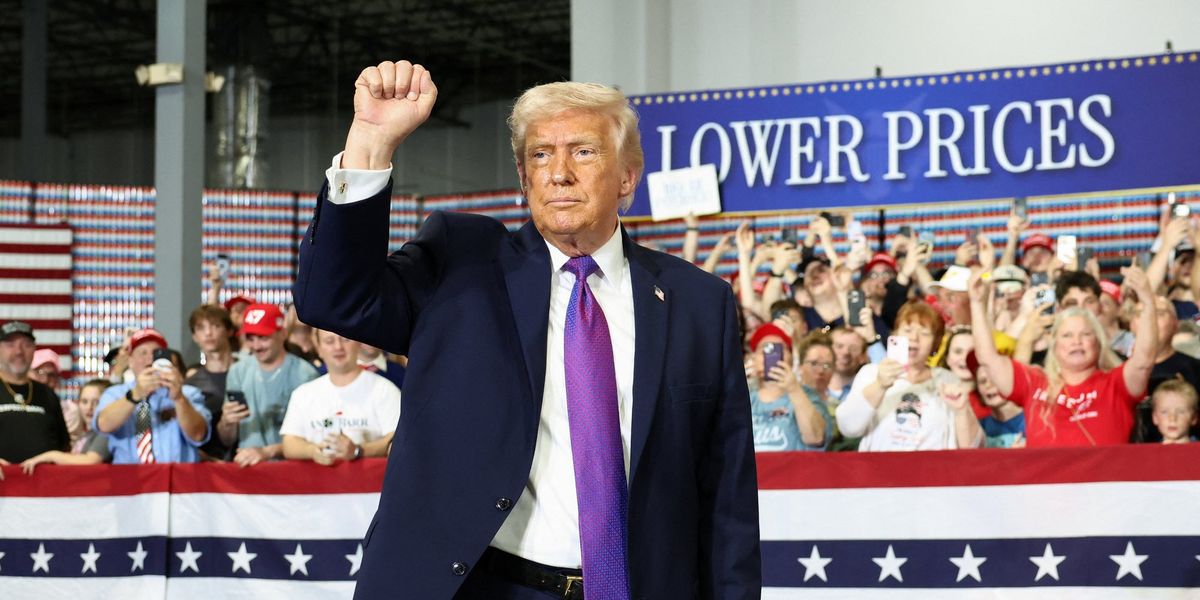
The US has temporarily lifted sanctions on Russian oil currently stranded at sea as Donald Trump looks to alleviate the surge in crude oil prices since the start of the war in Iran
|
REUTERS
Democratic Senator Jeanne Shaheen said: “As Putin helps Iran target Americans in the Middle East, the President is now filling the Kremlin’s war coffers.
“Instead of squeezing Russia’s faltering economy, the President’s ill-planned war is giving Putin a windfall while American families face higher prices.”
The temporary lift in sanctions is the latest move by the Trump administration to help counter the oil price surge. Washington announced on Wednesday it would be releasing 172 million barrels of oil from the strategic petroleum reserve.
On Thursday, the International Energy Agency (IEA) said the conflict in the Middle East was creating the biggest oil supply disruption in history.
The agency has ordered the largest release of government oil reserve in its history, announcing its 32 members had unanimously agreed to release around 400 million barrels of emergency crude.
“Oil markets are global so the response to major disruptions needs to be global, too. Energy security is the founding mandate of the IEA, and I am pleased that IEA members are showing strong solidarity in taking decisive action together,” the energy watchdog’s executive director, Fatih Birol, said.
With the war entering its 14th day, the Strait of Hormuz, the pivotal choke point in the Persian Gulf responsible for around 20 per cent of the world’s oil shipments, remains effectively closed for tankers.
Iran’s new Supreme Leader, Mojtaba Khamenei, called on Thursday for the strait to “remain closed”.
In his first public message since assuming his father’s position, Khamenei said Iran should use the “lever of blocking the Strait of Hormuz” because it represents an area where “the enemy is highly vulnerable”.
Iran also warned earlier in the week the world should be ready for oil at $200 per barrel, and that any tanker bound for the US, Israel or its partners was a legitimate target.
MORE TO FOLLOW…