THE cuts to university theology and religion departments should be of greater concern to the Church, the F. D. Maurice Professor at King’s College, London (KCL), has said.
Speaking after the launch of A Short History of the Department of Theology and Religious Studies, on 23 February, Professor Linda Woodhead described a “shrinking pool” of these departments. “It’s really scary how many are closing at the moment as universities are in a financial crisis and they chop things off,” she said. “If I was a church leader, I’d be extremely worried about it.”
Last year, in a letter co-ordinated by the think tank Theos, academics warned that there remained just 21 higher-education institutions in England and Wales offering an undergraduate degree in Theology and Religious Studies, while 90 offered history, and 101 sociology.
In 2024, the University of Nottingham announced that its Department of Theology and Religious Studies (TRS) would be “re-housed in the Department of Philosophy”, and the University of Kent dropped its religious studies degree. This followed protests at the University of Chester against planned compulsory redundancies in its TRS department, and plans at the University of Cardiff to cuts its Religion and Theology department altogether.
While a small number of universities retain a dedicated department or faculty, many now house theology and religion degrees in larger schools dedicated to the humanities or social sciences. Theology is now offered as part of a broader degree, typically including religion, philosophy, and ethics.
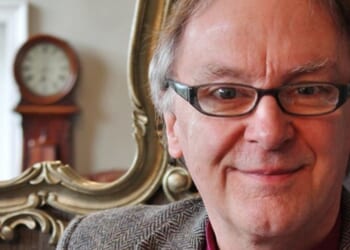
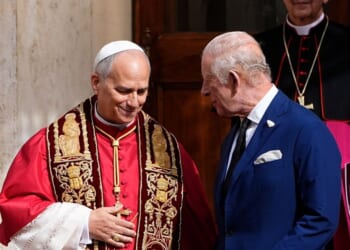
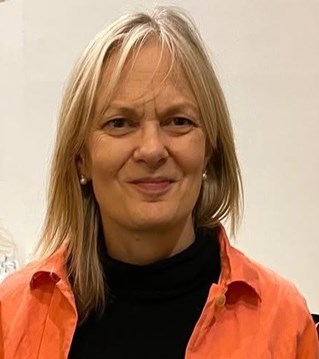 Professor Woodhead
At King’s, undergraduates can study either Religion, Philosophy, and Ethics, or Sociology, Politics, and Religion, and are attracted to them in equal number, Professor Woodhead reported this week. There was “no demand” for a single theology degree. The department’s good health — it has more than 300 students in any one year — reflected a long history, she suggested, in which the “contestation” between departments had prevented it from getting “stuck”.
The new history of the TRS department, written in partnership with Sarah Limb, a Ph.D. student in the history department, locates it in “a wider story of secularisation that is far more complicated than that term and a simple narrative of ‘from religious to secular’ might imply”.
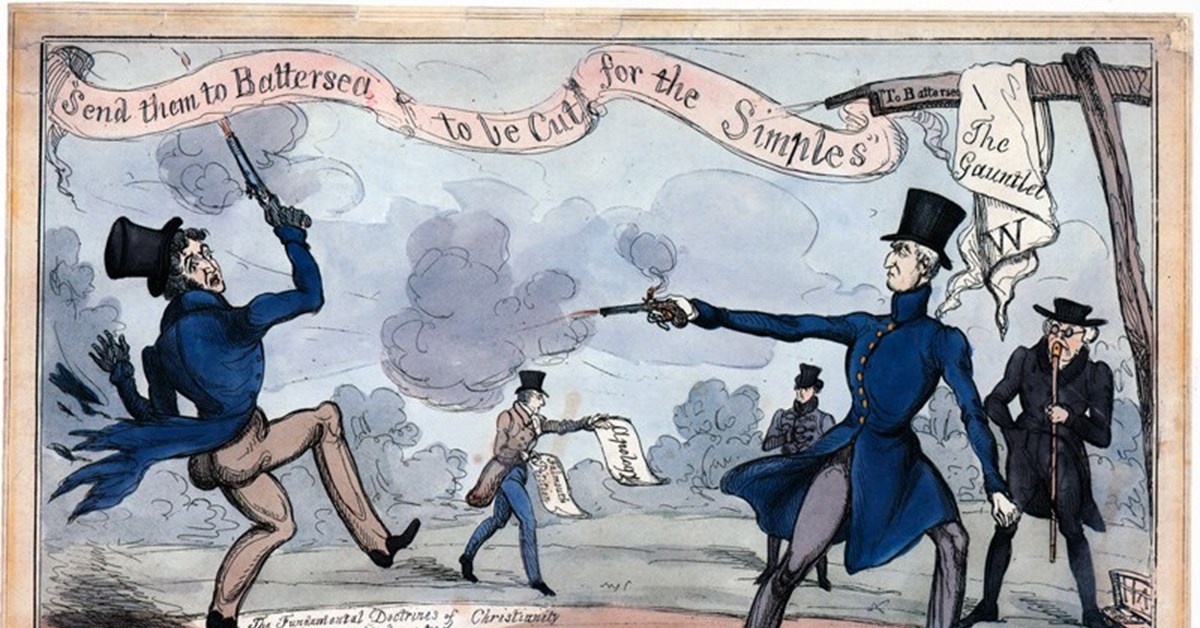
KCL was founded as an Anglican foundation by the Duke of Wellington and King George IV in 1829, as a direct response to the establishment of University College, London, which was set up in 1826 with an explicit “no theology” policy, and branded by critics the “godless institution of Gower Street”. KCL would offer “instruction in the doctrines and duties of Christianity . . . side by side with instruction in various branches of literature and science”.
A theological department was established to train Anglican ordinands in 1846. For a time, it was the single largest training institution for the Church of England. From 1969, ordinands spent a fourth year of pastoral training at St Augustine’s College, in Canterbury.
In the the early years of the 20th century, the report observes, “theology and the Church were still at the heart of King’s. The Principal was an Anglican clergyman who kept an eye on ordinands. The Dean and Chapel were at the heart of the institution.”
But, in 1903, religious tests were abolished for students and staff outside the theological department, and there followed a “process of gentle secularisation, in the sense that religious and secular education became more clearly separated”.
Well into the 20th century, the report records, religious studies was “framed largely as Christian theology, moral philosophy, and the study of doctrine, and religion itself was approached primarily in normative or confessional terms rather than as a topic of empirical investigation.” But, as early as the 19th century, “King’s became known for a kind of theology, philosophy, and textual exegesis that was openly engaged with wider artistic, social, and intellectual developments.”
A dedicated Faculty of Theology was set up at the University of London (of which KCL and UCL were constituent colleges) in 1967. Against a backdrop of declining church attendance, ordinand numbers fell, and, in 1972, the Murray report recommended was that the university “transition away from a curriculum dominated by the needs of Christian, specifically Anglican, vocational training and towards a more non-denominational Religious Studies programme”.
In 1975, the House of Bishops withdrew its support for ordination training at St Augustine’s (ordination training having ceased at King’s), and, in 1980, the Theology Department was merged with the Theological Faculty. Today, few students are considering ordination, “but all are attracted to the study of religion and theology, both for its own sake and for what it reveals about ethics, culture, society, and politics worldwide”.
The report contained lessons for the Church today, Professor Woodhead suggested, including what it describes as the “sharp and prescient” analysis of falling ordinand numbers provided by a former Dean of KCL, Sydney Evans, in 1967. They included “the present uncertainty about the truths of Christianity”.
The Church, still concerned about ordinand numbers, “gets into a terrible tangle when it thinks it can control all this, and if it just did something different it would all be all right,” Professor Woodhead said. “But these are huge bigger trends, and you have to work with them rather than think you can change and reverse them.”
Theology would survive as a discipline, she said. But the Church could learn lessons from Scandinavia, which retained a “very strong level of theological education amongst at least some of the clergy”. One “easy thing” would be to establish a chair in Anglican theology.
The report traces the origins of the social-scientific study of religion back to early 19th century figures such as F. D. Maurice, one of the first professors of the Theology Department and a pioneer of Christian Socialism. He was sacked after publishing an essay rejecting the idea that there was a doctrine of eternal punishment. This week Professor Woodhead spoke of her pride in taking the Chair named after him.
The report acknowledges that the social-scientific study of religion at King’s is “far removed from Maurice’s original theological vision”, but it “continues to reflect his fundamental concern with understanding social change and contributing to the
improvement of society”. The “moral and spiritual formation” envisaged at its foundation — “lofty and perhaps bossy aims” — had been eschewed amid the secularisation and liberalisation of higher education. But the “big questions” about God and the world still influenced the outlook of students.
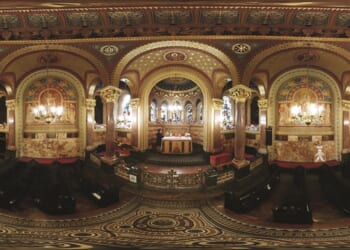
The “enormous chapel” at the centre of the college, and the part played by the Dean, “set a tone” at the college, Professor Woodhead observed. “It opens up a sense of the legitimacy of spiritual quest for all students, whatever their faith. It doesn’t feel like a secular institution that wants to get rid of faith and religion.”