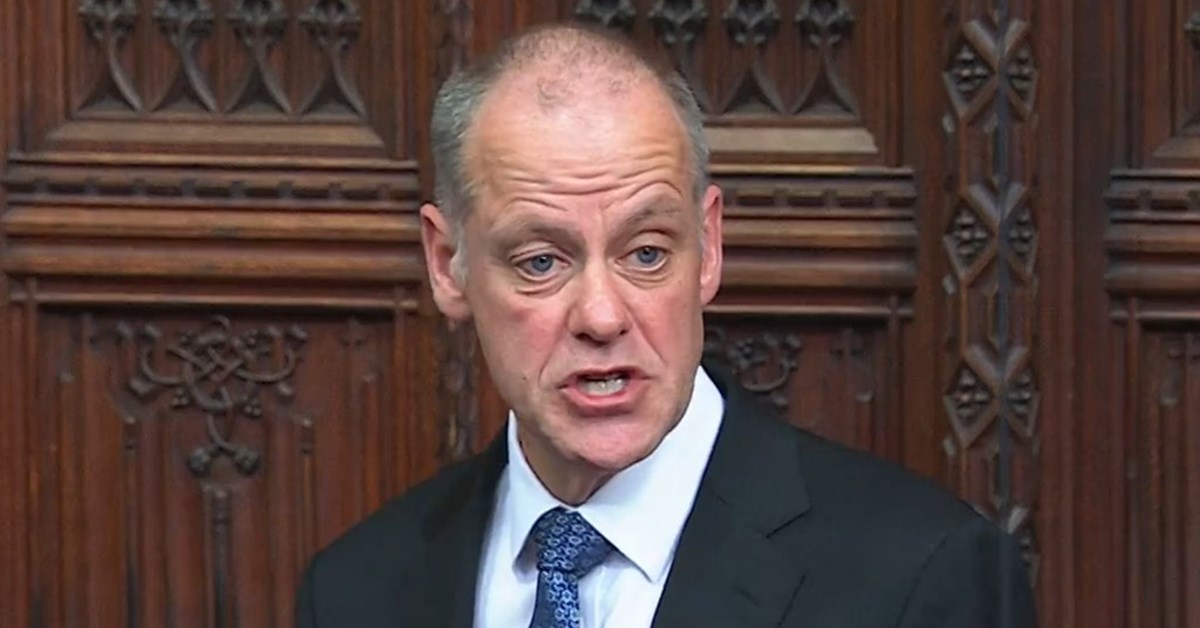
AS THE assisted-dying Bill runs out of debating time in the House of Lords, the Christian Labour peer Lord Rook on Friday tabled three amendments on protecting vulnerable people from coercion and safeguarding young people.
Lord Rook, a founding partner of the Good Faith Partnership, who also worked for the Salvation Army, told peers that amendment 154 to the Terminally Ill Adults (End of Life) Bill would establish a simple but essential safeguard: “that assisted dying should be patient-initiated, so a doctor or other health professional should not raise the subject unless the patient has done so first”.
He continued: “If an assisted death is truly a matter of patient choice, why allow the authority figure in the room to introduce the option? The Bill already makes it clear that there is no duty on doctors to raise assisted dying. If there is no duty and preventing coercion is central, why not make that safeguard explicit in the Bill?”
Addressing his fellow Labour peer Lord Falconer, who is sponsoring the Bill in the Upper House, Lord Rook asked: “If the Bill’s case rests on patient choice and the absence of pressure, why resist the clear rule that this conversation must always be initiated by the patient themselves?”
Lord Rook also proposed amendments 210 and 211, on protecting young people. “Clause 6 prohibits raising assisted dying with a person under 18, and that is welcome, but what happens if that is breached? Amendment 210 would provide that such a breach must be referred to the General Medical Council,” he said.
“Amendment 211 addresses a different scenario, where a minor raises assisted dying themself,” he said. “The Bill is silent about what must follow, yet silence in safeguarding creates inconsistency and risk. . . It is a tragic fact in our country that suicide is now one of the leading causes of death for young people. When a child expresses a wish to die, our national response is about safeguarding, compassion, referral, care and support.
“My amendment therefore seeks to provide clarity for clinicians: if a minor raises assisted dying, the doctor must refuse to discuss it, beyond explaining that the person is ineligible; the interaction must be recorded; and the young person must be referred for mental health support. In other words, when a minor expresses a wish to die, we should treat that not merely as an inquiry about their eligibility but as a serious safeguarding event.”
Lord Rook concluded: “Through all these different amendments, there is a single thread. If this truly is to be a safe Bill, the final legislation must minimise coercion and protect the vulnerable. Above all, it must fulfil the commitment of its sponsors: namely, to ensure that a citizen’s decision to choose an assisted death is always voluntary and that the state’s obligation to safeguard the most vulnerable is always upheld.”
Lord Falconer described Lord Rook’s first amendment, 154, as “neither practical nor wise”. He continued: “It is for the doctor to decide how to deal with it, of course in the context that the noble Lord mentioned.”
Peers were speaking as only three of 14 days of debate in the Lords remain, and about half of the 1200 amendments are yet to be discussed. The Bill was passed by the House of Commons last June.
The BBC reported on Monday that 100 Labour MPs had written to the Prime Minister arguing that, if assisted dying legislation does not pass, trust in politics will be undermined.
But the Labour MP Jessica Asato, who opposes the Bill, told the BBC: “The sponsor of the Bill has rejected 99 per cent of suggested improvements and amendments in the House of Lords and so it still contains all the same faults and issues. Any MP that voted to push this Bill through would do so knowing that it is unsafe and would harm vulnerable people.”
A new Whitestone poll of more than 2000 UK adults for Care Not Killing shows that the public wants Parliament to prioritise safety over choice.
Asked if they would support a law that enabled patient choice, but was implemented in a way that put other patients and vulnerable people at risk, respondents opposed the move by 42 per cent to 35 per cent. The proportion of those who “strongly” backed putting safety over choice was more than double the proportion of those who said the opposite (26 per cent to 12 per cent).
Members of the Scottish Parliament are due to vote on whether terminally ill adults with decision-making capacity and six months or less to live can go ahead with assisted dying, on Tuesday.
Lord Rook’s amendment 154 was not moved.