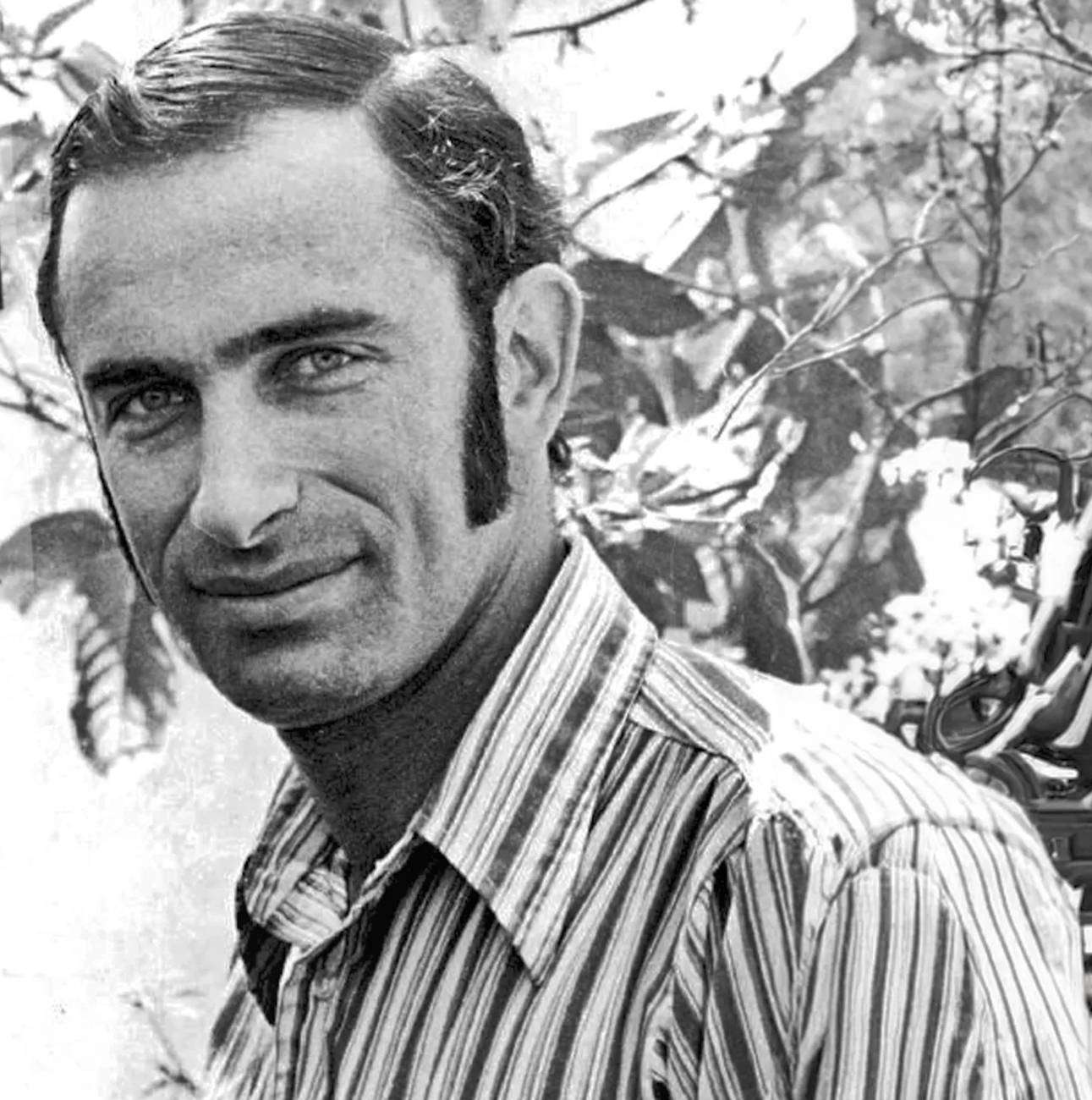
History’s wrongest man. Paul Ehrlich, author of the 1968 bestseller The Population Bomb, died over the weekend. I think there’s a strong case to be made that he is History’s Wrongest Man.
The thesis of Ehrlich’s book was that the world was destined to become overpopulated. And as the population grew, resources would become more scarce, and humans would become poorer and less well fed. He predicted a world wracked by starvation, shortages, and famine. This has not happened.
In 1980, Ehrlich also famously bet economist Julian Simon that the price of five critical metals would increase. Simon, who believed that markets and human ingenuity would overcome scarcity, bet that the price would decrease. Ehrlich lost the bet and paid Simon the price difference with a check—signed not by Ehrlich, but by his wife.
Yet here is how the subhead to The New York Times obituary for Ehrlich casts his legacy: “His best-selling 1968 book, which forecast global famines, made him a leader of the environmental movement. But he faced criticism when his predictions proved premature.”
No. Ehrlich wasn’t prematurely correct. He wasn’t ahead of his time. He was simply and utterly wrong.
The Reason Roundup Newsletter by Liz Wolfe Liz and Reason help you make sense of the day’s news every morning.
Since the publication of Ehrlich’s book, the Earth’s population has increased by 134 percent to over 8 billion. Yet as Ron Bailey noted yesterday, humans across the globe are, on average, considerably richer and far better fed. Extreme poverty still exists, but it has fallen dramatically. Famine is far less prevalent than it was in the 1960s. Lifespans have, on average, increased. All of this has happened as the population has expanded.
The reason is human ingenuity. Science, technology, trade, and complex coordination enabled by markets have not only made the world a better place, they have also made it better for more people. But like so many people, Ehrlich could only see the world in zero-sum terms.
Ehrlich cloaked himself in the mantle of science, portraying himself as a truth seeker who was simply explaining the hard reality of the world. But as Nick Gillespie, Katherine Mangu-Ward, Matt Welch, and I discussed on yesterday’s Reason Roundtable podcast, this supposedly neutral pose—he was just following the science—tended to devolve rather quickly into expectations of government overreach.
To some extent, this is just a result of the fact that, in the news business, pessimism sells, and good news often does not. But it’s also an example of a tendency that we’ve seen over and over from the left-leaning environmental and public health activists.
There’s a remarkable clip from a 1970 interview in which Ehrlich, after saying he’s against government involvement in private lives, suggests that the Federal Communications Commission might insist that television networks always portray large families in a negative light, and says that at some point, the government might tax large families, or even force people not to procreate.
Paul Ehrlich in 1970: “The FCC should see to it that large families are always treated in negative light on television.”
If that doesn’t work, then the government should “legislate the size of the family” and “throw you in jail if you have too many” kids.pic.twitter.com/646gThk9WC
— Shawn Regan (@Shawn_Regan) January 5, 2023
Ehrlich’s worldview wasn’t just anti-libertarian. It was explicitly, profoundly antihuman. And too many in the media still give polite deference to his disturbing and demonstrably false ideas.
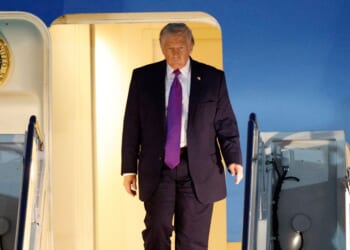
Strait Talk. As Robby Soave noted in yesterday’s Roundup, over the weekend, President Donald Trump asked a handful of American allies to provide military assistance to reopen the Strait of Hormuz. This request was not exactly met with enthusiasm. Germany said no. Japan and Australia said probably not. And Britain and France, The Wall Street Journal reports, are “assessing possible action,” which is also what city councils say when they are determined not to do anything.
Now Trump says America doesn’t need any help at all. Although he insisted that “numerous countries have told me they’re on the way” to assist in the region, the president said yesterday afternoon that “we don’t need anybody” to reopen the Strait. Which is it? As with so many of the contradictory and confusing messages emanating from the White House about this war, it’s hard to keep the story, well, strait.
Scenes from Washington, D.C. Speaking of media hype: There were supposed to be tornadoes in the region yesterday. The government even went to telework for the day to ensure safety during the storm. Well, there weren’t any tornadoes. There was barely any rain. Tornado? More like a tor-NAH-do. The welcome news is that, unlike Paul Ehrlich, some meteorologists owned up to getting the forecast wrong.
QUICK HITS
- A federal judge blocked many of the new childhood vaccine policies implemented under Health and Human Services Secretary Robert F. Kennedy Jr. Those changes included reducing the number of recommended childhood vaccinations and reducing immunization requirements for a handful of diseases. The ruling will almost certainly be appealed.
- Why, exactly, did we go to war in Iran? Trump’s latest answer is “you could say we did it out of habit, which is not a good thing to do.” If it’s not a good thing to do…why did we do it? You should not take a country to war out of habit!
- The identity of infamous graffiti artist Banksy has been revealed.
- Meanwhile, Trump keeps saber-rattling about Cuba.
- Sen. Ted Cruz (R–Texas) thinks the Oscars have rewarded movies “made to virtue signal to left-wing elites.”
- Restaurants are struggling to cover costs as hard-drinking millennials age out of peak drinking years and younger people drink less.
- Republicans in Congress keep trying to pass the SAVE America Act. I do not think they are going to be successful.
- For $300, you can own a wearable replica of the Pip-Boy arm-computer from Fallout 3.