While the US/Israeli attacks on Iran continue and Iran retaliates via missile and drone strikes on the Gulf states, the focus of world attention has clearly shifted to the Strait of Hormuz.
Iranian threats to naval and commercial shipping have reduced traffic through the narrow waterway by approximately 90 per cent, and oil prices are spiking as an immediate consequence.
This affects economies around the world, leading to higher prices across a range of commodities. Only Iranian allies China and India seem to be relatively unaffected so far. Britain is bracing for a sharp rise in fuel prices as conflict in the Gulf strangles one of the world’s most critical oil routes.
With US forces moving to regain control of the region, the crisis risks hitting UK households and businesses within days through higher petrol, energy and transport costs.
The US has responded by aerial attacks on Iranian naval facilities along the northern shore of the Strait and by sinking the bulk of Iran’s fleet of small attack boats and minelayers. According to President Trump, the Iranian and IRGC navies are effectively “gone”.
Meanwhile, several hundred miles to the north-west of the Strait, the US has also targeted military facilities on Kharg Island, through which 90 per cent of Iran’s oil exports transit. It has not, however, damaged the oil storage facilities and pipelines there. But the threat of doing so remains.

An elite force moving at maximum speed is about to shift the balance of power in the Strait of Hormuz
|
Getty Images
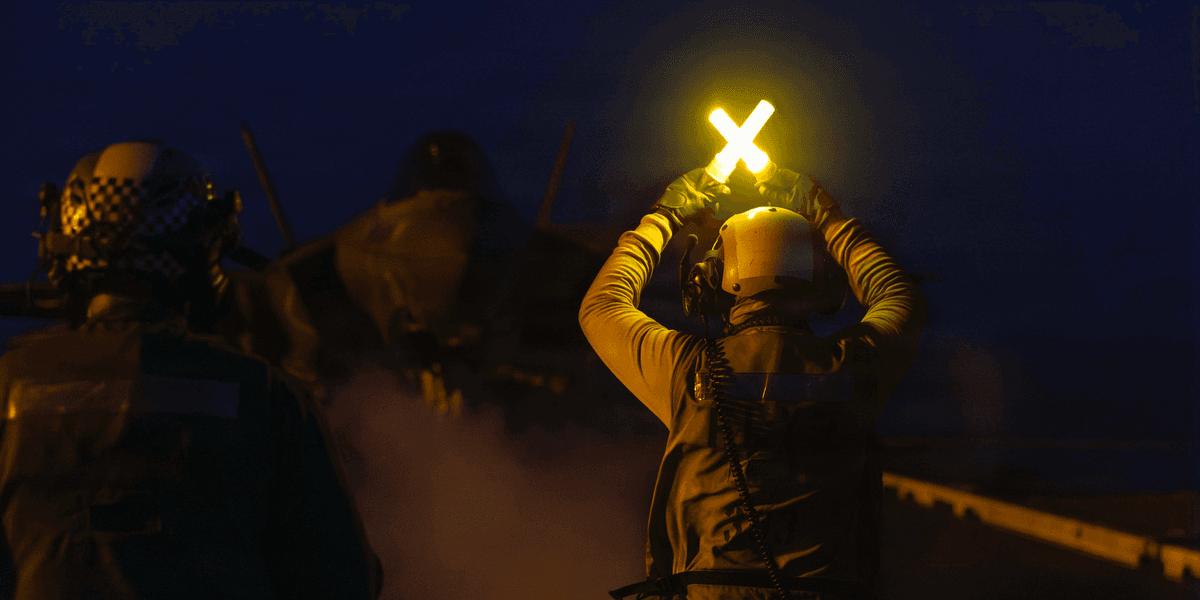
My perception is that the balance of power in the Strait of Hormuz is about to shift dramatically. The arrival of the American amphibious assault ship USS Tripoli, currently progressing westward from Singapore at the head of a Marine Expeditionary Unit (MEU), represents a new problem for the Iranian regime.
This elite force of approximately 2,500 troops is moving at maximum speed toward the region, signalling Washington’s potential shift from airstrikes to the deployment of ground troops.
The MEU is a self-contained, integrated force combining ground combat elements with artillery, amphibious vehicles, fighter jets like F-35s, and attack helicopters.
Its primary objective could be to regain control over the Strait of Hormuz from Iranian forces and the IRGC, which have disrupted global shipping.
Or it could be for raids on islands and shore bases used by the Iranians as missile and drone launch points, or for taking full control of Kharg Island, Iran’s economic lifeline.
Others have suggested the Marines might be used as armed escorts on civilian shipping transiting the Strait, although here their influence on Iranian attacks from the air, sea, and sub-sea would be limited. And there are hundreds of hips now stacking up to make the passage, so this would be a gargantuan undertaking.
Other possible missions might also include highly sensitive tasks, such as securing enriched uranium stocks to prevent any “dirty bomb” scenario, or collaborating with the CIA, Mossad, and others to engage opposition groups and build an internal resistance movement to overthrow the regime.
Meanwhile, European states dither, and their influence is much diminished on the global stage. Britain’s Prime Minister is understood to be consulting lawyers yet again about the rights and wrongs of the UK becoming more actively involved.
This is hardly the robust and decisive leadership that the situation and the British electorate require.