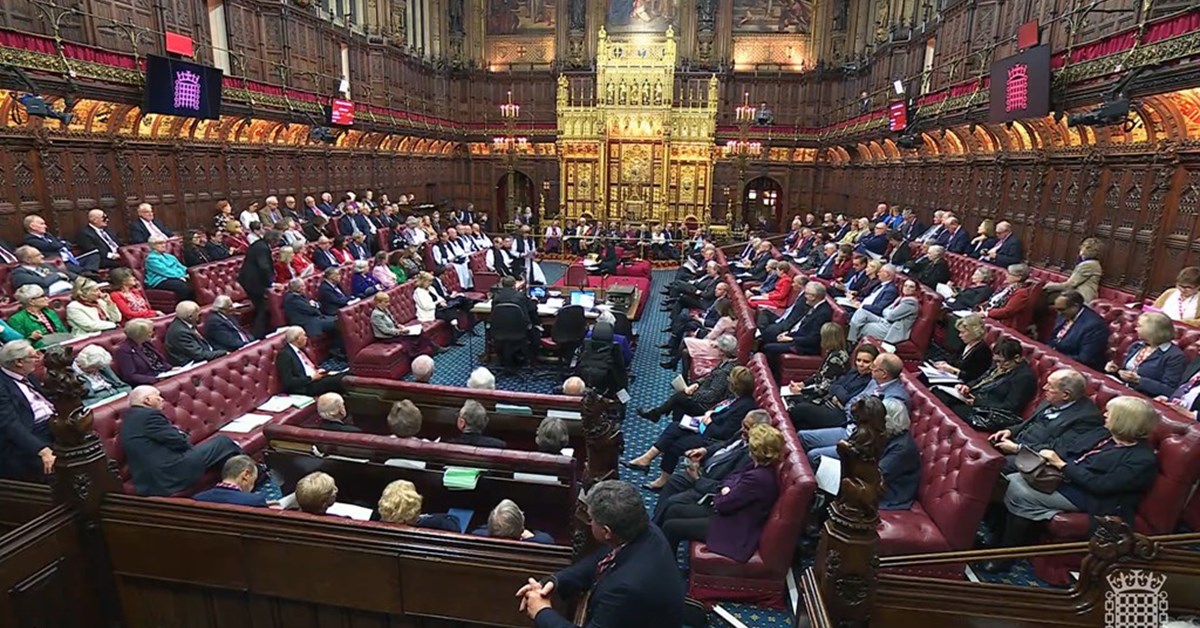
THE Archbishop of Canterbury, speaking in the House of Lords on Wednesday night against the decriminalisation of abortions carried out outside the legal framework, said that the legislation “risks making an imperfect situation worse”. Nevertheless, a majority of peers went on to vote for full decriminalisation.
The Archbishop interrupted her pilgrimage from St Paul’s Cathedral to Canterbury to attend the Lords for the debate and the vote on a Commons amendment to (now Clause 208 of) the Crime and Policing Bill.
She spoke of the Church of England’s “principled opposition” to the move, “recognising that there can be limited conditions under which abortion may be preferable to any available alternatives. . . This is based on the belief of the infinite worth and value of every human life, however old or young, and including life not yet born. The infinite value of human life is a fundamental Christian principle that underpins much of our legal system and has shaped existing laws on abortion.”
MPs had voted last year in favour of the amendment (News, 27 June 2025), tabled by the Labour MP Tonia Antoniazzi. Baroness Thornton (Labour), a former health minister, who was backing the amendment in the Lords, said that, “since 2022, there has been in place national oversight within the Crown Prosecution Service for the prosecution of abortion offences and that, under this framework, multiple women have been prosecuted, despite judges in the cases calling for the CPS to reconsider”.
Also in favour, Baroness Hazarika (Labour) said: “For that small number of women who end up doing this at a late stage in their pregnancy, they are not doing it for the fun of it. They are often abused and often in situations of domestic violence; they are often from very marginalised communities, such as my own community — from the Muslim community, or from other more isolated communities.”
The legal framework includes the need for the signatures of two doctors and time limits at which terminations can be carried out. Under the 1967 Abortion Act, a registered medical professional could terminate a pregnancy within 28 weeks where there was a risk to the life of the pregnant woman, or of harm her physical or mental health, or that of any of her family members. But, in 1990, the Human Fertilisation and Embryology Act 1990 lowered the time limit to 24 weeks for most cases, and restrictions were removed for late abortions in cases of risk to life, foetal abnormality, or grave physical and mental injury to the woman.
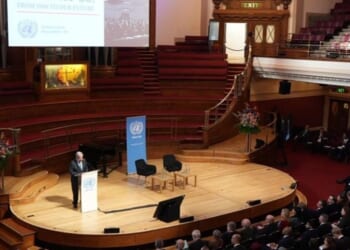
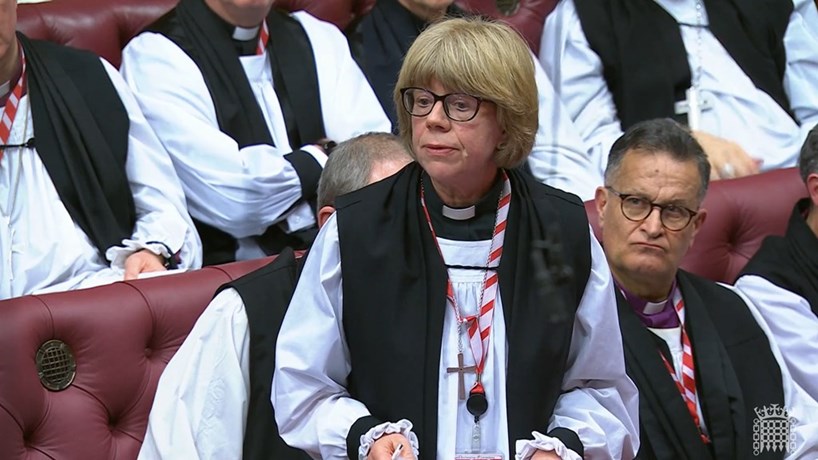 Parliament TVThe Archbishop of Canterbury, who interrupted her walking pilgrimage to attend the House of Lords for the debate and the vote
Women who end their pregnancy outside the legal framework risk risk prosecution and imprisonment under the Offences Against the Person Act 1861.
In 2024, an investigation by the BBC found that an “unprecedented” number of women were being investigated by police on suspicion of illegally ending a pregnancy. The abortion provider MSI said that it knew of up to 60 criminal inquiries in England and Wales since 2018, compared with almost none before.
On Wednesday night, Baroness Monckton (Conservative) tabled an amendment in the Lords to overturn support for what she called the “radical proposal” that was the Antoniazzi amendment.
Baroness Monckton was backed by Archbishop Mullally, who said: “Decriminalisation of abortion is a question of such legal, moral, and practical complexity that I do believe it cannot be properly addressed in an amendment hastily added to another Bill. Consideration of any alteration to our abortion laws needs public consultation and robust Parliamentary processes to ensure that every aspect of this debate is carefully considered and scrutinised.”
The other Lords Spiritual present were the Bishops of Chelmsford, Coventry, Chester, Leicester, Southwell & Nottingham, Portsmouth, Sheffield, Chichester, Hereford, and Oxford.
Baroness Monckton’s amendment was lost by 185 to 148.
Archbishop Mullally also spoke in support of amendments from the Bishop of Leicester, the Rt Revd Martyn Snow, and Baroness Stroud (Conservative), which would have reinstated in-person consultations — which were the practice before the pandemic — before the prescription of drugs for the termination of a pregnancy.
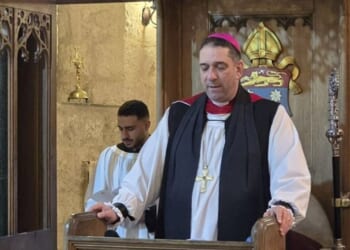
Bishop Snow’s amendment related to patients below the age of 18. He said: “My amendment offers a reminder that the needs of children and young people should be paramount in our thinking, and in that of all who work with them, including abortion providers. My amendment asks for one proportionate safeguard: that when a child is the patient, a medical professional meets her before prescribing. I invite noble Lords to consider whether that is really too much to ask.”
Archbishop Mullally, supporting the amendment, said: “We have a particular duty of care to those under 18 to ensure that they are properly cared for and supported while making such difficult decisions.
“I am reminded of the call of the prophet Micah both to do justice and to love mercy. Balancing justice and mercy is the challenge that we are debating today. I do not think that women who act in relation to their own pregnancies should be prosecuted, but I also do not wish to see any increase in late-term abortions.”
Under current law, it is legal to take prescribed medication at home for termination if a woman is less than ten weeks pregnant. During the first Covid-19 lockdown in March 2020, regulations were changed to allow women to have medical abortions at home after a phone or video consultation, in a move that was made permanent in 2022, meaning that women could take pills at home for gestation of up to nine weeks and six days.
The Lords voted by 191 to 119 against bring back compulsory in-person consultations.
On Thursday, the Roman Catholic Archbishop of Liverpool, the Most Revd John Sherrington, who is the lead bishop for life issues for the Bishops’ Conference of England and Wales, said that he was “deeply distressed” by the vote.
The RC Archbishop of Southwark, the Most Revd John Wilson, said: “This is a truly tragic moment for our nation.”
The UK director of the Evangelical Alliance, Peter Lynas, said that he was also “deeply concerned”. He continued: “As Christians, we believe every life has inherent dignity. Parliament must now act to address the risks created by this decision, ensuring women in crisis pregnancies receive compassionate, life-affirming support, and that both mother and child are cared for with dignity before and after birth.”