A YEAR of “significant organisational change and upheaval” under way at the Church Army will entail property disposal and the closure of its Marylebone project supporting homeless women.
This week, the charity’s CEO, Matt Barlow, spoke of the belief that God was “at work in the midst” of it. “Jesus speaks of pruning for fruitfulness, and already we are seeing the green shoots of God’s blessing. Church Army is emerging from a difficult time and the atmosphere is changing.”
The charity announced last year that extensive restructuring and a significant reduction in its workforce would be necessary in order to avoid running out of reserves in the next 12 to 18 months (News, 7 March 2025). The Board has announced a move “away from being a charity that focuses much of its time and effort on running projects, to being a movement that equips and supports an army of evangelists, their churches and dioceses, through effective training, resourcing, networking and promoting best practice”.
“With fresh clarity around our purpose, a new leadership team and even some new offices, we are believing that God will use us to equip a new generation of evangelists, building strength into our existing community,” Mr Barlow said this week
In the past year, the charity’s Centres of Mission — set up in areas of deprivation, and combining community projects with evangelism — have been reduced in number from 25 to ten. Last September, the board announced that, after more than three years as part of the Church Army’s family, the Waterways Chaplaincy would be “taking steps towards a new future outside of Church Army’s governance” (Features, 1 March 2024). The Church Army research unit also closed last year.
The Marylebone Project offers 112 long- and short-term beds for homeless women, including emergency beds for immediate need. Between 2021 and 2024, it made losses of £2 million. The Church Army began negotiations with Westminster City Council in March 2025, in the hope that the project might be able to continue. But the council’s survey of the buildings had concluded that “the financial commitment to invest in the provision would be significant, and they are unable to proceed”, a Church Army statement said.
The charity is now marketing the properties, with the project set to close in September. It was “committed to ensuring that every woman is supported through a safe, dignified transition into appropriate alternative accommodation”, the statement said.
In 2023-24, expenditure of £11.1 million exceeded income by £3.8 million. In the following year, this increased to £5.4 million, after recognising the £1.3 million loss on the sale of the 26 investment properties known as the Bushey flats, which were sold as a portfolio to avoid lengthy delays of individual sales. Held on the charity’s books at the cumulative individual values of £6 million, the properties were sold after the year end for £4.7 million to an investor, in order to release cash for the next two years.
The price reflected the market value of the portfolio, the Stamp Duty payable, and avoided potential lengthy delays, the annual report says. Some of the proceeds were used to repay the £1.6 million balance of a loan of £2 million provided by Stewardship, in 2024, to provide working capital while properties were sold.
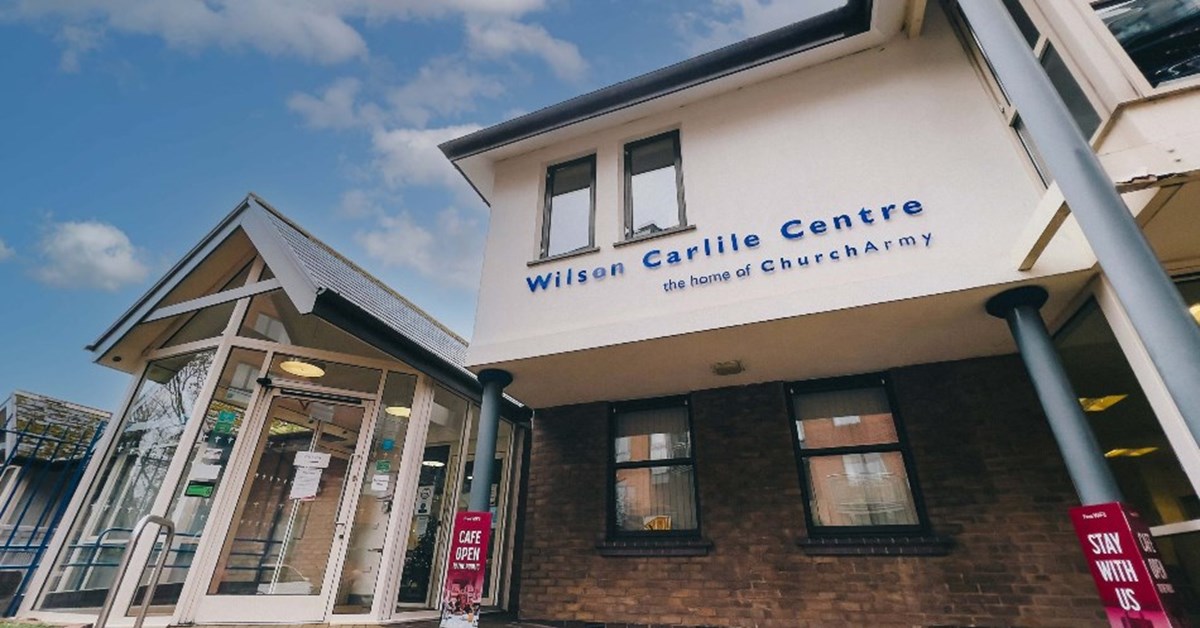
The board is still in the process of selling properties in Sheffield and London, including the Wilson Carlile Centre, which is on the market for £3 million. The charity said that it was in the final stages of agreeing a sale. The properties are expected to generate “significant capital gains as these are held in the balance sheet at historic values”, the annual report says. The Board has set a target to reduce the operating deficit to £2.3 million this year, and £0.8 million in 2027.
The Church Army has been funding a deficit budget from its reserves for several years. By the end of March last year, its unrestricted free reserves had almost halved, from £8.3 million to £4.3 million. It had previously worked to a target of £6.5 million of free reserves, but the Board plans to use up to £5 million of free reserves “as the organisation works to deliver a major change in its operations and income streams to move to a more sustainable model”. Reserves are primarily held in investment properties, all of which are being sold. As of the end of March last year, the charity had used up £2.2 million of the £5 million.
While total income has increased by 12 per cent since 2021, total expenditure has increased by 45 per cent. Last year, expenditure fell slightly from £11.15 million to £11.09 million, but the gap with income remains substantial.
Mr Barlow confirmed this week that an external review of “the various strategic decisions that were taken to resolve the deficit budget situation and their implementation”, commissioned by the Board, was underway. The Board was “seeking to reflect and learn to strengthen future governance of the charity”.
He also expressed gratitude for the “incredibly valuable work of everyone involved with Waterways Chaplaincy” and of his belief that it could be stronger with its own independent identity.
A bright spot in the annual report is the Missional Youth Church Network, which partners with churches, dioceses, schools, and communities to develop new expressions of church “for young people by young people”. Awarded £600,000 in funding from the Church of England Strategic Mission and Ministry Investment Board in 2024, it seeks to grow the number of churches from 54 in 2025 to 125 by the end of the decade.
The annual report suggests that the “public uncertainty over the future shape of belonging to Church Army” may be a factor in the falling number of candidates exploring a vocation as a Church Army Evangelist, while noting a decline in the Church of England at large.
”Much of 2025-26 will be related to significant organisational change and upheaval,” it says. “The leadership and board have given serious consideration as to the risk of attempting so much change in such a period of time. It was decided that this approach was necessary in order to achieve the financial restructuring in a timely manner, recognising the financial risk of not moving fast enough.”
“Thanks to a fresh reliance on prayer and renewed emphasis on sharing Jesus, hope and expectation abound,” Mr Barlow said this week.