I HAVE always found comfort in the dark. Some readers might find that troubling, especially when said by a priest. Quite rightly, our faith makes a great deal of light — indeed, Christ is the Light of the World. None the less, I associate darkness and shadows with warmth and joy. I suspect that it is a childhood association. When I was little, I loved to snuggle down under my bedclothes at night. I felt safe in the warmth and darkness. It was a realm where it was safe to dream. Recently, I was diagnosed as autistic. I now wonder whether my love of dark places is a token of my difference.
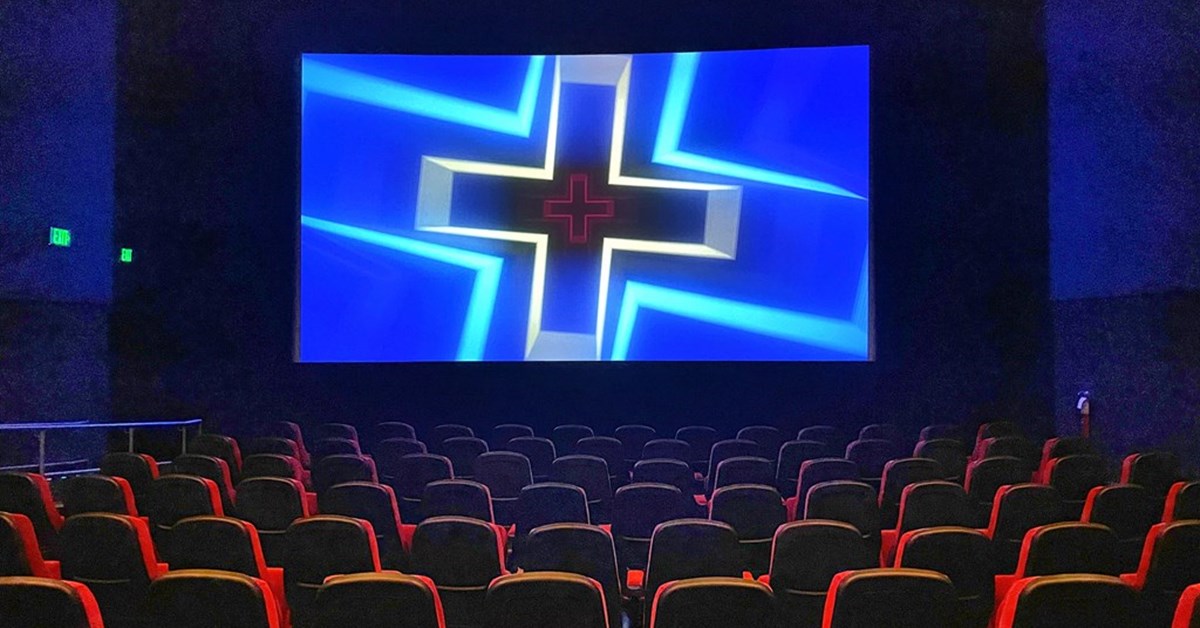
Darkness can be holy, too. I have known this since, as a small child, I fell in love with cinema. In a childhood that was not especially religious, the shadowed realm of the cinema screening room was filled with magic, wonder, and — dare I say it — holiness. I would be lying if I offered a specific cinema room as my holy place. I have spent so much time in so many.
All I know is that, when I was little, I fell head over heels in love with cinema, and I have never lost my sense of awe and wonder when the lights dim, and the music or sound effects begin, and the world’s greatest magic-lantern act unfolds on screen. The great film critic Robert Ebert said: “No good movie is too long. No bad movie is short enough.” Even when I have come home disappointed or angry with what I have seen at the flicks, I always enter the screening-room with hope and expectation.
SCHOLARS have long theorised about the meaning of cinema. It has been claimed that it forces us to become voyeurs as we watch the action, vicariously, from the safety of the dark. Personally, I am more drawn to the showing room’s dreamlike qualities. In the dark, you can become anyone on the screen; like a religious supplicant, it is possible to let go of your own identity and be formed into something new through the on-screen play of image, story, character, and sound.
When the cinema is full, it can feel like a shared dream or an imaginative contemplation. Laughter, tears, hopes, and fears are amplified, but also held in the story unfolding in communal space. This, for me, is holy ground. It is what I want my experience of church to feel like, which, so often, falls short.
HOLINESS is a potent word. Perhaps it is too important to be applied to a cinema screening room. In itself, it is such a secular, banal space, so often the scene of sound and fury rather than meaning, and filled with the scent of cheap hot dogs and overpriced popcorn.
I know that the cinema I grew up on was essentially entertainment, and holiness and entertainment are usually bad bedfellows. None the less, in the screening room’s dark space, I do feel closer to God. Francis Ford Coppola said: “The very earliest people who made films were magicians.” Cinema is a kind of enchantment. God, of course, is the ultimate enchanter. He liberates our souls from imprisonment. I find, in a disenchanted world, the shadowed world of cinema still, more often than not, directs me towards the God of grace.
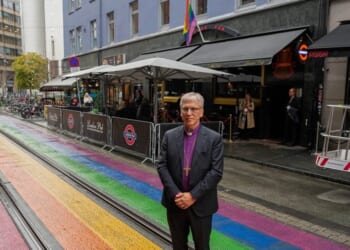
The Ven. Dr Rachel Mann is the Archdeacon of Bolton and Salford, in the diocese of Manchester.