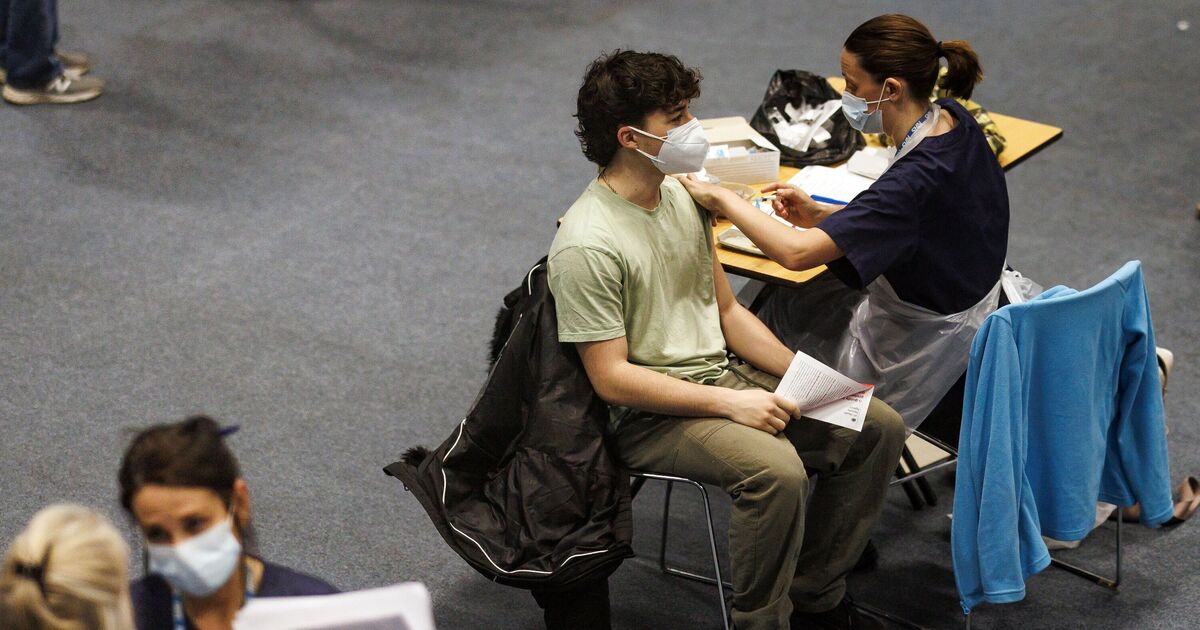
Health bosses have warned that the meningitis outbreak may spread outside of Kent (Image: Getty)
Health officials studying the Canterbury meningitis outbreak believe they may see some sporadic household cases outside of Kent, the director of public health at Kent County Council has told a briefing.
Dr Anjan Ghosh said that after modelling three possible scenarios, the “most likely” outcome in the next four weeks is that the meningitis outbreak would be confined to small household clusters outside of Kent, spread by students who had been unknowingly infected while on campus. This would happen in “people who’ve left, they’ve gone off campus, and many of them don’t stay in Kent, they go and stay elsewhere,” Dr Ghosh explained.
He added: “They were incubating when they left, and then they become cases, and there are small household, sporadic clusters outside of Kent.”
Health chiefs modelled three outcomes over the next four weeks since “that’s the time it takes for this whole thing (to) really subside”.
The first scenario was that the outbreak would remain in Kent. The third scenario, which he described as the “worst case” would result in another cluster entirely forming. However, he said this was “highly unlikely”.
Despite suggesting the “peak” may have passed, health chiefs suggested cases may continue to rise. The UK Health Security Agency confirmed two new cases on Friday, bringing the total to 29.
Two people have tragically died from the infection, Juliette Kenny, a sixth-former, and a 21-year-old university student.
The bacterial meningitis has been confirmed or suspected in four schools in Kent, as confirmed on Friday. Wes Streeting said sixth form students and pupils should continue to attend schools.
A year 13 pupil named as Juliette Kenny has died in the outbreak at Queen Elizabeth’s Grammar School, Faversham. A pupil from Norton Knatchbull School, Ashford, been admitted to hospital.
A year 13 pupil is believed to be in hospital Simon Langton Grammar School for Boys, Canterbury, with meningitis, and it was reported on Tuesday that a year 13 student was being treated for meningococcal disease from The Canterbury Academy.
The “unprecedented” outbreak has been traced back to superspreader events at Canterbury’s Club Chemistry nightclub, between March 5 and 7.
Health bosses are currently investigating whether mutant bacteria evolved “additional superpowers”, since it is rare to see such high numbers seemingly stem from a single venue.
According to the NHS, bacterial meningitis – which is more threatening than the viral disease – is spread through sneezing, coughing and kissing, but it is usually passed on by people who carry these viruses or bacteria in their nose or throat, and are not ill themselves.
So far more than 8,500 doses of antibiotics have been given to eligible people in Kent, which reduce the risk of developing meningitis by 90%.
At least 1,600 jabs of the meningitis B (MenB) was administered as of Thursday evening, NHS England said, and a new vaccination centre will open at Faversham Health Centre on Friday as part of the expansion.
THIS IS A BREAKING NEWS STORY AND IS BEING CONSTANTLY UPDATED.