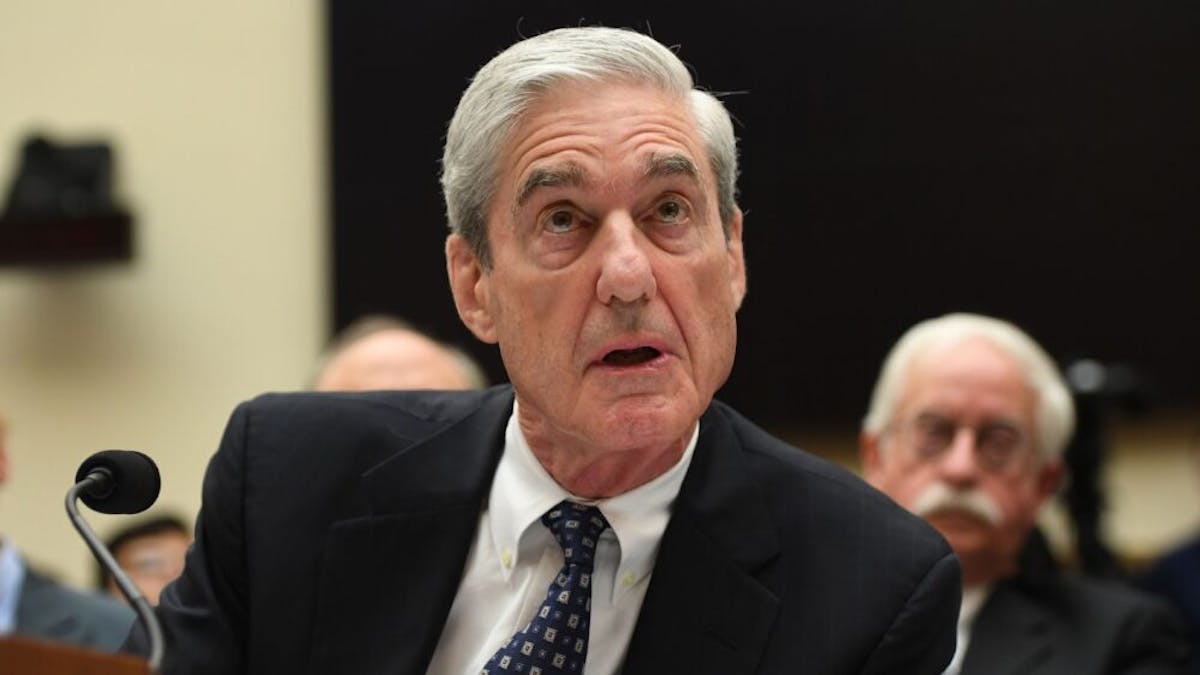
Former FBI director Robert Mueller, whose investigation into President Donald Trump’s first presidential campaign made him a Democratic hero, is dead at 81.
As special counsel, Mueller led the probe into whether there was Russian interference in the 2016 presidential election. The investigation, which took place during Trump’s first term, earned Mueller praise from Trump’s enemies, and scorn from the president.
“With deep sadness, we are sharing the news that Bob passed away last night. His family asks that their privacy be respected,” his family said in a statement, according to the New York Times.
“Robert Mueller just died. Good, I’m glad he’s dead. He can no longer hurt innocent people!” Trump posted to Truth Social on Saturday.
While Trump was critical, others lauded Mueller’s career.
“Robert Mueller devoted his life to service — from the Marine Corps to leading the FBI and serving as Special Counsel,” Sen. Mark Warner (D-VA) posted to X.
“He believed deeply in the rule of law and the responsibility to uphold it. His legacy is one of integrity, duty, and strength of character. My thoughts are with his family,” he added.
Mueller had Parkinson’s disease, the New York Times reported in August.
He served as the head of the FBI during under Presidents George W. Bush and Barack Obama from 2001-2013.
Before his decades in federal law enforcement, Mueller served as a Marine Corps officer during the Vietnam War, where he was awarded a Bronze Star for valor and a Purple Heart after being wounded in combat.
His background helped shape his reputation in Washington as an apolitical institutionalist, a figure trusted by leaders in both parties.
Appointed FBI director by George W. Bush just one week before the September 11 attacks, Mueller oversaw the bureau’s transformation into a counterterrorism-focused agency during one of the most consequential periods in its history.
Mueller returned to the spotlight years later as special counsel investigating Russian interference in the 2016 election, a probe that would define his public legacy. While the investigation concluded in 2019 that Russia had interfered in the election, it did not establish a criminal conspiracy between the Trump campaign and Moscow. Still, the probe fueled years of political conflict.
Trump repeatedly blasted Mueller throughout and after the investigation, calling the probe a “witch hunt” and accusing the special counsel’s team of bias. Even after the report’s release, tensions lingered, with Trump and his allies arguing the investigation had unfairly damaged his presidency, while critics maintained Mueller’s findings raised serious concerns about conduct and obstruction.