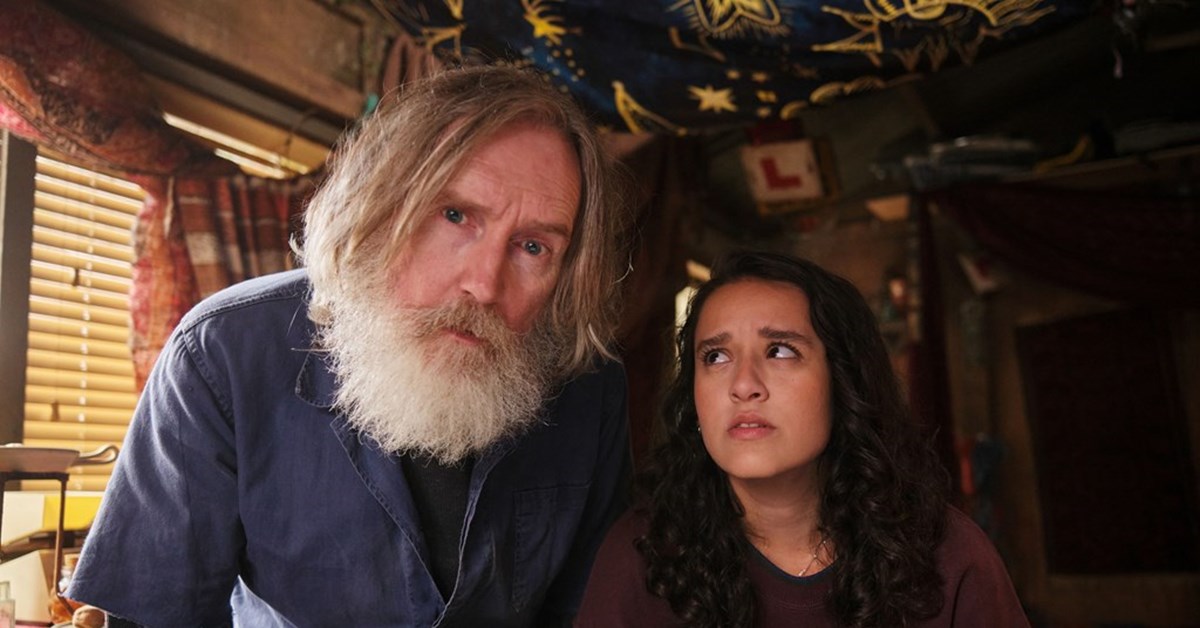
SMALL PROPHETS (BBC 2, 16 March), a quirky six-part drama written and directed by Mackenzie Crook, concluded with a tantalising promise that it will be continued. I decided to watch this slightly supernatural surprise smash hit after reading word-of-mouth approval online. I wasn’t disappointed.
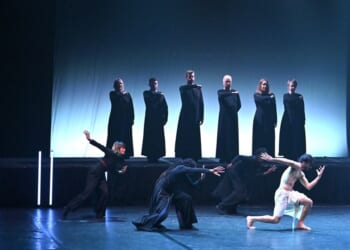
It stars Pearce Quigley as Michael, an inconsiderate neighbour whose house is overloaded with cardboard boxes, and who has an overgrown garden infringing on the house next door. Michael’s girlfriend disappeared, seemingly without trace, seven years ago on Christmas Eve. He has been existing in the liminal stasis of denial ever since.
He works at the Tool Box, a DIY store, managed poorly by a hapless boss (played by Crook) alongside some equally useless colleagues, including Kate (Lauren Patel), who becomes his unlikely friend. His father, played with frenzied brio by Michael Palin, lives in a care home and appears to be suffering from dementia. This is why Michael doesn’t at first take seriously his father’s advice that he ought to try growing homunculi, using a recipe found in an old diary. These are the titular Small Prophets, prophesying spirits, bound to tell the truth — but only if you have the courage to ask.
It is hard to describe the series further without too many spoilers. It is gentle, wryly funny, and completely bonkers, but gloriously so. Each episode is just under half an hour long, making it perfect binge fodder. It offers warmth and surprises.
Assisted Dying: What next? (BBC 1, 16 March), an exploration by Panorama, presented by Fergus Walsh, was shown before the assisted-dying Bill fell in the Scottish Parliament (News, 20 March); but the issue is still a live one for England and Wales. This programme concerns itself with the questions whether change is coming and whether it can be stopped — a framing that I thought betrayed implicit bias: this legislature represents a momentous potential shift in public attitudes to death and dying, and, of course, to the value of life itself. Whether it should be stopped might be a better question.
Despite attempts to introduce a balance of views, including using the existing law on assisted dying in Australia as an example, I found the bias persistently irritating. Baroness Finlay, a doctor who has years of experience in palliative care and is an opponent of the Bill in the House of Lords, was asked whether she was undermining democracy, whereas the motives of the architect of the Bill, Kim Leadbeater MP, were not similarly questioned.
“This isn’t going away,” she said. “We will bring it back next time; we will use the Parliament Act, if necessary, to ensure the Lords cannot block a second time.” Such words hint that this issue has consequences not only for the dying, but for our political traditions, too.