CONSCIOUSNESS and narrative lie at the centre of the Christian understanding of humanity’s relationship to God. Start the Week (Radio 4, 16 March) explored both.
In the 1990s, the neuroscientist Dr Christof Koch and the philosopher Dr David Chalmers made a bet: Dr Koch wagered that, within 25 years, science would find which parts of the brain were responsible for consciousness. Dr Chalmers disagreed, and ultimately won the bet — consciousness remains the ultimate “hard problem” in neuroscience.
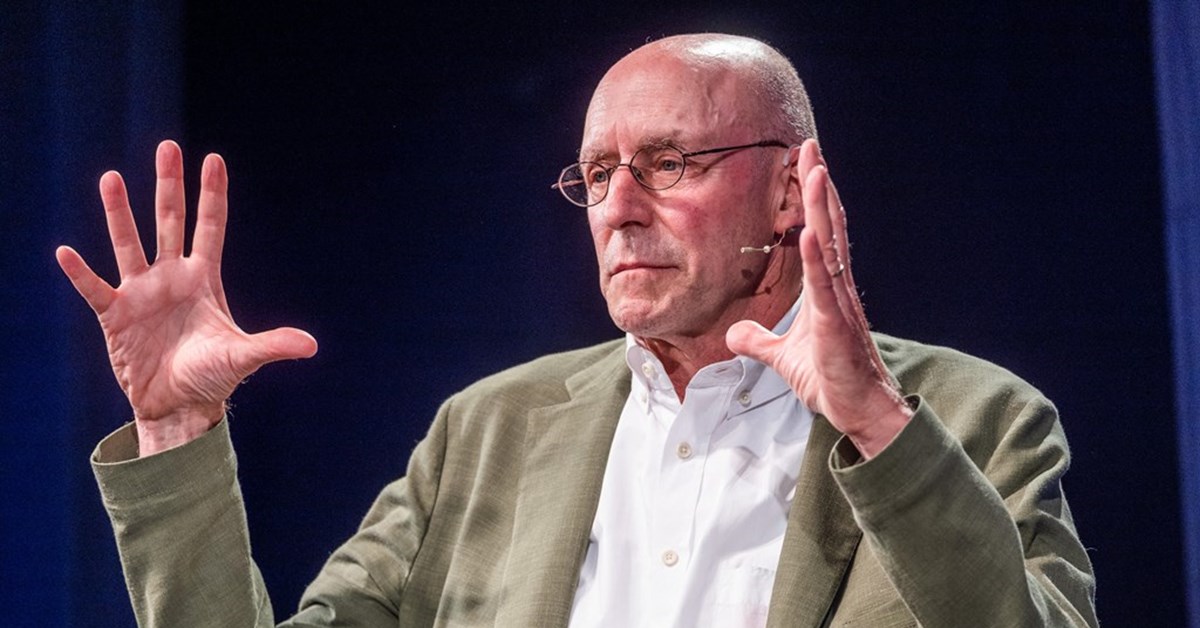
The science writer Professor Michael Pollan related this anecdote as he plugged his new book on consciousness, A World Appears. The basically materialist understanding of consciousness which he, like most of us in the modern West, took as given was challenged by both plant consciousness and his experiences with psychedelic drugs. He found, contrary to popular myth, that psychedelics did not clear his experience of the world, but, instead, “smudged the windscreen”, making him aware of how greatly our perception is mediated by our own consciousness.
Non-materialist ideas of consciousness exist: panpsychism, the view that consciousness exists everywhere and in everything, and idealism, the view that consciousness precedes matter and is like a field that human beings channel. These, too, have enormous lacunae.
Professor Fay Bound-Alberti, a cultural historian, blamed Descartes for our location of the mind within the brain. Professor Bound-Alberti, who is face-blind, believes that such interiority dates only from the Renaissance, when we first became aware of our own faces. Mirrors in their current form were a rare luxury until the 19th century, and awareness of one’s own face has recently morphed into an obsession, thanks to social media.
The author Mary Costello explored consciousness and unconsciousness through the vehicle of the characters in her novels and seemed particularly interested in Jung. She identified the human impulse for the divine with our impulse for consciousness, although she felt the need to apologise for this sounding a little “divine-sparky”.
Sunday Sequence (Radio Ulster) reported that the tech billionaire Peter Thiel, a patron of J. D. Vance, went to Rome last week to give an unadvertised and invitation-only lecture on the subject of the Antichrist. The feature made disappointingly little effort to understand Mr Thiel in his own terms — much of what he has said is available online — and even reported that he believed that AI would usher in a new revelation from God, which he definitely doesn’t.
Audrey Carville and Christopher Lamb also seemed mystified that Mr Thiel, having been brought up in an Evangelical home, now seemed to want to catch the eye of the Vatican. I was surprised that they didn’t mention that he was openly gay and raising children with his husband — surely a material factor in his rejecting of Evangelicalism for what he describes as a “small-‘o’ orthodox” faith.
Mr Thiel can be a troubling presence, but why criticise a caricature rather than what he has said publicly about himself?