THE Armenian Apostolic Church has denounced new claims by the national government and rejected the allegations of the country’s Prime Minister, Nikol Pashinyan, that senior clergy are leading a “war party” in co-operation with foreign intelligence.
“Emphasising the imperative of respecting and protecting the Church’s rights and autonomy, as well as the principles of justice and democracy, we condemn these arbitrary and discriminatory actions,” the Church’s governing Supreme Spiritual Council said. It is chaired by Catholicos Karekin II, who was refused government permission to attend the funeral of Patriarch Ilia II in neighbouring Georgia last week.
“We condemn the persecution of the Armenian Church and its clergy, the imprisonment of clergymen on fabricated charges, as well as attempts via state mechanisms to create artificial obstacles to the Church’s activities,” the Council said.
Its statement was a response to Mr Pashinyan’s recent speech to the European Parliament, in which he accused Catholicos Karekin and other “high-ranking clergymen” of spreading disinformation against Armenia’s US-brokered August 2025 peace agreement with Azerbaijan over the war-torn Nagorno-Karabakh region.
The Council said that chaplains had recently been barred from Armenia’s armed forces under a “unilateral decision” by the Defence Ministry, while “anti-Church rhetoric” was used to undermine religious freedom and “the constitutional foundations of Church-State relations”.
Church leaders have charged Mr Pashinyan’s liberal government, currently negotiating accession to the European Union, of conceding too much to Azerbaijan under the 2025 peace agreement, while government officials have retaliated by backing dissident bishops calling for Karekin’s resignation.
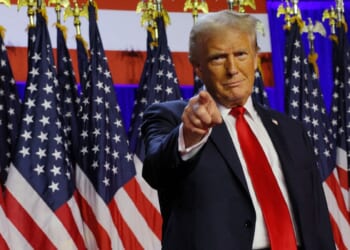
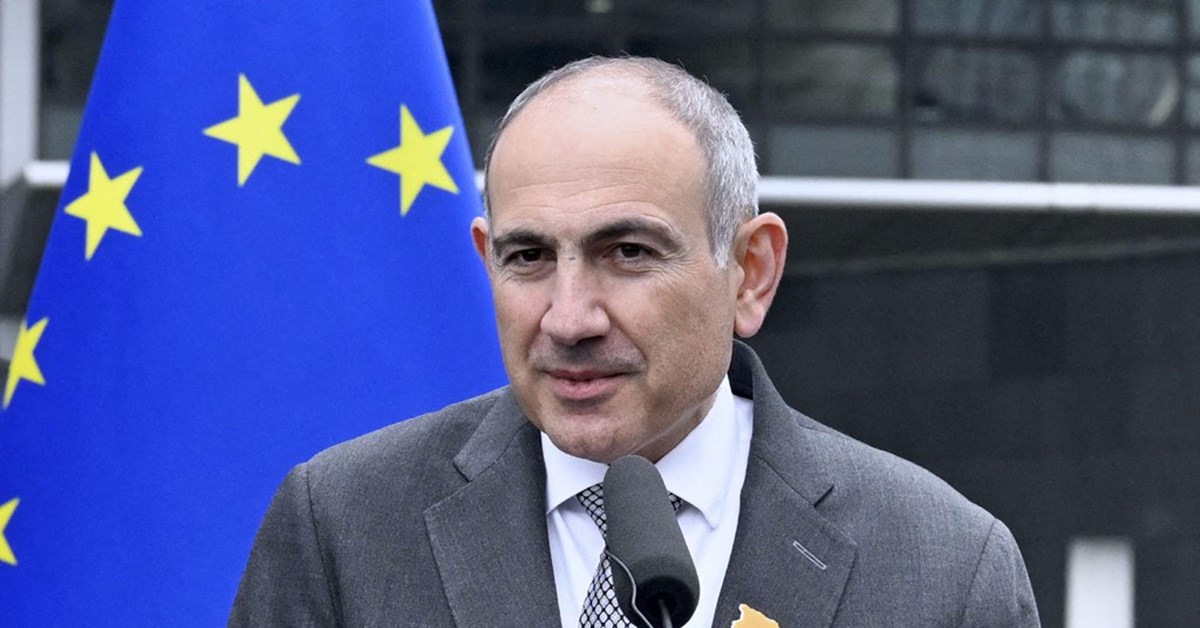
In a speech to the European Parliament on 11 March, the Mr Pashinyan accused church leaders of attempting to restart the bitter 35-year ethnic and territorial conflict with Azerbaijan, and of spreading claims abroad in league with “foreign special services” about political prisoners and an incipient dictatorship.
“Some clergymen, who cynically violated all the rules of spiritual good conduct, have assumed leadership of the war party,” Pashinyan told MEPs.
“Some are using the altar of Christ to preach conflict, war, and intra-Armenian violence — this cannot be tolerated in any democratic country.”
In its statement, the Supreme Spiritual Council dismissed Mr Pashinyan’s claims as “unacceptable and unfounded”, and said that they were “clearly intended” to justify “further repressive measures” by his government.
The Conference of European Churches in Geneva has voiced concern about the growing Church-state tension and “societal polarisation” in Armenia, urging the Pashinyan government to maintain “due process, judicial independence, transparency and proportionality”, especially in the run-up to parliamentary elections on 7 June.