THE Church does not exist for the sake of the Church: it exists for the sake of (and to be a sign of) the Kingdom of God. This is a bold statement, which, if right, establishes the need for Christians and their institutions to engage in shaping the world that they inhabit. The established Church of England, then, cannot duck the responsibility to imagine and reimagine its particular world, reaching beyond the narrower interests of its own polity and people.
This conviction lies behind my decision to conduct a two-year inquiry into the future of Europe, drawing on my position as a diocesan bishop and a Lord Spiritual with international and foreign-affairs experience. The report should have been published while I was still in office, but health incidents and retirement moves delayed it.
Now, out of office, my conviction has not diminished: the report is a contribution to a debate that is urgent. As history keeps demonstrating, if we leave the hard work and thinking of how a society should be shaped to other actors or powermongers, we lose the right to criticise when bad things happen as a consequence.
It is not enough, however, simply to ask the “How” questions: any answers have validity only if they emerge from a clear answer to the primary “Why” question. For example, if we think that liberal democracy, the rule of law, and human rights are important, then we must have a better case to put than “because they are”. Necessarily, everyone makes assumptions about what ultimately matters in life, but those assumptions need to be taken out, examined, challenged, and, if necessary, changed. After all, the Greek word for repentance, metanoia, which means literally “a change of mind”, lies at the heart of Christian theology and practice.
A caveat: addressing the part played by Christian thinking and theology in shaping the Europe of the past 1000 years is not to diminish the contributions of non-Christians. Indeed, underlying a Christian understanding of society is the responsibility to create space for those who live, or think, differently.
But my concern is to address Christian Churches directly — especially when they are tempted to confuse Christianity with Christendom — and seek a reappraisal of what is good and what is bad from our history as Christian actors on the continent, so as to think more clearly about what and how theology might shape our imagination and commitment to action.
THE reason that this matters is because politics must be driven by vision, and not simply by some sort of reactive functionalism. It is sobering in this generation to read the diaries of Victor Klemperer, a German Jewish philologist, from 1933 to 1945 in Germany, and discern possible parallels in how Churches protect themselves at the expense of proffering a different vision and committing themselves to a self-sacrificial engagement with the powers that be. Inherent in a prophetic Christian vocation is the courage to resist dehumanising public policy, standing up for a social reality that values people over power.
Stripping it all back to a fundamental theological anthropology (what is a human being, and why do we assume that we have value?) takes us to a biblical non-negotiable: that human beings are made in the image of God and are infinitely valuable.
Consequent to this is that individual value is accompanied by and conditional on how that individual exercises responsibility within the wider community of humanity. Radical (secular) individualism is inadequate and dangerous if divorced from a humanist solidarity. It is to the credit of think tanks such as Theos that they are working hard at what it might look like to recover a genuine Christian humanism as the basis of a renewed social contract. We have to start at home — with our own Churches.
My report, Re-imagining Europe: A Christian reflection, takes seriously the wider ecumenical world. I interviewed UK leaders, but also those engaged on the European mainland. (I chaired the Meissen Commission from 2007 to 2017, and was a member of the Governing Board of the Conference of European Churches from 2018 to 2023.)
During the conflicts and crises of the 20th century, Churches across the warring parties maintained their personal links. Friendships built up — and consciously forged — between the two world wars did not fall away because of national stresses. For example, see how important the relationship between Bishop George Bell and the young German theologian Dietrich Bonhoeffer was — often against the pressure of Churches wanting them to keep silent.
It is not surprising that the origins of what became the European Union were rooted in post-war Roman Catholic politicians whose vision in creating common institutions was driven by a conviction of human value, social order, human rights, and the rule of law. They were not alone, but they played their part in shaping and not simply reacting.
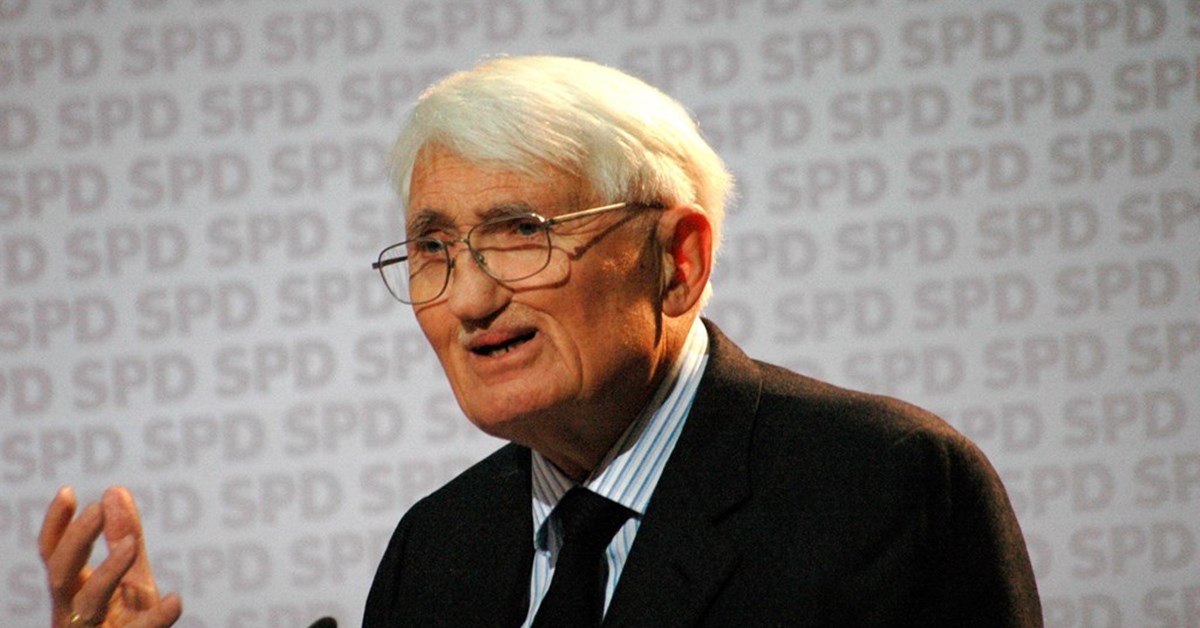
WE HAVE recently marked the death of the German political philosopher Jürgen Habermas, at the age of 96. Habermas argued vigorously and rigorously for the importance of a liberal democracy in Germany (and beyond) after the destruction and dehumanisation of Nazism and the Holocaust.
Liberal democracy could not merely be assumed. Power, he argued, must be spread widely, and not focused in an individual or a narrow and entitled elite. But the forms of law-based democracy that he helped to imagine and shape in West Germany were always going to be contested and complicated.
He believed firmly, however, that the intellectual thinking about democracy, humanity, and social value was not a luxury: indeed, it would underpin or undermine whatever social structures and processes would gradually emerge in post-war Germany. (He also believed that Western secular liberal thinkers had forgotten their roots, and needed to relearn Judaeo-Christian anthropology.)
In my report, I argue for the Churches to engage urgently in this work of imagining, shaping, and democratic reawakening — as some Churches in Europe are already doing. This is not “merely academic”: it has real-world consequences. If Christians, ecumenically and, together with other civil-society partners (including other faiths), want to see a brighter future than the one that we currently seem to be slipping into, then this work is vital and urgent now.
The Rt Revd Nick Baines is a former Bishop of Leeds. To download his report, Re-imagining Europe: A Christian reflection, visit: leeds.anglican.org