LIFE ON THE BREADLINE is a deeply passionate book — strident, opinionated, sometimes convoluted, and scornful of politicians and theologians alike — and yet embedded in dedicated personal experience and research. The author follows a similar path to the radical, prophetic Methodist minister John Vincent in Sheffield, now 95, depicted appropriately here as “the pioneering urban theologian”.
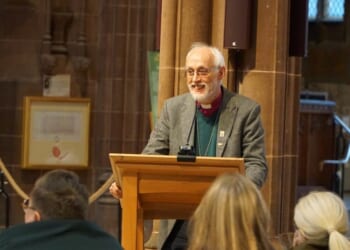
Dr Chris Shannahan, too, is a Methodist minister. A former RE teacher and youth worker in east London, he writes and speaks out against poverty, emphasising almost every sentence, as readers of the Church Times (Comment, 10 September, 2021) may already know or be able to hear from a video (on YouTube) of his Gore Lecture at Birmingham Cathedral last year.
His book opens with a sharp attack on Conservative politicians such as Norman Tebbit and George Osborne for — as he sees it — stigmatising the poor as “skivers” and “work-shy” rather than as victims of systemic poverty. But the heart of the book is its report of the “Life on the Breadline” qualitative survey that he led, funded by the well-respected Economic and Social Research Council.
This involved interviews and engagement with some 800 respondents across denominations: national church leaders, regional church leaders, and six local case-studies in Birmingham, London, and Manchester. It found general agreement among leaders that “since the 2010 General Election they had seen a significant rise in the number of people using food banks, the number of people who are homeless, are sleeping rough, who have insecure or low-paid jobs, are suffering from mental health problems, living in poor quality housing or are facing destitution”.
Those in smaller denominations were, understandably, unsure about how effective they could be in addressing these issues practically, compared, he notes, with well-financed bishops with a voice in the House of Lords. Subsequent chapters outline how this might partially be achieved through acts of caring, campaigning/advocacy, self-help/enterprise, and community-building.
He sees some merit in each of these “top-down” approaches, but finally calls for a more radical, holistic revolution.
Echoing the experience of post-apartheid South African and Latin American liberation theologians, he argues that this is a “Kairos moment” for Christians in Britain today and sees himself as “sowing the seeds of an austerity-age theology of liberation”: “The time has come to translate . . . words into action, to move beyond the common good and ram a spoke into the wheel of injustice. During Life on the Breadline, we caught glimpses of the politically engaged, imaginative, inclusive, holistic, bold and bottom-up Church that must arise if an austerity-age theology of liberation is to emerge and gain traction. . . It is time to act.”
This is the necessary prophetic voice of an archetypical Christian Dissenter. It does not represent the privileged, Establishment voices of those behind Faith in the City or those now pledging millions of much-needed historic funds away from parishes to address post-colonial remorse. But it might just be more effective for inspiring individual politicians with a social conscience of whatever party (and then their Government) to be more proactive on poverty. I certainly hope so.
Canon Robin Gill is Emeritus Professor of Applied Theology at the University of Kent.
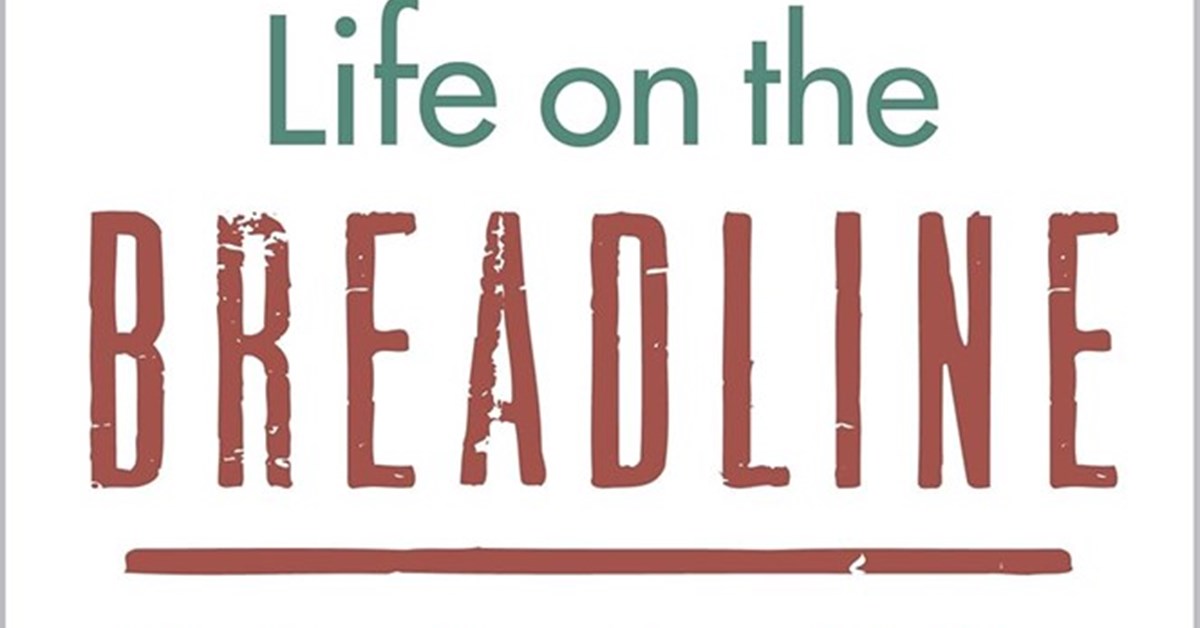
Life on the Breadline: Theology, poverty and politics in an age of austerity
Chris Shannahan
SCM Press £30
(978-0-334-06369-8)
Church Times Bookshop £24