DIVINE FEMININE, the latest work by the Anglo-Iranian experimental composer and turntable artist Shiva Feshareki, is billed by the BBC, which commissioned it, as an immersive spatial opera invoking female goddesses from many cultures. It is designed, according to the composer, “to reach out to an inclusive pantheon of deities in the hope that this connection might do something to connect the patriarchal mess in which we find ourselves”.
It is not an opera. They have plots, however preposterous. What we have is a series of goddesses — Kali, Anahita, Yemaya — and a chorus intoning lyrics from Jamaican British poet Karen McCarthy Woolf which draw on forms from all over the world: ballads, Afghan women’s landys, and incantatory Persian ghazals. There is a hint of a narrative structure when India Feshareki’s teenage Snowdrop with her “cool cherry vape” drops down a well to find the Irish goddess Brigid on the Atlantic seabed and replenish her sacred fire. There is no clear conclusion, however: just a chorus invoking the names of the world’s female deities and the soprano Emma Tring’s Brigid singing “I usher in the light”.
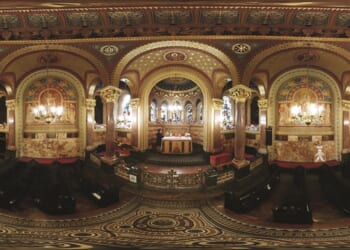
Conducted by Lucy Goddard and performed by the upper voices of the BBC Singers and Vox New Gen with the composer on turntables and bowed electric guitar, and with interjections from the flautist Karin de Fleyt, it filled the nave, aisle and gallery of St Martin-in-the-Fields on 5 March with lights and an hour-long “immersive 360° soundscape” as the black-clad performers wove in and out among themselves, and stamped and danced to Rebecca Namgaud’s choreography.
Fesharaki’s musical idiom is atonal, reminiscent of the work of John Cage and Laurie Anderson, with faint whiffs of Irish folk music for Brigid and Indian for Kali. No disrespect to the performers, whose credentials need no repeating, but the settings were sometimes so high as to strain their voices, and to my unaccustomed ear the soundscape was so loud, atonal, and largely arrhythmic that I had difficulty responding positively to the message.
It ended with Ms de Fleyt’s nimble fingers playing an Irish jig on a penny whistle as she led the company down and up the aisle. Perhaps more actual folk tunes would have provided musical variety and underlined the origins of the divine protagonists. A packed audience was loud in their applause. They may be more familiar with experimental music than I am.