(LifeSiteNews) — The Oklahoma House of Representatives, with the help of Republican votes, passed a bill legalizing “human composting” as an option instead of burial or cremation. The bill now heads to the state Senate.
“Unfortunately, it’s not Democrats pushing this bill in Oklahoma — it’s our own party,” said state Rep. Jim Shaw, a Republican who has been leading the charge to stop the atrocious affront to human dignity.
“Our dead deserve better than to be turned into human compost and scattered in our herb gardens,” Rep. Shaw told LifeSiteNews in an exclusive interview. “It’s time to stop commodifying the human body. It’s time to bring reverence and hope back into the way we bury our dead.”
‘Human bodies as fertilizer’
“Today the House advanced HB3660, a bill to legalize the use of composted human bodies as fertilizer,” Shaw wrote on Tuesday. “If this bill is put into law, Oklahoma joins 14 BLUE states that have legalized this process.”
“So, instead of outlawing this type of practice outright, we’re on track to take the use of humanure as fertilizer another disgusting step forward,” he added.
So, this was my day today…
Today the House advanced HB3660, a bill to legalize the use of composted human bodies as fertilizer. If this bill is put into law, Oklahoma joins 14 BLUE states that have legalized this process. So, instead of outlawing this type of practice… pic.twitter.com/CSo47cYw4D
— Jim Shaw (@ShawForOK) March 24, 2026
“They’ve been spreading ‘humanure,’ aka biosolids, on Oklahoma farmland for decades. This bill is throwing in composted human remains to be used as fertilizer,” Shaw continued in a subsequent post. “I’ve proposed a bill two sessions in a row to ban the application of biosolids as fertilizer in our state and it has been killed outright. This bill would take that practice to another level. It’s disturbing to say the least.”
They’ve been spreading “humanure” aka biosolids on Oklahoma farmland for decades. This bill is throwing in composted human remains to be used as fertilizer. I’ve proposed a bill two sessions in a row to ban the application of biosolids as fertilizer in our state and it has been…
— Jim Shaw (@ShawForOK) March 25, 2026
“I’ve been fighting the use of biosolids, human and industrial waste, as fertilizer in Oklahoma for the past two years. My bill to ban its use has been killed outright two sessions in a row. This bill is taking that process another step farther,” Shaw explained. “We’re going in the wrong direction.”
LifeSiteNews asked Shaw if Oklahoma churches and religious leaders had joined him in opposing HB3660.
“This bill really hasn’t been on anyone’s radar so far this session. It was passed unanimously from the House business committee, and until it hit the House Floor, it hadn’t gotten any kind of media attention that I’d seen,” Shaw said. “So, I posted about it through social media.”
Shaw’s post quickly went viral. “The outpouring of concern not just from Christians but from those guided by common sense has been remarkable. The fact that so many in the Legislature saw this as ‘not a big deal’ really highlights the contrast between the mindset of our legislators versus the people they’re here to represent.”
“I’m a Christian and oppose the commodification of human bodies,” Shaw told LifeSiteNews. “I also recognize that the way we treat the dead confesses something about what we believe about the nature of our lives and bodies and the life to come. Human composting (NRO) churns a body up in a container, heats the contents, and combines them with mulch, while pumping oxygen into the chamber to encourage faster decomposition. This treats the body as if it lacks value. But it doesn’t.”
Shaw also objects to the legislation for practical reasons, rooted in science and concerns for best practices in farming:
I oppose the bill for several reasons. I’m a new legislator and when I ran for office, one of the issues in my campaign was banning the use of biosolids, which is treated city sewage- human waste- for use as fertilizer on our farmland. It’s pasteurized but doesn’t completely remove cancer drugs, hormonal drugs, or forever chemicals. I’m a big believer in the “Make America Healthy Again” movement and anything that compromises the health and well-being of Oklahomans concerns me.
So, this bill initially grabbed my attention on those grounds.
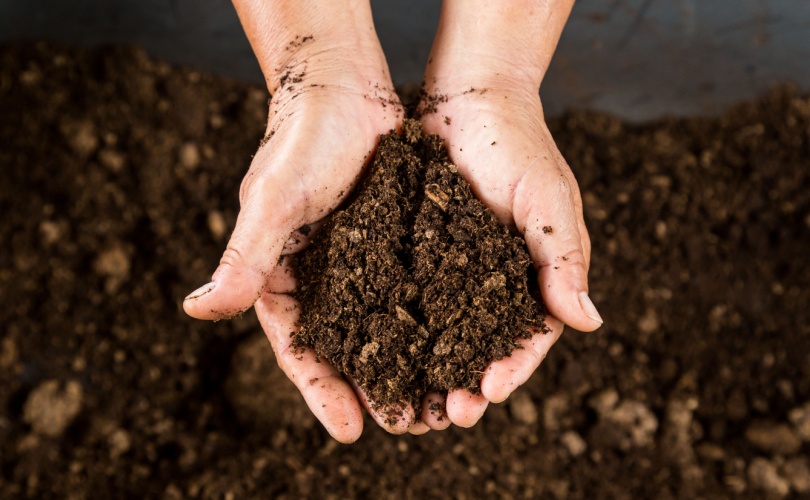
While, this bill doesn’t explicitly allow commercial use of composted human remains, the process produces about a truck-bed worth of soil that companies providing this service suggest can be used by the deceased’s family in a garden and additional soil can be “donated.”
What is ‘human composting?’
“Human composting” is exactly what it sounds like.
“Much in the way someone throws old coffee grounds or vegetable peelings into a compost pile to turn into fertilizer, the human body, a creation of God, is treated like nutrients for the dirt,” LifeSiteNews’ Matt Lamb has previously described.
“The first step in human composting begins with the body in a ‘cradle’ surrounded by organic materials, such as wood chips, alfalfa, and straw,” Mallory McDuff, an environmental education professor, explained in Wired. “For about 30 days, the body remains in a ‘vessel,’ where microbes and heat transform it into compost.”
The process “transforms bodies into nutrient-rich soil,” she insisted, and is a way to fight “climate emergency.”
“Donating human remains to a body farm and human composting are two ways to create life from death, engage family and friends, and make a difference in our climate emergency,” said McDuff, attempting to cast the process in a favorable light.
USCCB condemns ‘human composting’
In a statement issued in 2023 titled “On the Proper Disposition of Bodily Remains,” the U.S. Conference of Catholic Bishops (USCCB) condemned the destruction of deceased human bodies through composting.
Human composting is “disconcerting” because it leaves “nothing that one can point to and identify as remains of the body” the bishops explained. “The body and the plant material have all decomposed together to yield a single mass of compost. What is left is approximately a cubic yard of compost that one is invited to spread on a lawn or in a garden or in some wilderness location.”
The bishops affirmed that “(e)very human being has been created ‘in the image of God’ (Gn 1:26-27) and has an inherent dignity and worth.”
Accordingly, human beings “are therefore obliged to respect our bodily existence throughout our lives and to respect the bodies of the deceased when their earthly lives have come to an end.”
Noting that “(b)urial is considered by the Church to be the most appropriate way of manifesting reverence and respect for the body of the deceased because it ‘honors the children of God, who are temples of the Holy Spirit,’ the bishops said cremation can also be permitted so long as it’s not “chosen for reasons contrary to Christian doctrine.”
The bishops concluded their statement by reaffirming that since humans “are not pure spirits like the angels” but actually “share in the physicality of the material order” as “both body and soul,” we must “respect our bodily existence throughout our lives and to respect the bodies of the deceased when their earthly lives have come to an end.”
“The way that we treat the bodies of our beloved dead must always bear witness to our faith in and our hope for what God has promised us,” they wrote.