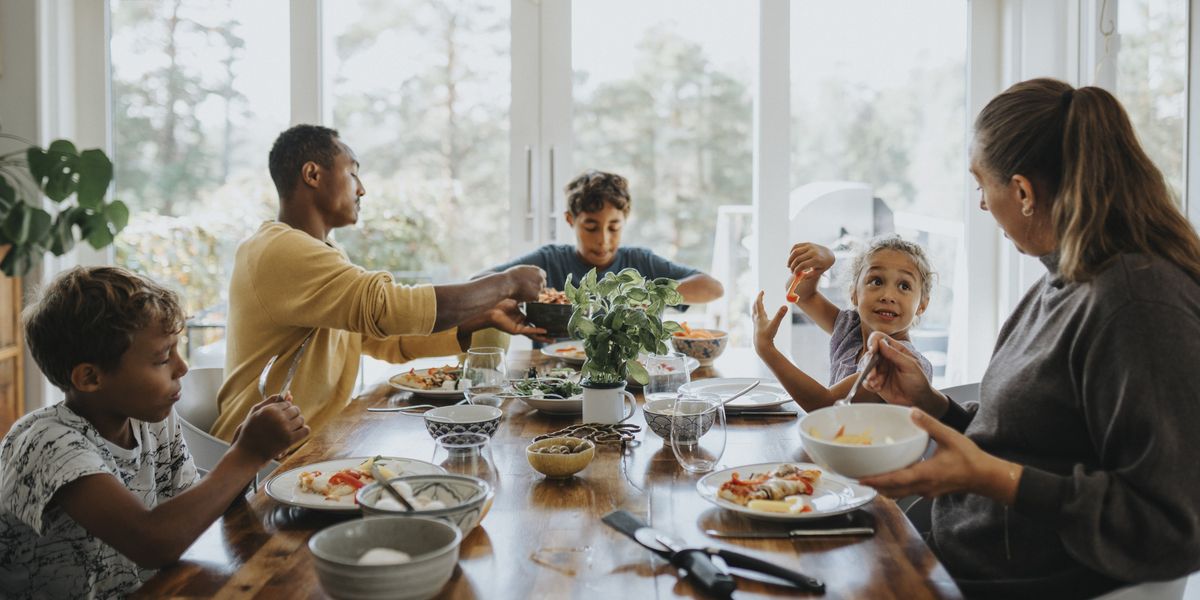
Eating together as a family was once a staple evening ritual. But in today’s world, fewer families are sharing meals together than ever before.
The importance of sitting down at the dinner table with loved ones cannot be overstated. In 2010, then-Conservative prime minister David Cameron recognised family meals in his “Happiness Index” — an Office for National Statistics (ONS) study to measure the nation’s quality of life beyond just gross domestic product (GDP).
Yet despite this effort to find practical ways to improve people’s lives, the trend continues to fall.
Some 45 per cent of British households say they eat together less than a decade ago, according to a recent survey by meal-kit company HelloFresh. GB News takes a closer look at the causes and consequences of this shift — and whether it could continue.
Dr Clare Mosely, a retired GP and author of Eating Together: A Recipe for Healthier, Happier Families, linked communal dining to children maintaining a healthy weight, eating fewer ultra-processed foods and lower rates of obesity. Beyond these physical benefits, family mealtime provides a wealth of social advantages.
Professor Claire Farrow, an expert in children’s eating behaviour at Aston University in Birmingham, said: “Children who regularly eat together with the rest of the family often report better mental health, less depression, less anxiety, they’re less likely to develop eating disorders or even take drugs. So (there are) quite a lot of surprising benefits of family meals.”
Research published in the Journal of Adolescent Health found children who engage in regular meals with their carers are three times less likely to have abused prescription drugs or used an illegal drug, while two times less likely to smoke.
Additionally, the Family Meals Movement, a London-based initiative tackling food insecurity, found links to better school grades, greater self-esteem and increased prosocial behaviour as adults, such as sharing and respect.
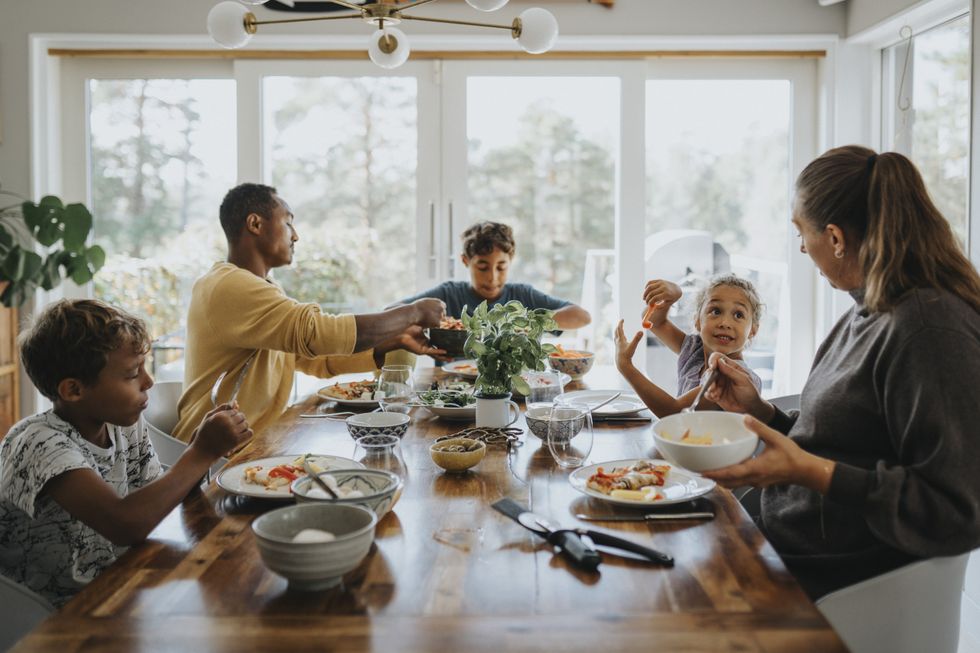
Family mealtimes have dropped by 45 per cent over the last decade, studies suggest
|
GETTY
“It’s because of the social context of family meals and the opportunity that they provide for children to talk to their parents, to hear other people, problem-solving or perhaps talk about issues that have happened throughout the day,” Prof Farrow explained.
“They provide this positive framework for people to interact with, for growing, developing children to interact in. And because of the way society’s changed, people tend to spend more time, often in isolated tasks, maybe putting the television on their own, or looking at the screen on their own, or doing things alone. The mealtimes actually provide time to come together.”
Prof Farrow stated that bullied children “experience the effects less strongly” because they can speak with family members and are “offered more support”.
Mother-of-three Emily Goodson highlighted the importance of shared conversation over the dinner table, saying: “How often do you just sit down and have an opportunity to have a casual conversation with your children? If you say, ‘Come here, sit down and tell me about your day’, it feels quite forced.”
She added: “So by sitting down to eat, it is an opportunity for calm and quiet and contemplation, and where you learn to have a grown-up to-and-from conversation. It’s not just the parent barking an order and as a parent, especially as a single mum.”
One factor contributing to the waning popularity of family mealtime is parents’ working schedules. The HelloFresh study found 35 per cent of families say evening meals happen later than they used to.
The ideal time for dinner is 6.28pm, but just 40 per cent of mothers and fathers find this viable daily. Worse still, a fifth of workers say they only leave their job on time for dinner twice a week or less.
Ed Davies, Research Director at the Centre for Social Justice (CSJ) think-tank, told the People’s Channel the trend is “significant” and it may be “underestimated how much the decline might affect people”.
“A lot of behavioural problems start with disordered attachment,” he said. “You feel that you love and belong, and that comes from spending time with your family. So an awful lot of these negative outcomes we think come from a specific trigger, but they come over the long term of not feeling part of a stable family.
“That root around the family dinner table is a moment of belonging and centring and love. You can find other ways, and people do, but it’s traditionally been a really key one when you come together (as a family) at the end of the day.”
Tradition has long been central to family meals. In Christianity, shared meals play an important role: Jesus Christ frequently ate with his disciples and the Last Supper remains one of the faith’s defining moments. During Easter, families are often encouraged to gather and eat together.
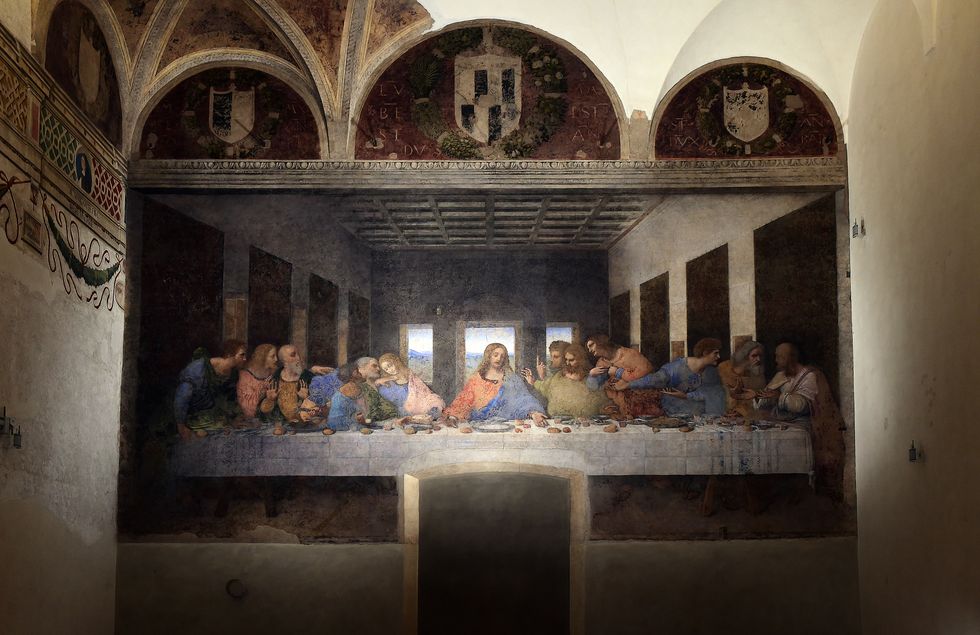
Eating together is a tradition entwined deep within Christianity, perfectly encapsulated in The Last Supper
|
GETTYMichael Phillips, Consultant Solicitor to the Christian Legal Centre, argued eating together has “always been very important for the Christian faith”.
He added: “What we’ve done as a society is we’ve swapped out the central place of the Christian faith and we’ve substituted it with other things. Whether it’s working for a single couple, or as a family, it’s academic achievement, sporting achievement and so on. As a result, I think it will lead to a decline, not just in the individual family, but in wider society.
“There’s an expression that’s sometimes used in church: the family that prays together stays together. And I think there’s some truth in that.”
Christianity has been declining for decades in the UK. In the 2001 census, 71.75 per cent said they were Christian. In 2011, this dropped to 59.3 per cent. By 2021, this figure was 46.2 per cent – the first time it had dropped below half.
The decline in families eating together has not just coincided with religious figures plummeting. Digital media and the habits of Generation Z, also known as the “TikTok generation”, pose a whole new challenge for parents aiming to spark their children’s attention.
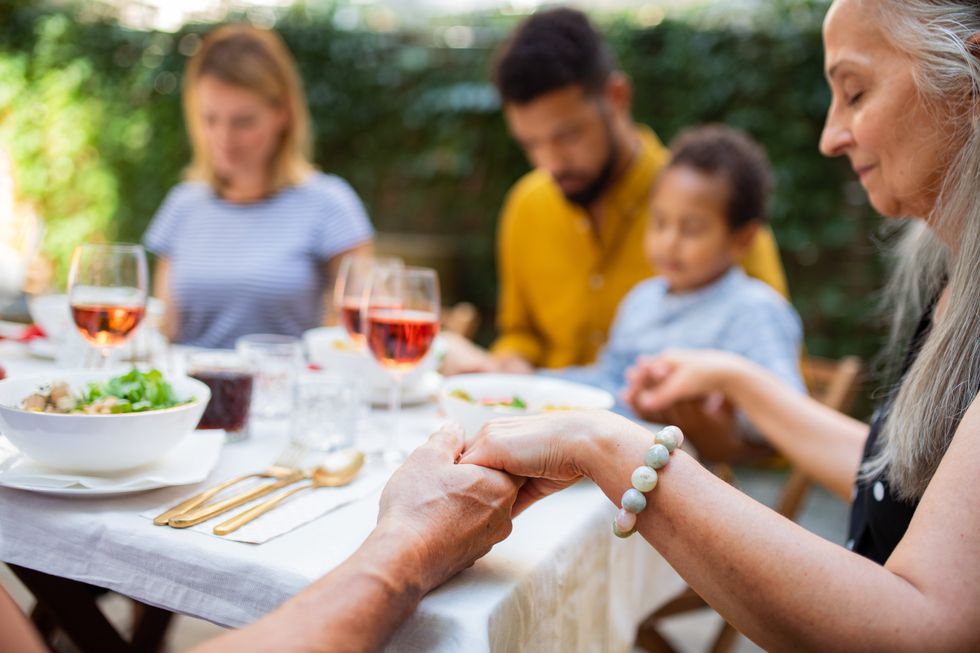
Michael Phillips argues eating together has ‘always been very important for the Christian faith’
|
GETTY
Mr Phillips noted it was too “easy” for children to “sit there and just be on their phone”. Meanwhile, Mr Davies explained the rise of the “TV dinner” from the 1950s onwards is a major driving factor.
He said: “It takes strength to say, ‘No, we’re going to sit down as a family, we’re going to eat together’. Sometimes after an exhausting day, that can be the part of the least resistance. Families are more disparate than they have been before. You usually have both parents working or both parents not living together, which is quite common. Centring is much harder than it used to be. It has to be a much more intentional act.”
While Prof Farrow noted the scourge of smartphones and social media changed the quality of mealtimes, as families “might not be talking together in the way they would have historically”, she said it is the popularity of takeaways and ready meals — driven in large part by the growth of food courier services, such as Deliveroo — that has played a damaging role.
According to the Agriculture and Horticulture Development Board (AHDB), 2025 saw a record low for the amount of time Britons spent cooking evening meals, with households spending an average of just 31 minutes preparing dinner. This coincides with an 18 per cent increase in the number of takeaway outlets in England over the last eight years, ITV News reports.
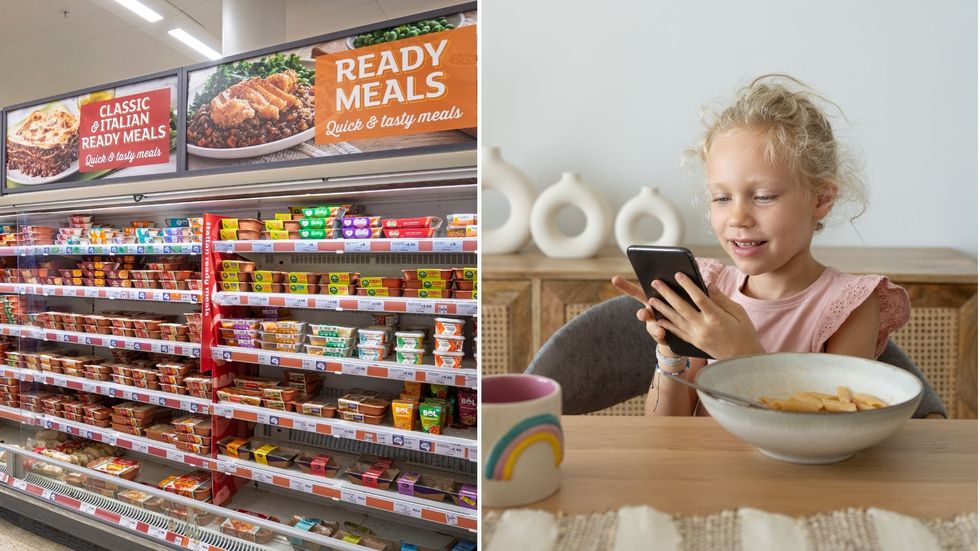
The rise of fast-cooked meals and children using mobile phones at the dinner table have been cited as causes for the decline
|
GETTY
Prof Farrow explained: “There’s been a huge change in social norms and the way society functions that’s happened over the last few decades.
“Certainly, we’ve seen this decrease in the prevalence of family meals; a lot of families have less time to plan, prepare and cook meals that they then would eat together as a family, or logistically even to get the family together regularly every night.
“So what you often have, particularly with increasing women returning to work, is that children might get home from school, but their parents might not be both home at the same time to have a meal together.
“So it might be that the children come in, they’re hungry, and they eat. Then one parent comes back, they eat, and then the other comes.
“There’s a much more chaotic family life experience because of the changes that we’ve seen in the economics of employment.
“There’s also changing social norms around food and a massive increase in terms of takeaways and ready meals and fast-cooked foods, which aren’t the kinds of foods that typically lend themselves well to: someone’s cooked, let’s all sit down and eat the food together.
“So there’s been a real societal change and a much increase in terms of the prevalence of snacking, which means that people are then hungry at different times of the day, and are less likely to have the kind of solid three meals a day that were historically more prevalent.”
Mrs Goodson, a food tech teacher by trade, also noted the prevalence of changing diets and habits.
She said: “Now people have got very busy lives. People eat on the hoof a lot. They didn’t use to snack as much as they did. Now, snacking is a really big part of the lives of children. I tried to avoid snacking when my children were young.”
Although these trends are concerning, light could be at the end of the tunnel. There has been an uptake in religion among youngsters in Britain, which brings hope of more formalised dinners being organised in future.
Data from the National Centre for Social Research revealed the share of 18–24-year-olds describing themselves as Christian increased from four per cent in 2018 to 16 per cent in 2024.

Last year saw a record low for the amount of time Britons spent cooking evening meals, and an 18 per cent increase in the number of takeaway outlets in England
|
GETTY
Mr Phillips also noted he was “beginning to see signs” of growth, with more “young people coming in, sometimes through the influence of social media”.
“I think what will happen eventually, that’s the effect of people going to church and hopefully people listening to the good message,” he said.
Additionally, there has been a meteoric rise in online culture promoting healthier lifestyles, improved habits and reduced screen time, focusing on both physical and mental wellbeing.
Last year, a record 11.5 million over-16s held gym memberships.
Huw Edwards, the chief executive of non-profit UKActive, commented: “With the right support, this could become the most health-aware generation ever.”
Could these be small indications that society could be moving to buck the trend of the declining family mealtimes?
Mr Davies concluded positively: “There’s a generation coming through who are probably looking for different ways to live. You’re seeing it in the religious numbers, but you’re seeing it in political numbers, too, that people realise that the status quo isn’t working.
“Whether that’s Reform or Greens, you’re seeing huge rises outside the normal political strands: you’re seeing these rises of people going to church.”
He added: “I do think there is something there about this disconnected life, this feeling that things aren’t quite working, that actually, a family dinner is a good way to need a connected life, and it is one of those things that’s quite simple to put in place that you can do.”