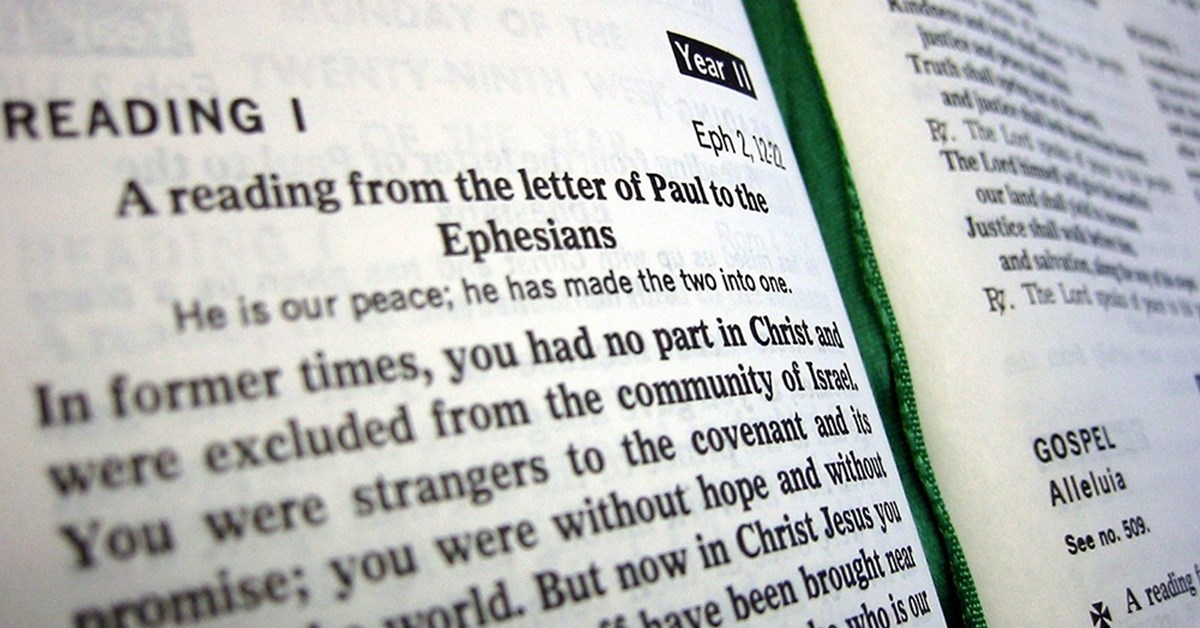
Isaiah 52.13-53.12; Psalm 22; Hebrews [10.16-25 or] 4.14-16; 5.7-9; John 18.1-19.42
THE Passion is action-packed. People move from scene to scene: garden, prison, palace, hillside. There is violence and cruelty: scourging, mockery, shame. Tense sequences of dialogue crackle between antagonists: Jesus and Judas, Jesus and Pilate, Peter and the high priest’s staff.
In many churches, the Passion is not read in Holy Week in the same way as in the rest of the year. It is dramatised, members of the congregation becoming speaking characters in the story. These dramatised readings have an impact on how we encounter, year by year, the last days of Jesus — whether we sit listening in the congregation, or whether we take part as one of the readers. But, if the Passion were a Hollywood action film, would the screenplay pass the EDI [equality, diversity, inclusion] test?
Since the fourth Sunday of Epiphany, readings from John have been highlighting women who interacted with Jesus. But now, where have they all gone? We once heard the voices of the Samaritan woman, the mother of Jesus, and Martha the sister of Lazarus. But, during the Passion, all are silent. Only one sentence in the Passion according to John is spoken by a woman. Unless we read into it some mystical or allegorical significance, it is a simple question, devoid of spiritual content: “The woman said to Peter, ‘You are not also one of this man’s disciples, are you?’”
Where, in the Passion, are the marginalised and the minorities? We could criticise it as a story for lacking not only women but also people of colour (though the name “Simon of Cyrene” suggests that the man who carried the cross for Jesus came from north Africa), and other minority representation. Does that mean that the Passion is only relevant to some Christians, not to all?
Two practical solutions to the lack of female voices in the dramatised Passion reading are easily available. One is to rebalance the voices by giving the narration (the largest of all the roles) to a woman. Another is what we might call the “Bridgerton solution”: “blind” casting. We could assign the speaking roles without matching the sex of the character to the sex of the reader. After all, not many churches have enough Jewish members to play the Jewish characters. Or any Romans to play the part of Pilate. The only demographic we could be confident of meeting would be the part played by the crowd — a collection of people who are fickle and unjust.
I do not raise this question on such a day as Good Friday to inflict political correctness on readers. Growing up in the days before equality became a matter of legal rights, I never had the least difficulty in identifying with characters in stories who did not match my own ethnic and cultural background, or my sex. What do we see in the Passion story? What is there, in the characters, and in their words and actions, that speaks to us, and ours? Behaviour. Nature. Attitudes. Assumptions. If the Passion is a betrayal story, I can find myself in Judas. If it is a forgiveness story, I can find myself (as I would like to be, even if not in reality) in Jesus (Luke 23.34). If the Passion is a story about hiding behind a crowd instead of standing up for what is right, there I am as one of the soldiers, or as Pilate.
Instead of thinking in terms of Hollywood blockbusters, we should consider the bare bones of the Passion, the structure. Standing back from the detail, and taking in the whole picture, I see two model responses, two ways of being present at the Passion of our Lord Jesus Christ according to John. One is action. The other is stillness (I do not say “passivity”, because that might suggest that, in the absence of speech and movement, there is nothing is going on).
Both these models, these ways of responding to the Passion, are authentic: true, most of the Gospel account is movement and dialogue, but the centre is still. The centre is Jesus, sparing with his speech; unable, by his own choice, to move or act. We find a like stillness, and waiting, in the women at the foot of the cross: in his mother; and his mother’s sister, Mary the wife of Clopas; and Mary Magdalene. With them we watch. Wait. Hope.