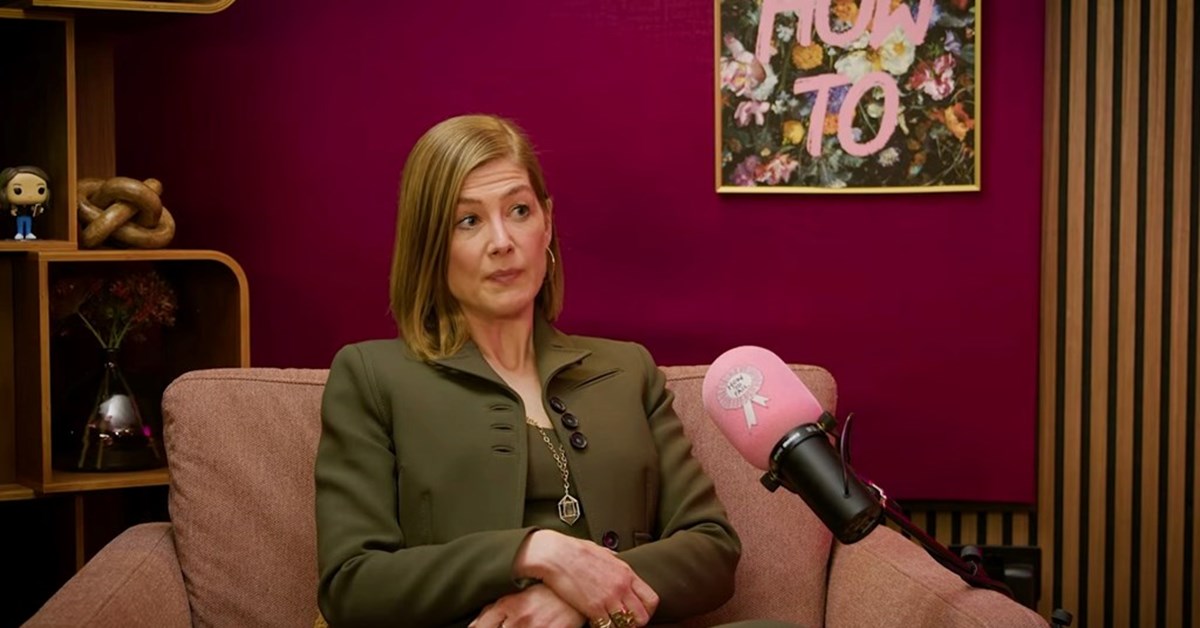
IN THE episode “Rosamund Pike: Failure is Pretending to be Someone You’re Not”, of the podcast How to Fail with Elizabeth Day, the Oscar-nominated actor speaks of her experiences with failure in various aspects of her life, including language, and film choices, such as Doom, in which she acted with Dwayne Johnson, known as “the Rock”, and the film title was nearly a self-fulfilling prophecy. It presents a heartfelt examination of womanhood, and the expectations — both spoken and unspoken — that accompany it. The discussion also includes a humorous Chinese insult, adding depth and lightness to the conversation.
Atonement: The John Paulk story: “The Dancefloor”. This first-person documentary features John Paulk as he recounts his journey from his first kiss in a gay bar, to an understanding of Christianity which led to his undergoing conversion therapy in a Christian context. He even became the chairman of Exodus International: a powerful organisation promoting an escape from same-sex attraction through prayer and a form of reconditioning.
The story opens with him as an older man, being discovered back in a gay bar, and the intriguing fact that he has reverted back to that life. After the conversion therapy as a then ex-gay man, he had married an ex-lesbian. Together, they had presented themselves as a power couple, on the church and conference circuit, arguing that intense therapy could lead to a change in sexual orientation. Their efforts ultimately failed, however, leading Paulk to come out again. Now in his sixties, he reflects on his experiences, and the effect that they had on him and others.
To explore the lives of people facing dramatic and unexpected events, focusing on how they navigate their new realities, listen to A Slight Change of Plans, presented by Dr Maya Shankar. In “I Felt Like an Alien Impersonating Myself”, Rachel E. Gross, a science journalist, spoke about suffering a stroke at the age of 35 — when she was busy and seemingly at low risk for such an event. She describes poignantly the experience of feeling disconnected from her body and mind, and the significant delays in her speech and motor functions. It was as though she had aged overnight. This sudden change led her to reflect on her identity, exploring questions about the essence of the self: Is it defined by memory, physical appearance, or a sense of agency? The episode invites a philosophical discussion about identity, which, I feel, touches on themes of spirit and soul.
Another perspective on scripture and its interpretations with regard to sex and sexuality is presented in The Bible for Normal People: “Matthew Vines: The Bible Isn’t Against Gay Marriage”. Vines is critical of both conservative and progressive views, arguing that one is too rigid while the other is overly laissez-faire. He reviews relevant biblical passages, focusing on Romans 1, and suggests a cultural context that helps to reframe these arguments. He emphasises the importance of understanding the Roman mindset concerning sexuality, power dynamics, and the exclusivity of sexual relationships, which often served to prevent the abuse of power.