THE President of Cuba, Miguel Díaz-Canel Bermúdez, has described the oil blockade that the Trump administration imposed on his country in January (News, 27 February) as a violation of human rights: “An act of depriving a people who are generous, hardworking, and supporting, of the most basic things needed to live in peace.”
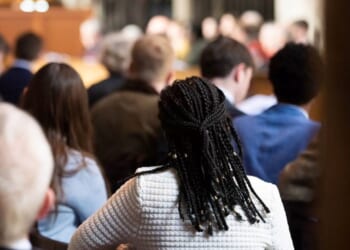
He made the remarks in a speech to welcome an international ecumenical delegation to the Convention Palace, in Havana, on Monday. The blockade has compounded what is acknowledged to be the country’s worst economic and energy crisis since the Cold War. The UN has warned of a possible humanitarian collapse, because 90 per cent of services rely on oil — a figure, it says, that includes five million people living with chronic illness, whose treatments are at risk of disruption, and another million who rely on tanker trucks for drinking water.
The international newspaper Al Jazeera described the situation on Tuesday as “the worst humanitarian crisis in [Cuba’s] history”. The President thanked the delegation for “the message of peace and deep faith with which you accompany us”, and urged the representatives to “to tell this reality” to the rest of the world.
He urged church leaders to continue the community initiatives through which they had always supported Cuba, alongside developing new initiatives “because you have great experience in community work and popular education, and all these things are really important at this moment,” he said.
The secretary-general of the Anglican Communion, the Rt Revd Anthony Poggo, was one of the delegates, along with the general-secretary of the World Council of Churches, the Revd Professor Jerry Pillay. Cubans were living through difficult times, Professor Pillay Pillay said. He described his fellow delegates as “senior religious leaders” who represented millions of people globally.
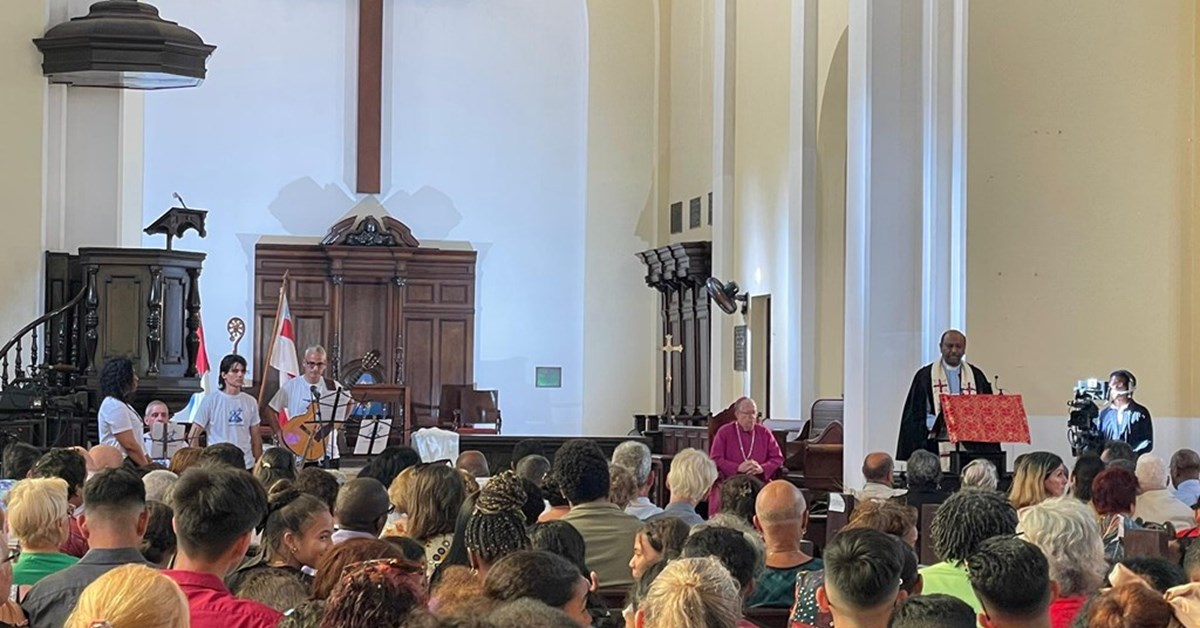
“We are here to celebrate the beginning of Holy Week with you. We will join the voices of people of faith to say that what is being done to you is wrong. Our presence, and that of such a high-level delegation, shows that we are here to offer our support, and to tell the people of Cuba they are not alone,” he said.
The president of the Cuban Council of Churches, the Revd Joel Ortega Dopico, described the solidarity visit as “a source of healthy pride for the Cuban ecumenical movement . . . the beginning of a stage in which the global ecumenical movement and the Cuban ecumenical movement will work more closely together”.
One of the central goals of the visit had been “to see the Cuban reality with [our] own eyes”, Professor Pillay told a press conference on Wednesday, marking the end of the three-day visit. “We are now returning to our countries with the responsibility of sharing this reality with churches and international organisations, bringing to the world the testimony of a people who, even amid great difficulties, keep faith and hope alive,” he said.
The delegation had been deeply moved, he went on, by the resilience of the Cuban people, and by the hope that they had encountered in faith communities during the Holy Week celebrations. The general secretary of the World Council of Reformed Churches, the Revd Philip V. Peacock, concluded: “The delegation finds that Cuba does not constitute a threat but rather represents a benefit to many countries.”
He recalled that Cuba’s international solidarity, especially in the field of health care, had had a positive impact on numerous nations, demonstrating a sustained commitment to the well-being of other people. The delegation confirmed that it had able to observe first-hand the “complex reality” that the country was going through. It noted that the current crisis was largely shaped by the impact of the US economic embargo, as well as by economic and energy pressures affecting families’ daily lives.
Delegates had experienced an environment of openness and full participation in the country’s church life, Professor Poggo said. He stressed that members of the group had preached, prayed, and shared in various Palm Sunday services without facing limitations, which he considered “evidence of existing religious freedom and the spirit of fellowship among churches and Christian communities in Cuba”.
The other delegates in the group were the stated clerk of the General Assembly of the Presbyterian Church (USA), the Revd Jihyun Oh; the director of advocacy in the Presbyterian Church (USA), the Revd Jimmie R. Hawkins; the general secretary of the United Church of Canada, the Revd Michael Blair; and the general secretary of the World Methodist Council, Dr Reynaldo Ferreira Leão Neto.