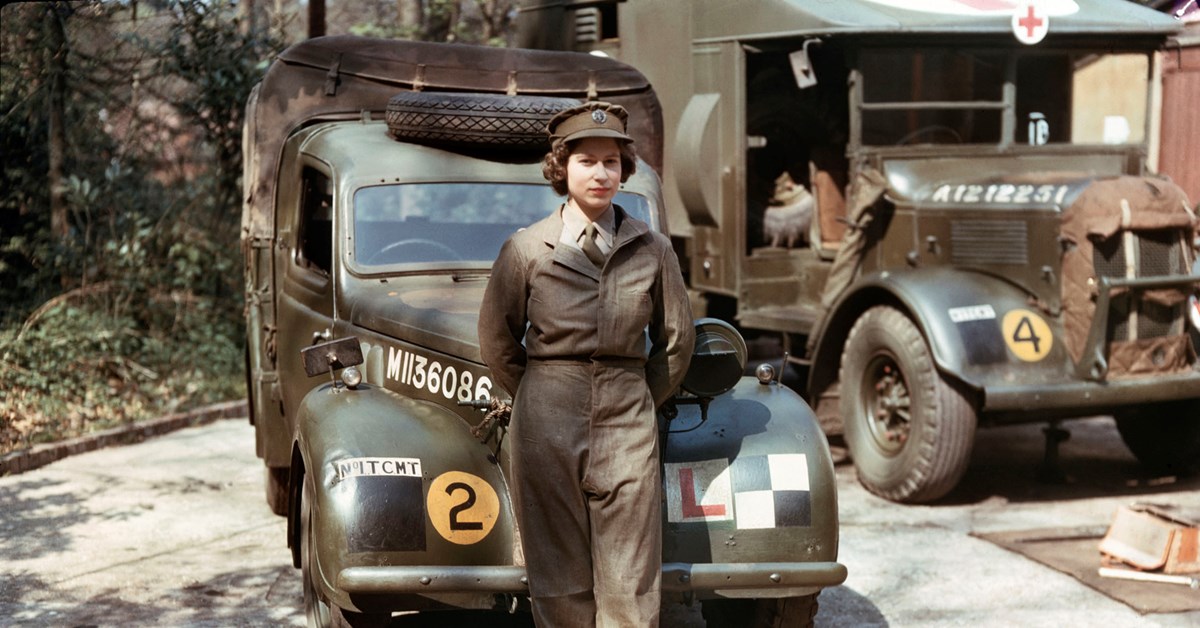
I STILL assume, instinctively, whenever someone on the radio mentions “the Queen”, that they are talking not about the current holder of the title, but about our late and lamented monarch — the centenary of whose birth was marked this week by the launch of the Queen Elizabeth Trust. I know that I am not alone in this.
Queen Camilla is turning out to be a much-admired royal. Through the charities and causes that she champions — from children’s literacy to care of the lonely and elderly, and support for survivors of sexual violence — the public have come to discover her warm approachability, resolute compassion, and feisty mischievous wit. But it is her mother-in-law who, after 70 years on the throne, remains an index to our lives.
Her story was our story, as this week’s BBC television documentary Queen Elizabeth II: Her story, our century made clear. She wasn’t just a barometer of our times: she helped to shape them. The young woman who was a second subaltern in the Second World War set an example in the years that followed, as Britain left behind Empire and embraced the notion of Commonwealth, a transition in which she was far more than a figurehead, as her interactions with post-independence Africa showed.
She understood, as Barack Obama put it, “the sweep of history”. She set aside the pain of the IRA murder of a dear uncle, Lord Mountbatten, to visit Ireland and address a state banquet in Dublin in the Gaelic language that her forebears had once outlawed.
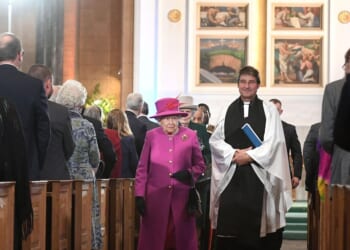
Yet, over the years, she was as pained and bewildered as any of her subjects when confronted by personal tragedy: her children’s divorces and the Windsor Castle fire in the annus horribilis; the bereavement of her grandchildren on the death of Diana, Princess of Wales; the heartbreak of her hunched figure, sitting alone and uncomforted, in church at the Covid funeral of her beloved husband after 73 years of marriage (News, 23 April 2021).
But she knew how to laugh, and made us laugh with her. At the launch of the London Olympics, as Daniel Craig bounded up the steps of Buckingham palace in his 007 tuxedo, she looked up from her writing desk and pronounced, “Good evening, Mr Bond,” and proceeded to board a helicopter and apparently parachute into the Olympic Stadium.
How the nation shared in the joy of her Jubilee, when she marked the platinum anniversary of her reign by taking tea and marmalade sandwiches with Paddington Bear, who spoke for us all when he lifted his hat and said: “Happy Jubilee, Ma’am. And thank you. For everything.”
When she died, people joined a queue ten miles long to file past her catafalque, pausing for a few seconds, which were too brief to articulate their huge sense of personal gratitude. This week, her son and heir found the words. “Much about the times we now live in . . . may have troubled her deeply,” the King said. “But I take heart from her belief that goodness will always prevail, and that a brighter dawn is never far from the horizon.”
When his message was played on the radio, a BBC presenter followed it by saying that the King was “highlighting his mother’s optimism”. But it was not optimism. It was hope, which, to a Christian, is a very different thing.