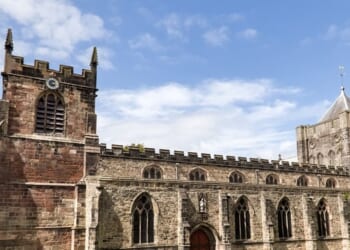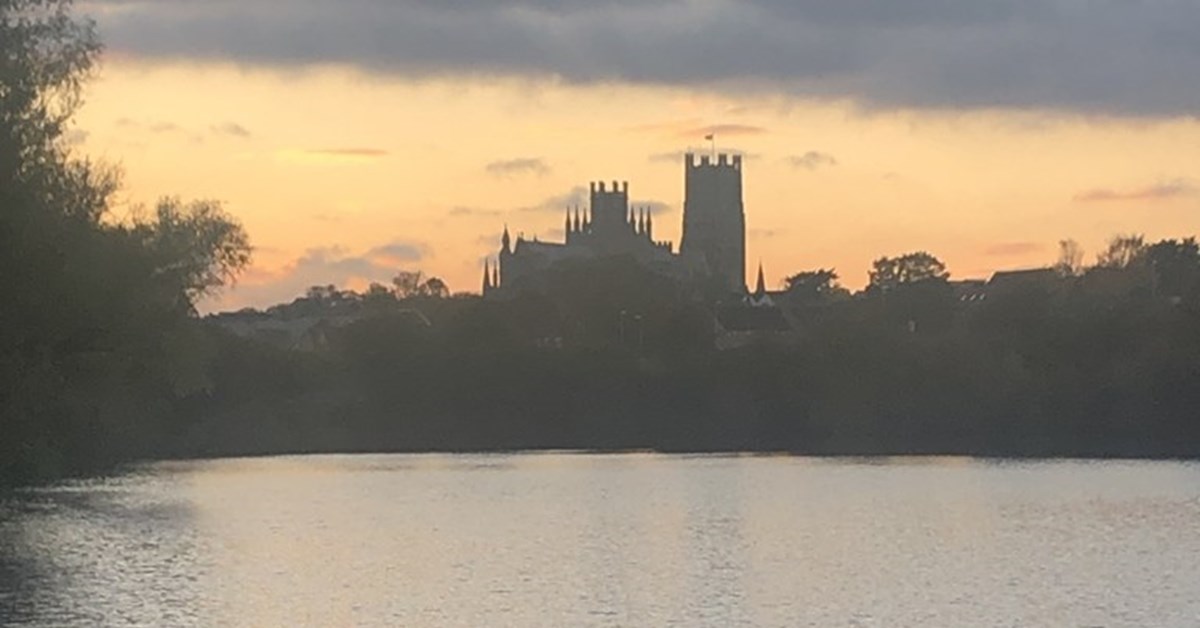
MY HOLY place is a stretch of water with a view of Ely Cathedral. The lake is one of a group of one-time clay pits, worked for 150 years before being abandoned, exhausted, late in the 20th century. The pits filled with water from the Ouse; the wounds of industry healed; natural life returned. Today, on a stretch of reed bed near by, bitterns and Chetti’s warblers are back.
One of those old clay pits is Kit’s Lake. In 2020, when it was offered for sale by the Environment Agency, my late brother, the musician and writer Kit Hesketh Harvey, saw its potential and introduced his friend Caroline Roboh, who bought it to safeguard its return to a natural state. Kit died in 2023, and Caroline named the lake after him, in memory of his work there.
ALAS, it was not always cared for. On our first visit to the lake, we cleared away about 20 sacks of litter; and I have always been puzzled by the urge to push shopping trolleys into the water. But we were joined by volunteers from Ely Wildspace, and inspected by Natural England, and inspired by the RSPB to try to coax turtle doves. Last year, the founder of the British Pilgrimage Trust, Guy Hayward, led us on a route once plotted by Kit across the fens, ending at Ely for evensong. And a volunteer from Ely Wildspace sent me a recording of a nightingale that had taken up residence.
BETWEEN April and September, I visit the lake to sow turtle-dove seed, hoping that some of the endangered birds might spot it on flight over East Anglia. I am spurred by the thought of turtle doves so close to the cathedral, and by the memory of Guy Hayward singing, by the water, verses from Ralph Vaughan Williams’s “The Turtle Dove”:
Fare you well, my dear, I must be gone, And leave you for a while. . .
The cathedral and the lake alter according to the time of day and seem especially lovely at dusk, as flocks of terns rise as one from platforms in the water. A moment of holy peace came with the blessing of the lake by my friend the priest Paul Gismondi. It was a prayer of thanks for the abundance of creation, to ask for spiritual cleansing and healing, to recognise that the death and resurrection of Jesus give us living water.
Nature and faith are juxtaposed here. So, it seemed fitting, two years ago, to give a concert in the Lady chapel in memory of my brother, who had been a child chorister. It was performed by a sacred-music choir, Cambridge Voices, for whom my daughter-in-law, Anna, sings. The concert was entitled “Byrd and Bird”. The holy place by my holy place.
Sarah Sands is a journalist and author, and chief executive of Hymns Ancient & Modern.