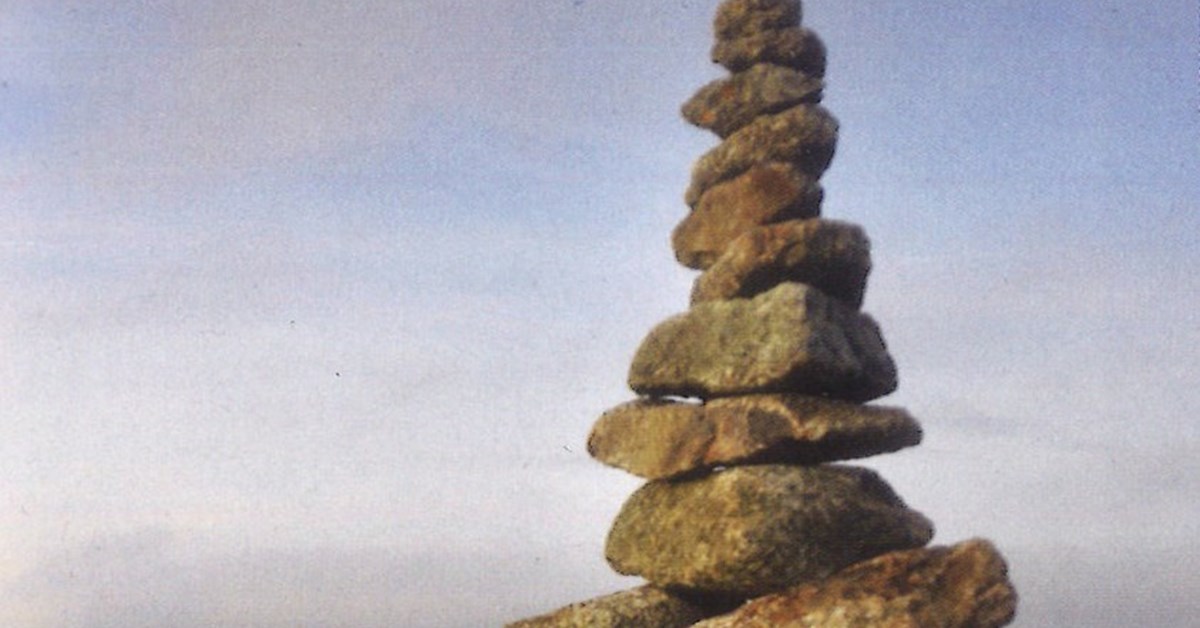
A BOY of 11, brought from inner London to live in Devon, saw a church on a rock and was enraptured. It was Brentor on Dartmoor: one of a string in honour of St Michael on hilltops that lead down to his Cornish Mount. The experience gave the boy an instant and equal love of rocks and churches. When he grew up, Jon Cannon became an inspiring lecturer and writer on medieval cathedrals. Meanwhile, he explored the rocks of Britain. Just before his untimely death in 2023, he finished this book about them.
It is not the work of an academic geologist, although it is based on reading what they have written. Rather, it might be called “one person’s Britain”: a tour by someone who loved to travel alone around the island, driving, cycling or walking while immersing himself in the geology and the history to which it has given rise. England, Scotland, and Wales are covered, including the Orkneys and the Hebrides, but not Shetland, Man, or the Channel Islands.
Britain has been forged by every geological epoch, from the pre-Cambrian rocks of west Scotland and the Hebrides to the fens and beaches of recent times. After an introduction on geological time (long and slow) compared with human time (very short), the book proceeds to take us through each of the ages in turn — Cambrian, Devonian, Carboniferous, and so on — showing what each has contributed to the island and how it has shaped our history.
Having discussed the geology, the author proceeds, in each chapter, to show that it has formed the landscape and offered resources for human life. Stone provides material for building, from prehistoric monuments to modern cities. Water channelled by rock gives motive power and feeds reservoirs. Minerals supply fuel and enable metal extraction, hence industries, towns, and cities.
The range of stones gives character to churches. Softer red sandstone enabled the Romanesque carvings at Kilpeck in Herefordshire. Granite was harder to use until the Cornish masons learnt how to cut and carve it at Launceston and later at Truro Cathedral. Small flints became great churches in East Anglia. Alabaster was chosen for monuments, Sussex marble for the Archbishop’s throne at Canterbury.
The author also explores how the different terrains have influenced the “mythosphere”: the creation of legends, folklore, and medieval and modern literature. The more rugged landscapes of the Midlands, north, and Scotland generated the Robin Hood and Border ballads, and the novels of Robert Louis Stevenson, John Buchan, and Alan Garner. The kindlier surroundings of the chalklands inspired A. A. Milne’s “enchanted places” and Rudyard Kipling’s Puck of Pook’s Hill.
Cannon makes himself our guide rather than our lecturer and conveys the flavour of his travels along with his information, with anecdotes of his thoughts and experiences. This makes for an attractive book about the whole of Britain, showing how geology has created the character of its regions, and encouraging readers to explore them for their own benefit. It is a final fitting piece of work by an original and stimulating historian, whom we lost far too early.
Dr Nicholas Orme is an Emeritus Professor at the University of Exeter.
The Stones of Britain: a history of Britain through its geology
Jon Cannon
Constable £30
(978-1-4721-1683-3)
Church Times Bookshop £27