In November, President Trump reiterated his support for allowing 600,000 Chinese nationals to study at American universities over the next two years, an idea he first announced in August. His statement rightly drew criticism from conservatives.
I, too, voiced concern, outlining in a piece the risks that Chinese students at American universities pose to U.S. national security at a highly critical time when Beijing is ramping up its efforts to intimidate and influence countries.
READ MORE: America Doesn’t Need 600,000 Chinese ‘Students’
Beijing uses its students and researchers abroad to gain access to some of the most sensitive information. However, this isn’t the only way the Chinese Communist Party (CCP) infiltrates American higher education. Other channels of CCP infiltration are just as consequential and demand swift action from our elected officials.
Joint institutes between U.S. and Chinese universities have been on the rise since the early 2000s. While they claim to promote academic cooperation, these institutes serve as an avenue for critical technology and applied research transfers to the CCP, assisting Beijing with its military buildup (see military-civil fusion strategy).
Beijing has formed more than 1,500 initiatives with over 300 American universities. The Select Committee on the CCP has identified hundreds of academic partnerships in critical fields that pose a direct threat to U.S. national security due to ties to blacklisted Chinese defense universities, agencies, and military companies.
A handful of U.S. universities — including New York University, Duke University, and Kean University — maintain branch campuses in China. These campuses are required to comply with Chinese law that curtails academic freedom. By doing so, American academia is reinforcing the CCP’s system of mass repression.
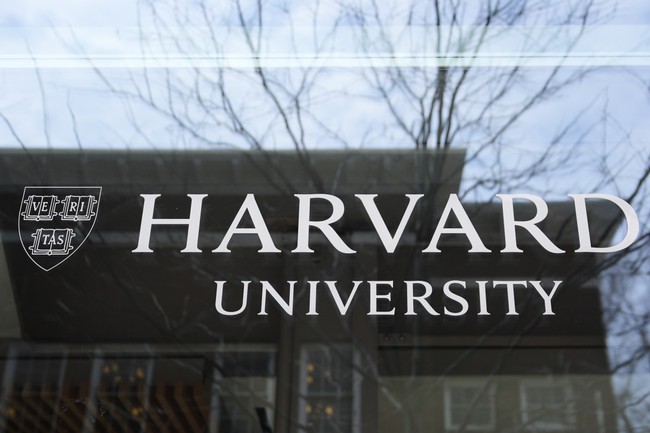
A December report by Strategy Risks exposes how some elite universities in the U.S., including MIT, Stanford, and Harvard, have partnered with two major CCP AI labs, Zhejiang Lab and the Shanghai Artificial Intelligence Research Institute. Both of these labs are tied to U.S.-sanctioned China Electronics Technology Group Corporation, a Chinese state-owned company known for helping militarize islands in the South China Sea and develop the surveillance apparatus to target Uyghurs.
There’s a disturbing pattern of American universities’ involvement in the Uyghur genocide. It came to light in May that Harvard had hosted and trained members of the Xinjiang Production and Construction Corps (XPCC), a Chinese paramilitary organization that plays a central role in the Uyghur genocide. In 2020, the Trump administration imposed sanctions on the XPCC and government officials associated with the group.
An investigative piece in the Stanford Review, also published in December, exposed Wendy Mao’s — the Earth and Planetary Sciences Chair at Stanford and Deputy Director of the Stanford Institute for Materials and Energy Sciences — years-long partnership with the Center for High Pressure Science and Technology Advanced Research (HPSTAR), an institution supporting China’s nuclear program that was placed on the Department of Commerce’s Entity List in 2020. She has co-authored countless peer-reviewed papers with HPSTAR, as well as trained several of its scientists, and was a visiting scholar there from 2016 until 2019.
Perhaps the most unsettling part about the partnerships outlined in the Strategy Risks report and the Stanford Review piece is the extent of U.S. government funding. In Mao’s case, funding sources include:
- Department of Energy (including the National Nuclear Security Administration (NNSA), Argonne National Laboratory, Lawrence Berkeley National Laboratory, Oak Ridge National Laboratory, and Brookhaven National Laboratory)
- Defense Advanced Research Program Agency (DARPA)
- Department of Defense (DOD)
- National Science Foundation (NSF)
- National Institutes of Health (NIH)
- Army Research Office (ARO)
- National Aeronautics And Space Administration (NASA)
Unfortunately, federal agencies have a history of using taxpayer money to support projects that enrich China’s military-industrial complex. Between June 2023 and June 2025, about 4,350 and more than 1,400 research papers with ties to Chinese state entities received Department of Energy (DOE) and Department of War (DOW) funding or research support, respectively.
Over 2,000 research papers funded by the DOW were co-authored with individuals with direct ties to China’s military-industrial base.
While the vast majority of Confucius Institutes in the U.S. have closed since the first Trump administration (fewer than five exist in the U.S.; they are the focus of a bill), universities have failed to comply with Section 117 of the Higher Education Act, which requires them to report all foreign donations and gifts equal to or exceeding $250,000. Between 2022 and 2024, top American universities raked in more than $530 million from Beijing, yet neglected to report how these contributions were used.
Unlike the Biden administration, which turned a blind eye to this foreign influence and even closed such cases, the Trump administration has opened a number of investigations into Section 117 noncompliance. The Department of Education will launch a new portal in 2026 so that universities can report foreign gifts more efficiently and securely — a win for transparency in higher education.
While this is a promising development, much more needs to be done.
First off, Congress must pass legislation that aims to curb Chinese infiltration on campuses. Examples include the Securing American Funding and Expertise from Adversarial Research Exploitation Act of 2025 (SAFE Research Act), which covers everything from ending DOW funding for universities that partner with adversary-controlled entities to research funding prohibitions, and the Defending Education Transparency and Ending Rogue Regimes Engaging in Nefarious Transactions (DETERRENT) Act, which amends the Higher Education Act’s threshold to $0 for countries of concern and requires colleges to disclose foreign investments.
The Trump administration should consider revoking the tax-exempt status of universities that work with sanctioned Chinese entities and individuals — or even better, with any Chinese entity, given that they all function under Beijing’s thumb.
ALSO SEE: FBI Nails Chinese Researcher in E. Coli Smuggling Bust
Federal agencies, like the DOE, need to ramp up audits and compliance monitoring efforts of all awards and to classify restricted entities on various lists as prohibited entities.
It would also be highly beneficial if the administration reestablished and expanded the focus of the China Initiative, which the Biden administration disbanded based on false accusations of racism — a move that the Committee of 100, an organization with ties to the Chinese government, applauded. This Department of Justice program would play a key role in identifying and prosecuting spies.
Lastly, it goes without saying that the administration must reassess its position on student visas for Chinese nationals.
There are recent instances of universities complying with Washington’s requests concerning China, such as Purdue’s plan to halt graduate admissions for nationals from adversarial countries and the University of Arizona’s decision to close its microcampuses in China.
But we can’t let several small wins distract us. Rooting out this cancer from American higher education requires a coordinated and aggressive approach. I’m afraid we’ve barely scratched the surface.
Note: Do you enjoy RedState’s conservative reporting that takes on the radical left and woke media? If so, please support our work so that we can continue to bring you the truth.
Join RedState VIP and use the promo code MERRY74 to receive 74% off your membership!