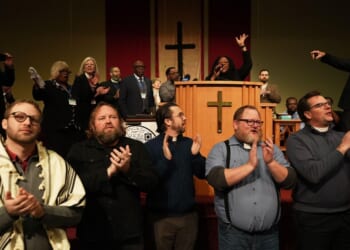
TODAY, I will be at the chrism service. As lay chair of Southwark diocesan synod, it is my privilege to ask the bishops who lead and serve us to renew their commitment to “watching over Christ’s own flock, and building them up in the unity of the Spirit and the bond of peace”.
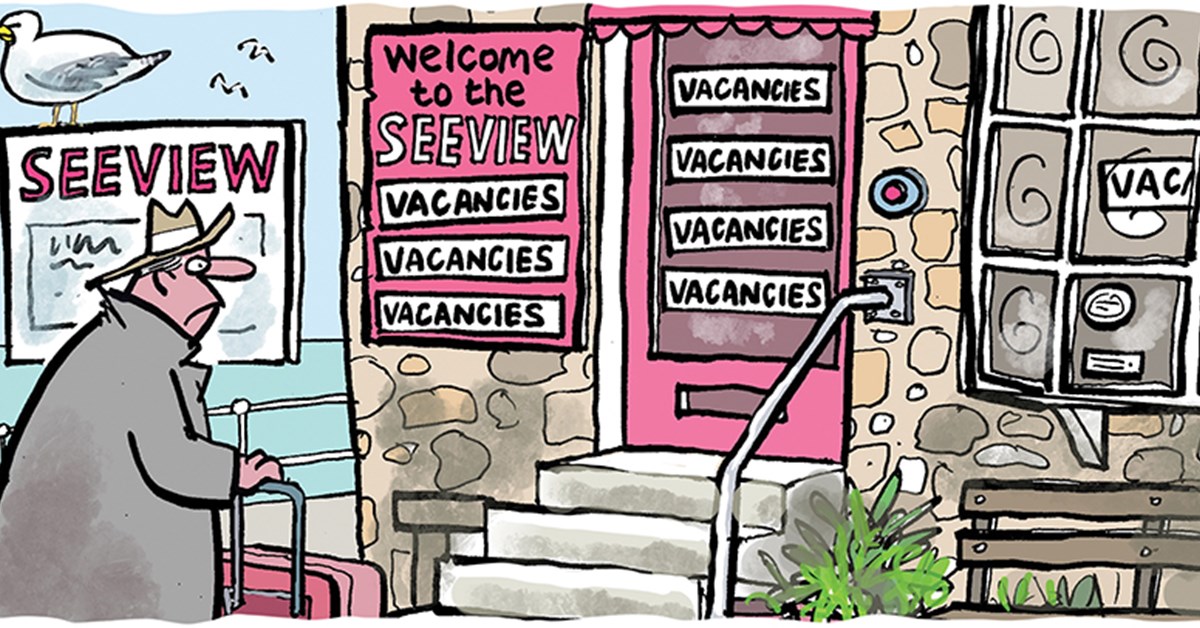
This year will be particularly poignant, since it is the Rt Revd Christopher Chessun’s last before his retirement as diocesan Bishop. Many dioceses find themselves with vacant sees and acting and interim bishops in post. Next year, we will be among them.
Conversations about the process for appointing bishops have been rumbling for more than a decade. In 2014, there was a “failure to appoint” for Hereford; then, in 2015, for Oxford. In 2016, the Archbishops commissioned a review of the Crown Nominations Commission (CNC), led by the Revd Professor Oliver O’Donovan.
During the 2017-22 quinquennium, all CNC meetings appointed. None the less, in 2021, there was a review of the CNC electoral processes, and reforms followed (News, 16 July 2021). The key plank of these was a new “pairs” system, expected to increase diversity and reduce tribalism.
Now, there would not be only six central CNC members, but 12: three pairs of clergy, three of laity. One member of each pair would serve for a particular vacancy, so that every central member was not required to attend every CNC meeting. While the system enabled a traditional Catholic and an Evangelical “pairing”, all the original central CNC members of global-majority heritage have now left their posts, leaving their “pair” to pick up more Commissions.
THE pairs system was not a panacea. The process in Carlisle (2023) and then Ely (2024) did not lead to appointments; outside voices blamed “tribalism”. When the House of Bishops met in September 2024, I sat at the back, alongside some central CNC members, who had not been consulted about the CNC proposals. The longest-serving member, Christina Baron, said afterwards that CNC members felt that their work “is not respected, is not valued, that we are not taken seriously”.
The Bishops’ proposals — to remove the secret ballot, lower the election threshold from two-thirds to 60 per cent, and to give an archbishop an extra vote to break a deadlock — were all voted down (News, 21 February 2025).
As I write, there are eight vacant sees, and four more are due to become vacant soon. Do we need to schedule more CNCs? During 2012-17, there were 19; during 2017-20, there were 17. The current quinquennium has had 17; five are scheduled for this year, and more for early 2027. But any see that falls vacant now will not have a CNC scheduled until summer 2027. The Archbishop of York said to me in 2024 that the “limiting factor is diary constraints”. He had “thought about having a speed-dating approach to CNC”, but he has, to date, been outvoted on this.
Certainly, it would be quicker. When Archbishop Fisher retired in 1961, his successor was announced within a week; some episcopal vacancies now last 24 months. Proposals came to Houses of Laity and Clergy last month to consider whether legislation was desired to give acting bishops a vote in the House of Bishops and the General Synod. But is this solving a symptom rather than seeking a creative cure? One idea to minimise gaps might be for all vacancy-in-see committees to begin work, gently, 18 months before their bishop turns 70, rather than wait for a resignation.
JUST months after the 2021 “pairs” proposals was carried, Caroline Boddington left her post as Archbishops’ Secretary for Appointments, after 17 years. She had transformed a “secret” system and professionalised it. There are shortlists, longlists, and candidate statements. Prospective bishops now know that they are candidates, playing an active part in the process.
Many of these changes were positive. But a system remained that has arguably swung the other way: it is described by some as corporate and managerial. Myriad boxes need ticking, so that it is a miracle that anyone is ever appointed who has not been a suffragan bishop. And suffragan sees remains in the gift of their diocesan: no one elected to the appointments process needs to be consulted, and some bishops take advice — but some disregard it.
The “pairs” reforms have left bishops pushing for more change; but the laity are not content with their proposals. Perhaps something different needs to be tried. In July, Professor Veronica Hope-Hailey is due to bring to the Synod her research into trust in the C of E (Comment, 22 November 2024).
In a world of clause-filled job descriptions and person specs, rebuilding trust in the discernment processes — and in those who serve on them, and are appointed through them — might provide a radical way of enabling CNCs to think outside the box or listen to the Spirit. Trust cannot be legislated for, and it needs to go both ways.
Back in 2017, Professor O’Donovan’s review observed that the moral success of the CNC model “requires a climate of mutual trust and confidence that those charged with the task will put the interests of the church, both local and national, ahead of any sectional agendas”. As I ask our bishops to renew their commitment to “watching over Christ’s own flock”, I will be praying for them, and those who come after them, however they are discerned — but also praying that we find a way to rebuild the trust that we need so badly.
Rebecca Chapman is a General Synod representative for Southwark diocese.