WHEN the Taliban returned to power in August 2021, public life in Afghanistan changed overnight. Ministries were restructured, women were pushed out of universities and workplaces, and a new moral order was imposed. For one of the country’s smallest and least visible communities, Christians, most of them converts from Islam, the takeover did not just narrow freedoms: it erased them.
There are no public churches in Afghanistan. There are no official records acknowledging Afghan Christians as a minority community. Taliban officials routinely deny that Christians exist in the country at all. Yet, estimates from advocacy groups and church networks suggest that between 10,000 and 12,000 Afghans may identify as Christians, almost all of them converts. Their existence depends on secrecy.
Under prevailing interpretations of sharia law applied by the Taliban, apostasy from Islam can carry the death penalty. Even where formal prosecutions are rare, the social consequences are severe. Families may disown converts; neighbours may report suspicions.
Armed patrols and intelligence networks cultivate a climate in which rumour alone can destroy a life. For converts, faith is not only a spiritual choice, but a permanent security risk.
Many Afghan Christians live double lives. By day, they observe Ramadan, attend mosque prayers, and follow social codes expected of practising Muslims. By night, behind closed doors and drawn curtains, they gather in small family groups to pray in whispers. Bibles — often digital copies stored discreetly on phones — are read quietly. Religious symbols are hidden or destroyed; language is coded; meetings are staggered to avoid patterns.
ONE convert we spoke to, who wished to be identified as Ali, runs a small shop in a provincial city. His colleagues see him as a devout Muslim. At home, he leads prayers with his wife and children in a windowless room. “One word ends everything,” he told us.
Discovery would not only endanger him, but also his extended family. Fear is not abstract. House searches have increased in some areas, and accusations, whether genuine or malicious, travel quickly through tight-knit communities.
The Taliban’s broader social policies have deepened this isolation. Since 2021, girls have been barred from education beyond grade six. Universities have closed their doors to women.
These edicts affect all Afghan families, but, for hidden minorities, they compound vulnerability. Education once offered Christian families a pathway to economic independence and, potentially, a safe exit. Now, daughters remain confined to homes, their futures narrowed. Sons continue schooling, but parents worry about ideological indoctrination and the pressure to conform.
For Christian girls in particular, the risks are layered. With education curtailed, early marriage becomes more likely. Families often seek to arrange marriages within trusted circles to prevent exposure. Networks grow insular, opportunities shrink, and isolation becomes self-reinforcing.
Economic collapse intensifies the strain. International sanctions, aid reductions, and financial restrictions have hollowed out Afghanistan’s economy. Jobs are scarce.
Christians avoid government employment, where vetting and surveillance may be stricter. Many rely on small private businesses or informal labour to maintain cover. Healthcare presents another challenge: access to hospital often requires identification and scrutiny. Some Christians use false names; others avoid treatment altogether, fearing questions that could expose them.
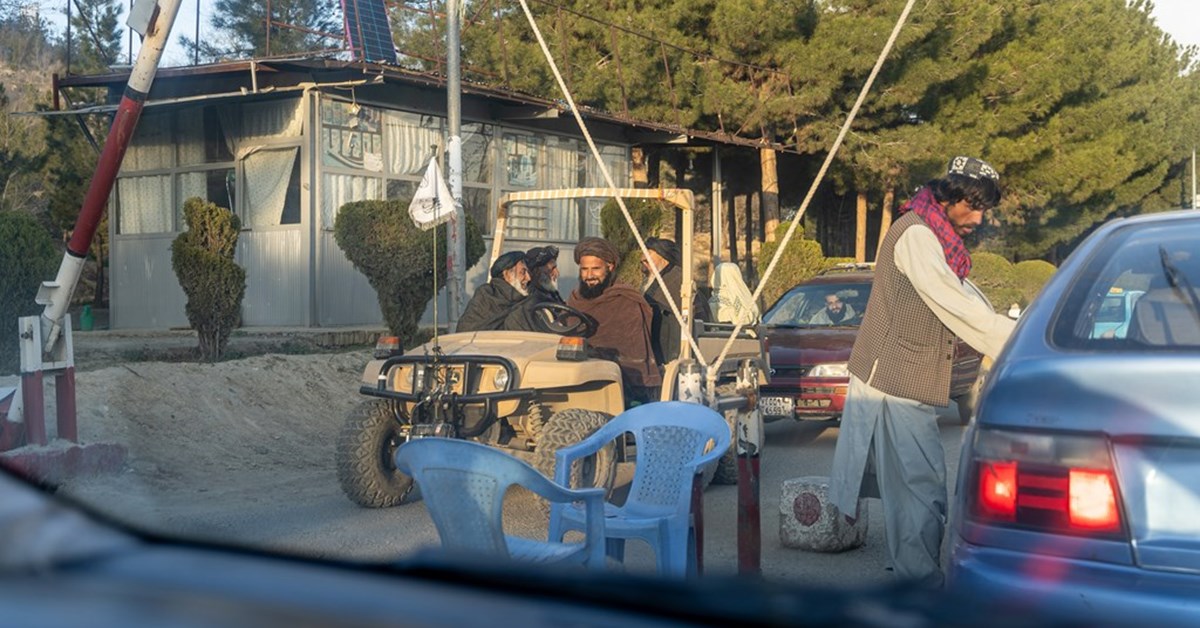
Digital space, once a fragile lifeline, is no guarantee of safety. Encrypted messaging applications allow small groups to share scripture and encouragement. But Taliban authorities monitor networks, and arrests have followed online activity that is deemed suspicious. Phones are searched at checkpoints; data can become evidence.
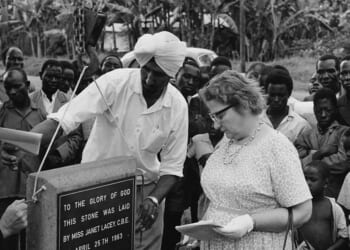
THE repression of minorities is not new in the long history of conflict in Afghanistan. Christian communities existed along ancient trade routes centuries ago. In the 20th century, small numbers converted through contact with foreign missions and aid workers. The Soviet invasion, civil war, and the Taliban’s first regime in the 1990s drove many into exile. After 2001, Afghanistan’s constitution recognised certain rights, and a limited civic space emerged. That space has now collapsed.
Other minorities have also dwindled. Many Sikhs and Hindus have left in recent years. The once tiny Jewish community in Afghanistan effectively disappeared before 2021. Christians, lacking even formal recognition, survive in silence.
International responses have been uneven. The United Nations has documented human-rights violations and restrictions on women and minorities. Western governments have imposed sanctions while engaging in cautious diplomacy. Humanitarian aid continues, often routed through non-governmental channels.
Yet, for Afghan Christians inside the country, these debates feel distant. Protection mechanisms are limited. Asylum pathways exist, but they are slow, uncertain, and accessible to few.
Tauseef Ahmad and Sajid Raina are Kashmir-based freelance journalists.